
















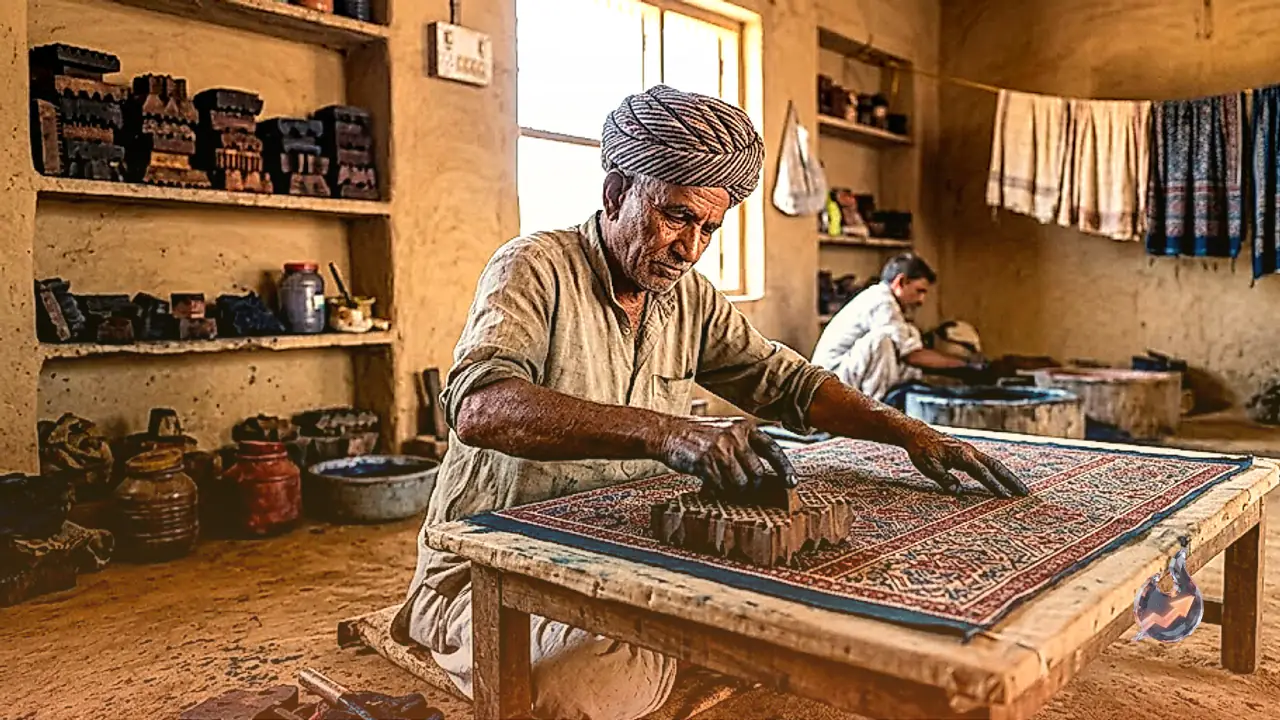

Deep within the arid expanses of Rajasthan, the vibrant town of Barmer harbors an ancient textile tradition that has survived millennia of geographical shifts, political upheavals, and cultural migrations. Known as Ajrakh block printing, this intricate craft is much more than a decorative cloth-making technique. It represents a living history of artistic resilience, meticulous hand skill, and natural dyeing methods passed down through countless generations. Carved wooden blocks, mineral-rich mud pastes, natural dyes, and complex resist-printing sequences come together in Barmer to produce fabrics of exceptional geometric symmetry and enduring beauty. The story of Ajrakh in Rajasthan is inextricably linked to human migration, particularly the movement of traditional artisan families across regions that are now separated by international borders.
Ancient Roots and Historical Connections
The origins of Ajrakh block printing are believed to extend back nearly 4,000 years into antiquity. Scholars and craft historians frequently draw connections between modern Ajrakh patterns and textile fragments discovered at sites belonging to the ancient Indus Valley Civilization. Archaeological findings from these ancient urban centers revealed woven cotton cloth bearing stamped geometric motifs that mirror the grid-like alignments and symmetrical flourishes seen in present-day Ajrakh designs. While historical artifacts do not offer definitive proof that every complex chemical and mechanical step used today existed in identical form four millennia ago, they undeniably establish that fabric dyeing, stamping, and embellishment have been deeply embedded in the cultural fabric of the Indian subcontinent for thousands of years. Ajrakh stands as a direct contemporary heir to this vast reservoir of ancient artisan knowledge.
The Legacy of the Khatri Artisan Community
The survival and continuous evolution of Ajrakh are largely owed to the dedicated custodianship of the Khatri community. For centuries, members of this artisan collective have specialized in the specialized crafts of textile dyeing, pattern carving, and resist printing. Knowledge was rarely documented in written manuals; instead, it was transmitted orally and experientially from parents to children within family workshops. Craftspeople did not merely carry finished fabrics as they moved from region to region. They transported their most precious working tools, including hand-carved wooden blocks made from teak or shisham, formulaic recipes for natural dyes, and an intuitive mastery of fabric preparation. Historical trade and migration routes carried this craft from the province of Sindh to the region of Kutch, and eventually further inland into the desert landscape of Rajasthan.
The 1947 Partition and a New Chapter in Barmer
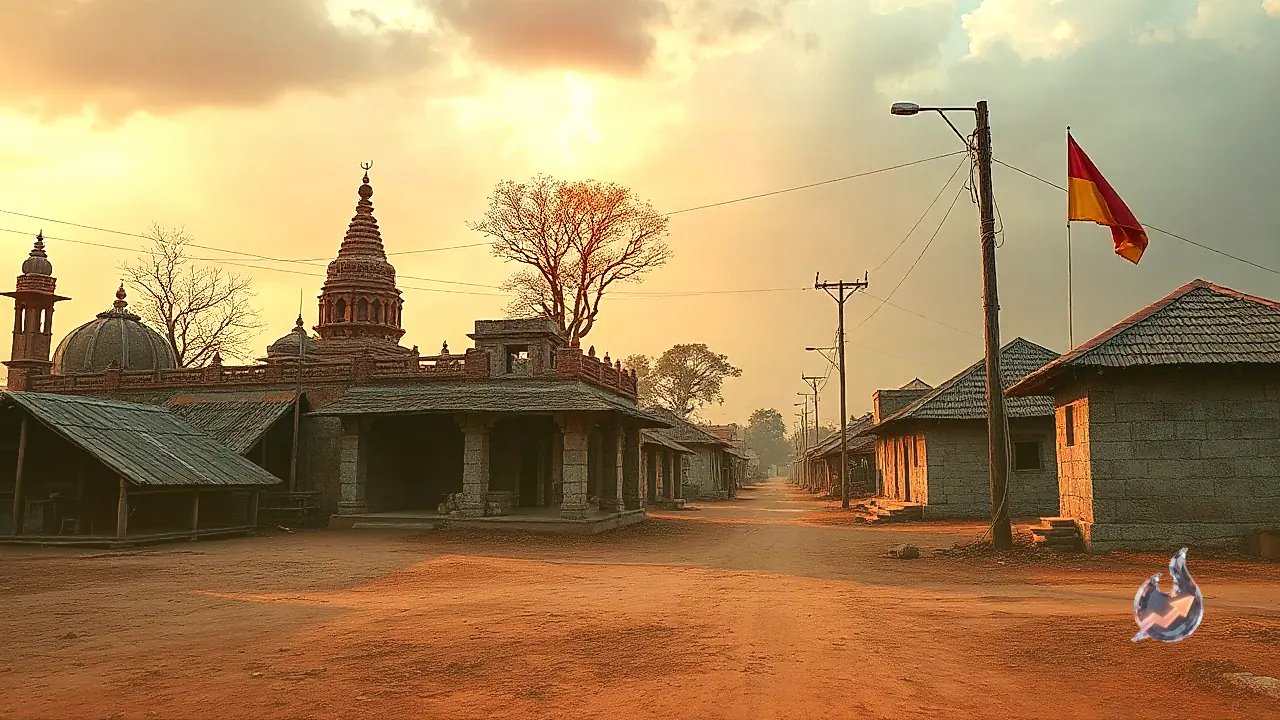
The geopolitical division of the Indian subcontinent in 1947 triggered massive socio-economic shifts and human movements. During this turbulent period, numerous Khatri artisan families migrated from Sindh to find refuge and establish new settlements in Barmer, Rajasthan. Leaving behind ancestral lands, these craftspeople brought along their inherited trade secrets, carving tools, and unyielding dedication to their craft. Re-establishing complex dyeing workshops in the desert terrain presented immense challenges, requiring access to reliable water sources, suitable washing areas, and local raw materials. Over time, Barmer proved to be a welcoming sanctuary. The dry climate and sun-drenched landscape provided ideal conditions for the multi-stage washing and sun-drying processes essential to Ajrakh production, allowing the craft to take deep root in its new home.
Local Color Innovations and Distinctive Aesthetics
While the foundational techniques of Ajrakh remained intact upon reaching Rajasthan, the local environment and aesthetic preferences of Barmer exerted a strong influence on the craft's visual identity. Traditional Ajrakh fabrics produced in older historical centers relied heavily on a restrained color palette dominated by deep indigo blues and rich iron blacks. However, artisans in Barmer introduced a livelier array of local hues to cater to regional tastes and celebrate desert culture. They incorporated brilliant shades of red, vibrant yellows, and rich greens into their compositions. The signature visual appeal of Barmer Ajrakh lies in its intricate balance of complex geometric shapes, stylized floral medallions, and continuous repeating border grids. Achieving perfect visual harmony across a single length of fabric requires extraordinary concentration and a keen artistic eye.
The Intricate 16 to 23 Stage Production Process
The true value of an authentic piece of Ajrakh cloth lies in the labor-intensive, multi-step process required to create it. Preparing a single piece of fabric involves a sequence of anywhere from 16 to 23 separate stages, depending on the complexity of the design and color scheme. The cloth undergoes initial scouring and washing to remove natural impurities, followed by treatment with natural mordants such as myrobalan to prepare the fibers for dye absorption. Subsequent steps include block printing, mud-resist application, immersion in dye vats, secondary washing, and prolonged sun-drying on open desert ground. Each stage must be executed in precise sequence. A single error in paste formulation or block alignment at an early stage can spoil the entire fabric length, making patience and disciplined craftwork non-negotiable.
The Science and Art of Resist Printing
Central to the creation of Ajrakh is the specialized technique known as resist printing. This method relies on applying a protective paste to specific areas of the fabric to prevent them from absorbing color during subsequent dyeing cycles. The resist paste is crafted using a carefully balanced mixture of natural ingredients, including slaked lime, plant gums, and fine desert clay or mud. Using wooden blocks carved with raised relief patterns, artisans stamp this thick paste onto the fabric with exact pressure. When the cloth is immersed into natural dye vats containing indigo or madder root, the paste-covered sections resist the dye, remaining uncolored or retaining earlier color layers. Through multiple rounds of resist application, printing, and dyeing, complex multi-layered patterns gradually emerge on the cloth surface.
Mastering the Rare Skill of Double-Sided Alignment
Among the most impressive technical feats in hand-block printing is the ability of master Ajrakh artisans to execute precise double-sided printing. On high-grade Ajrakh textiles, the intricate geometric patterns and colors appear virtually identical on both the front and reverse sides of the fabric. Achieving this seamless double-sided clarity demands supreme hand-eye coordination and spatial judgment. The artisan must stamp the wooden block on the reverse side of the cloth in perfect physical alignment with the impression made on the front side, without the aid of modern optical tools or guides. A deviation of even a fraction of a millimeter creates visible ghosting or misaligned borders. This extraordinary level of craftsmanship transforms functional garments into exquisite masterpieces of textile art.