






















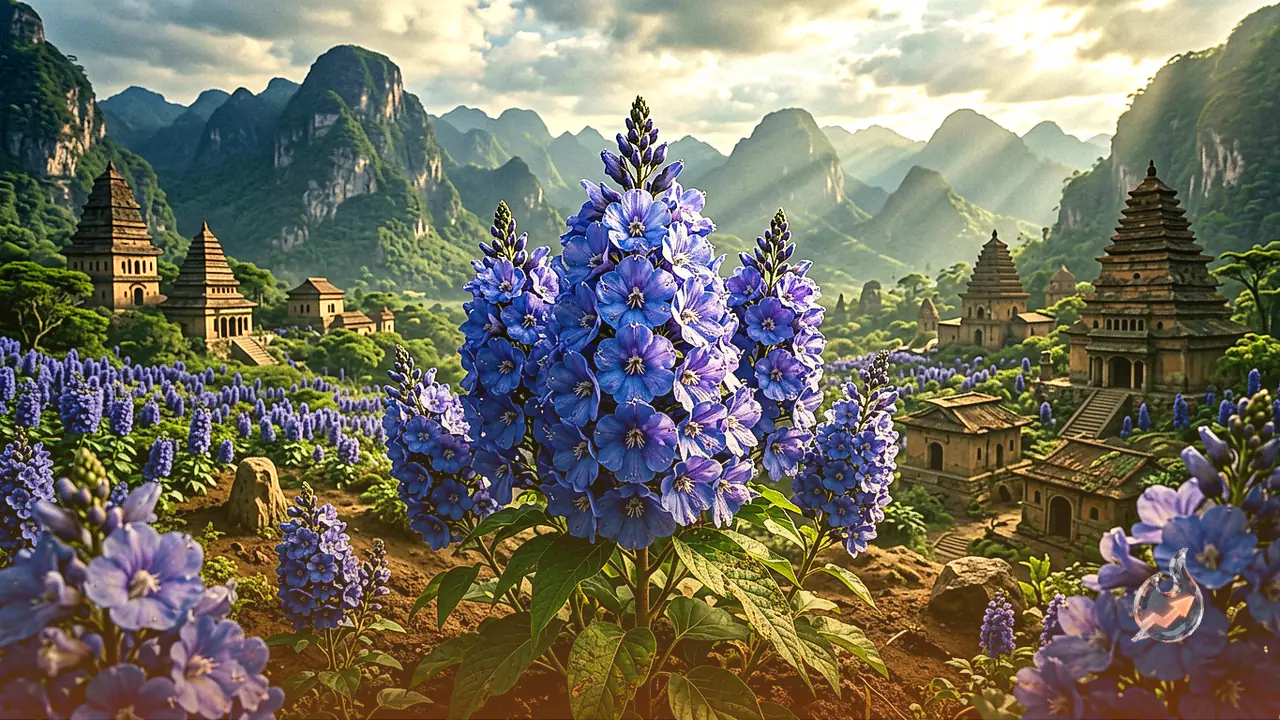

Natural beauty in India is greatly enhanced by its diverse flora, but certain flowers stand out not just for their appearance but for their extraordinary life cycles. Neelakurinji is one such renowned flower that transforms parts of the Western Ghats into a breathtaking expanse of blue and purple hues.
Scientific background and blooming cycle
Scientifically identified as Strobilanthes kunthiana, this plant is celebrated for blooming massively after long intervals. Its most famous variety produces flowers simultaneously roughly once every twelve years, though the exact cycle can vary depending on specific species and regional locations across the landscape.
Munnar and Eravikulam National Park
Neelakurinji is primarily associated with Munnar. When it blooms across Eravikulam National Park and surrounding high-altitude terrain, the entire landscape is drenched in blue and purple shades, making it a major attraction for nature lovers and photographers alike.
Kodaikanal hill station
The popular Tamil Nadu hill station of Kodaikanal is also situated within the Western Ghats zone. Its surrounding elevated meadows host plants belonging to the Strobilanthes family, turning the natural trails and hilly terrain extraordinarily scenic during the blooming season.
Nilgiri hills
The Nilgiri region is well known for its rich biodiversity and dense grasslands. It harbours several specialized plant species native to the Western Ghats, and kurinji flowers can be spotted in select pockets here, with timings varying by location and species type.
Palani and Anamalai hills
The Palani hills are famous for their scenic landscapes and ecological wealth. As part of the Western Ghats, this territory supports numerous rare plant species. Additionally, the Anamalai hills spread across the border of Kerala and Tamil Nadu are known for rugged trails and lush vegetation, with Neelakurinji plants recorded in certain higher-altitude zones.