






















Vibrant, flowering climbers transform balconies and terrace gardens into captivating green retreats. Bougainvillea stands out in particular because its dazzling, radiant blooms catch the eye from a distance while thriving even in limited spaces. However, purchasing a quality bougainvillea specimen from a commercial nursery often costs between 350 and 500 rupees, and exotic varieties can command even higher sums. If a homeowner desires multiple pots across a garden, the total expense quickly adds up. Fortunately, with a little patience and the right horticultural technique, anyone can produce healthy, brand-new plants using a small stem cutting taken from an established bush.
Why the Rainy Months Offer the Ideal Environment for Propagation
The period spanning July through September presents the most favourable window for propagating bougainvillea via cuttings. Elevated atmospheric humidity during the rainy months shields tender stems from desiccation, providing an optimal microclimate while subterranean roots begin to form. High ambient moisture prevents the cutting from drying out before it develops its own moisture-absorbing root system. Nevertheless, torrential rainfall and persistently soggy soil pose serious hazards, as waterlogged conditions easily rot tender tissues. When conditions are maintained properly, fresh green foliage typically emerges along the stem within a few weeks. Root formation timelines vary depending on plant cultivar, ambient temperatures, humidity levels, and overall care, making it far wiser to monitor botanical indicators rather than relying strictly on the calendar.
Selecting the Right Cutting and Blending a Porous Soil Mix
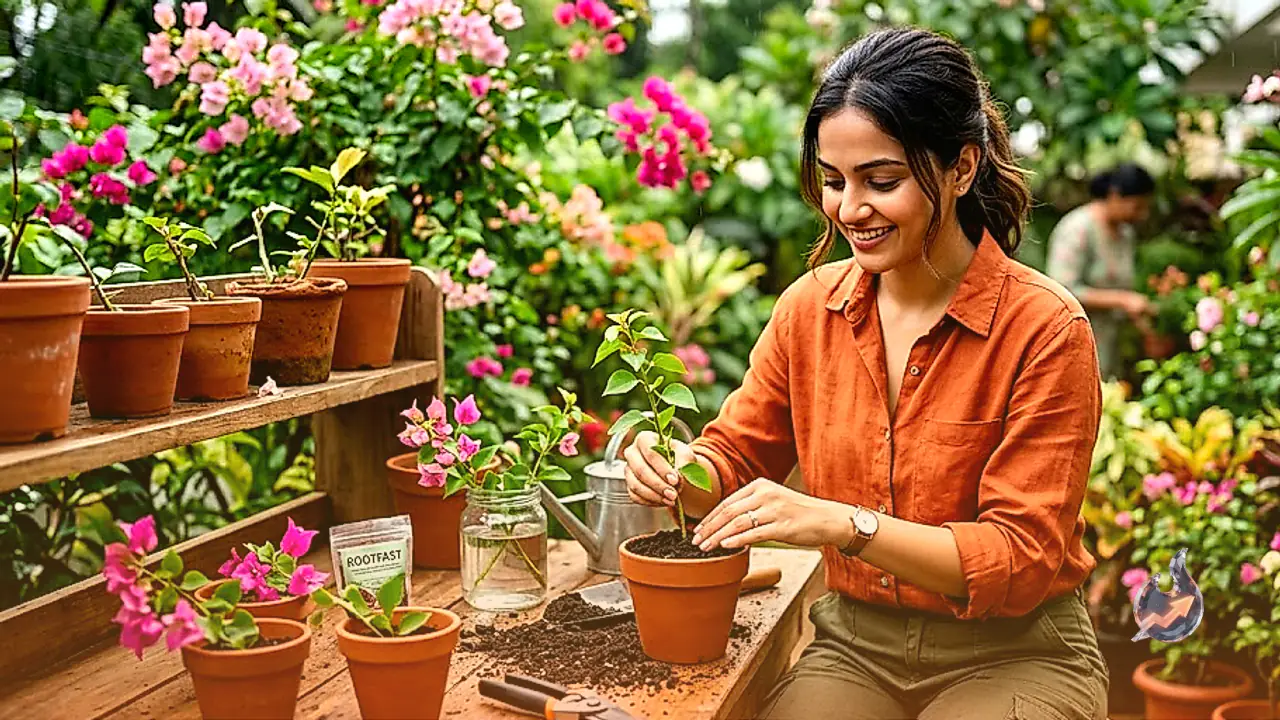
Successful propagation begins with identifying the appropriate plant branch. Tender, exceptionally soft green shoots should be avoided because they rot quickly, whereas excessively thick, aged woody stems struggle to generate new roots in a timely manner. The ideal candidate is a semi-mature, sturdy stem that is neither entirely new nor overly aged. Using a sharp, clean gardening tool, snip a healthy length and strip away the bottom foliage to expose clean nodes.
Potting medium preparation is equally critical. Bougainvillea cuttings require a loose, well-aerated substrate that allows water to drain freely without pooling. A balanced mixture of loamy soil, fully decomposed organic compost, coarse sand, and coco peat provides excellent texture and aeration. Pots must feature functional drainage holes at the base to discharge excess moisture immediately. The stem does not need to be buried excessively deep; simply anchor it securely into the soil, gently press the surrounding medium with fingers to eliminate air pockets, and water lightly just enough to moisten the root zone.
Crucial Pitfalls to Avoid After Planting Stem Cuttings
A common misstep among enthusiastic gardeners is moving newly planted cuttings straight into harsh afternoon sunlight and soaking the pot with generous amounts of water daily. Both practices severely jeopardize the plant's survival. During the formative weeks, containers should reside in a bright location that receives abundant indirect natural light while remaining sheltered from intense, direct midday heat.
Irrigation must also remain measured and cautious. Gardeners should replenish moisture only when the top layer of the potting mix feels dry to the touch. Pouring water into the container every single day does not accelerate rooting; rather, continuously waterlogged soil starves root zones of essential oxygen and induces fungal rot. Stems require slight dampness combined with adequate soil aeration to stimulate healthy subterranean growth.
Nurturing the Specimen Once Fresh Foliage Appears
The appearance of vibrant new buds and leaves across the cutting signals an encouraging milestone, demonstrating that the cutting has begun anchoring itself with rudimentary roots. At this vulnerable stage, the plant should not be abruptly thrust into intense outdoor heat. Instead, gradually acclimatize the young cutting to brighter conditions over several days so it adapts smoothly to stronger light levels.
Once the emergent shoots thicken and show robust growth, the young plant can be carefully transferred into a larger permanent pot or garden bed. After establishing its permanent root architecture, bougainvillea demands generous exposure to direct sunlight. The species thrives in abundant sun, and providing uninterrupted exposure ensures heavy, picturesque flowering cycles as the plant matures.
Plant Multiple Cuttings Simultaneously for Guaranteed Success
A major advantage of vegetative propagation is that a single healthy bush can supply numerous stem cuttings simultaneously. Planting multiple cuttings across individual pots maximizes success rates. In horticulture, not every single cutting manages to develop viable root systems, as micro-fluctuations in moisture and temperature can cause individual failures. Planting three to four cuttings at once remains the most practical approach.
Bypassing repeated nursery expenses of 350 to 500 rupees per plant allows home gardeners to expand their collections economically. With proper drainage, careful watering, and the seasonal boost provided by rainy conditions, simple cuttings can soon fill home terraces and balconies with rich cascades of vibrant colour.