
Stepping out of a refreshing shower and wrapping yourself in a plush, spotless, and completely dry towel is one of everyday life's simplest comforts. That pleasant feeling vanishes the instant the fabric carries a stale, sour, or musty odor of trapped dampness. During chilly winters and rainy monsoon spells, this persistent issue plagues countless households because bright sunshine remains scarce and the surrounding atmosphere stays perpetually thick with humidity. In many homes, even after undergoing an extensive wash cycle, towels refuse to dry thoroughly through the entire day. The lingering dampness forces people to wash them all over again, restarting the very same tedious chore. While changing weather conditions take the blame most of the time, the underlying culprit frequently rests within our regular laundering routines. Packing the washing machine drum beyond its reasonable limits, pouring excessive amounts of laundry detergent, leaving wet fabrics sitting idle inside the sealed drum for hours, and draping damp towels haphazardly on narrow hooks without spreading them out all combine to lock moisture deep inside the fabric weave. Thankfully, adopting a few sensible modifications in how we wash, spin, air, and store our towels can completely eliminate musty damp odors and keep home linens impeccably fresh.
Allowing Ample Drum Space and Balancing Detergent Usage
Due to their unique woven loop construction, bath towels possess exceptional water retention capabilities. The moment they become saturated, their weight increases significantly compared to ordinary day-to-day clothing items. Cramming these dense textiles into a washing machine drum alongside heaps of everyday garments leaves almost no room for the load to tumble and agitate properly. When laundry cannot move freely through the water, detergent cannot penetrate uniformly, nor can trapped dirt and body oils be adequately rinsed away. To achieve genuinely clean results, always operate your washing machine well within its specified weight capacity and ensure that thick towels have plenty of room to circulate during the entire wash cycle. Separating heavy bath sheets and hand towels from lightweight, fragile fabrics is another practical strategy. Washing them independently allows you to set an optimal wash cycle and spin intensity designed specifically for heavier cotton weaves without risking damage to delicate garments.
A widespread misconception among households is that generating massive mountains of suds guarantees superior cleaning performance. In reality, pouring more detergent than recommended causes profound laundering problems. When an overabundance of detergent is used, the machine's standard rinse cycle fails to wash it all away. Microscopic soapy residues end up settling deep inside the tiny loops of the towel fabric. Over time, this detergent buildup forms a stiff, greasy film that traps moisture and dead skin cells, turning the towel into a breeding ground for foul odors. Always consult the dosage guidelines printed on your detergent packaging and measure the quantity based on the actual size and dirt level of the laundry load. If a towel emerges from the wash feeling unnaturally slick, slimy, or shows traces of lingering lather, run it through an extra clean water rinse immediately. Pouring extra detergent simply to mask bad smells with artificial perfumes is counterproductive and damages the longevity of the fibers.
Selecting the Right Spin Settings and Gentle Hand-Washing Methods
Once the primary wash cycle concludes, choosing the correct spin speed plays a critical role in how quickly the fabric can shed its moisture later. Refer to the textile care label stitched onto your towel as well as your washing machine manual to select the highest recommended spin extraction setting. An efficient spin cycle utilizes centrifugal force to expel vast amounts of trapped water from deep within the dense cotton loops before you even take the fabric out. The more water extracted during this phase, the faster the towel will dry once suspended in the open air. However, keep in mind that spinning merely drains excess saturation; it does not yield a completely dry towel. Immediate hanging in a well-ventilated space or the use of an appropriate tumble dryer remains essential. For households that wash towels by hand, extraction requires patience and gentle handling. Avoid aggressive twisting, wringing, or pulling, as violent torque can snap hem stitches, stretch the cotton loops out of alignment, and warp the structural shape of the towel. Instead, press and squeeze the folded towel firmly between your palms or against the side of the wash basin to drain excess water safely.
Emptying the Washing Machine Drum Without Delay
A very common household habit is ignoring the washing machine buzzer and letting wet laundry languish inside the drum for hours while attending to other daily chores. The sealed drum of a washing machine maintains a warm, dark, and highly humid microclimate with practically zero airflow. Under such conditions, mildew spores and odor-causing bacteria multiply at an astonishing rate, imparting an unmistakable sour odor to the fabrics within a short span of time. To preserve freshness, make it an absolute rule to retrieve towels and hang them up the moment the cycle finishes. If a damp towel has inadvertently spent prolonged hours trapped inside a closed machine and has developed a noticeable musty smell, simply hanging it to dry will not rescue it. Drying will only bake the smell into the fabric; the only effective remedy is to run it through a fresh wash cycle with clean water and appropriate detergent. In the same vein, never dump freshly washed, soaking-wet towels into a plastic laundry hamper or bucket in a compressed pile while waiting to hang them up.
Optimizing Airflow: Shaking and Spreading Out Flat
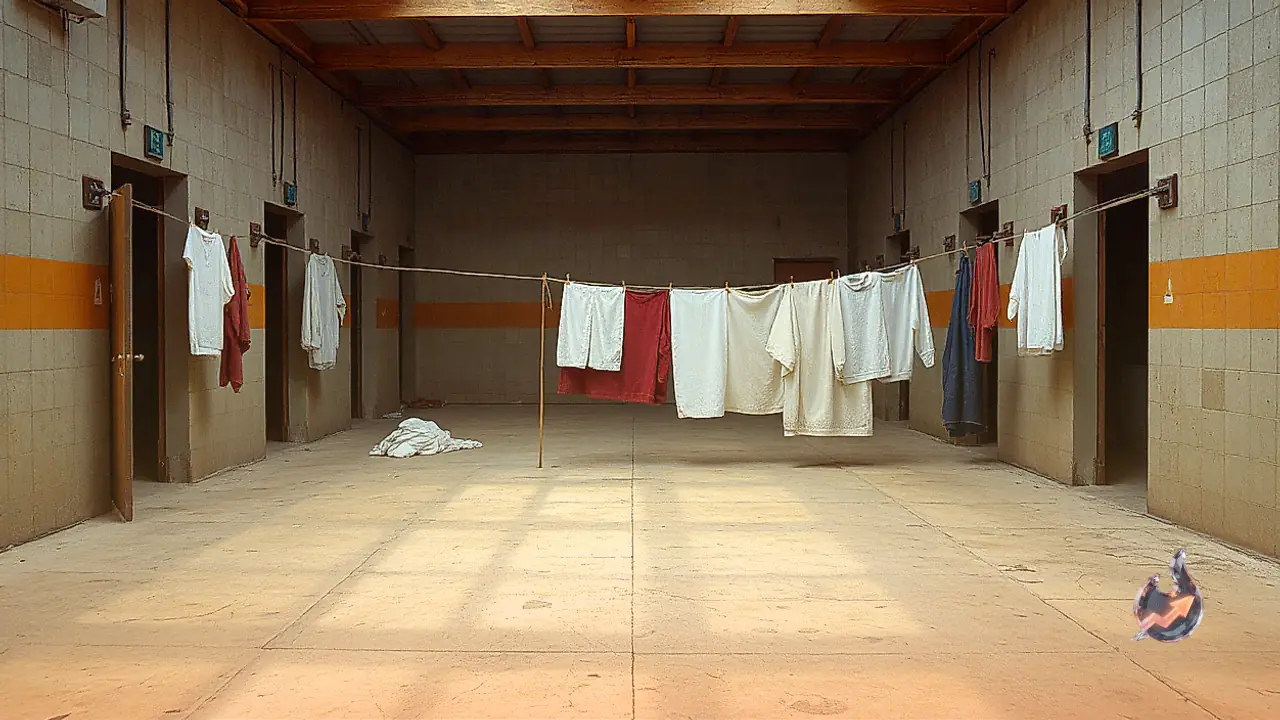
Before pinning a towel onto a clothesline or placing it on a drying rack, grasp it firmly by the edges and give it one or two brisk, vigorous snaps in the air. This quick action serves an important purpose: it shakes out severe creases, straightens tangled fibers, fluffs up the pile, and allows air to penetrate the interior spaces between the cotton loops. When positioning the towel on a drying rack or wire, spread it out across its entire width rather than letting it bunch up in the middle. Crowding towels onto tiny wall hooks or door pegs creates thick, clustered folds where moisture stays trapped for days, generating stubborn mildew. If your drying rack offers sufficient space, drape the towel across two parallel bars rather than just one. Dual-bar draping prevents the damp inner surfaces from clinging together, creating an open tunnel beneath the fabric that encourages continuous air movement. Furthermore, keep a noticeable gap between the towel and adjacent hanging clothes so that moving air can circulate unobstructed around all surfaces.
Harnessing Natural Sunshine While Managing Ambient Humidity
Whenever practical, select an open and airy outdoor spot for line drying. Sunlight provides natural thermal energy and helps eliminate moisture-loving microbes, but sunlight alone should not be viewed as a substitute for thorough washing and complete moisture evaporation. Proper cleaning and total dryness are equally vital. When setting up a drying rack on a balcony or patio, pay attention to the surrounding architecture. Ensure that high solid parapets, adjacent walls, or closely spaced hanging curtains do not choke off passing breezes. If you observe that the outer face exposed to the elements has dried while the inner, sheltered face remains cold and damp, flip the towel over to balance the drying process. In regions prone to evening temperature drops, bring line-dried linens indoors before twilight sets in. Lingering outdoor dampness and evening dew can easily re-saturate fabrics that had nearly reached full dryness during the sunny afternoon hours.
Best Practices for Drying Linens Indoors
During relentless downpours or freezing winter spells when outdoor drying becomes impossible, indoor drying must be managed strategically. Position your clothes drying horse in an area of the room that enjoys the highest degree of natural air exchange, such as near a doorway or open balcony entrance. When outdoor weather allows, crack a window open slightly to let humid indoor air escape and fresh air circulate. Running an overhead ceiling fan creates air currents across the surface of the hanging laundry, which accelerates the rate of moisture evaporation. However, running a fan inside a tightly sealed, clammy room without any fresh air inlet will merely circulate stale humidity without truly drying the linens. Never drape saturated towels directly over soft furnishings such as mattresses, sofas, or polished wooden furniture, as trapped moisture will ruin upholstery and foster wood mold. Similarly, never drape wet towels directly over electrical space heaters or convective radiators to speed up drying, as doing so presents an immediate and severe fire hazard.
Addressing the Root Cause Through Washer Hygiene
Spraying fragrant fabric mists, perfumes, or deodorizing room sprays over a damp-smelling towel is entirely ineffective. Chemical fragrances merely cover up the odor for a brief spell, and when the artificial scent mingles with underlying mildew, the resulting stench becomes far more nauseating. The only genuine solution is to wash the fabric thoroughly, rinse away every trace of soap, and allow it to dry down to the core. Always consult the product's care tag to verify the maximum permissible washing temperature, using warm water whenever allowed. If your towels consistently emerge with a foul odor right out of the wash, the problem likely resides within the washing appliance itself. Over months of regular use, detergent sludge, lint, mineral deposits, and black fungal grime accumulate behind the rubber door gasket, inside the slide-out detergent dispenser drawer, and along the outer drum walls. Consult the manufacturer's manual to sanitize the machine, wiping down the door gasket and scrubbing the soap drawer clean. Never mix different commercial cleaning chemicals together arbitrarily, as combining incompatible substances can generate dangerous fumes.
Confirming Complete Dryness Before Folding and Storing
A towel can feel reasonably dry on its broad, flat surfaces while still retaining substantial pockets of moisture within its thick bound hems, woven borders, and corner seams. If you fold a towel and tuck it into a dark, closed wardrobe while those dense edges remain even slightly damp, that hidden moisture will slowly spread through the folded fabric. Within days, the entire closet will take on an unpleasant musty stench, contaminating dry garments stored nearby. Before packing clean linens away, run your hands along the thickest borders, double-stitched hems, and corners, pressing firmly to feel for any residual coolness or dampness. Only after you are completely confident that not a single damp fiber remains should the towel be neatly folded and stored inside an airy, dry cupboard. Observing these simple, methodical laundry habits ensures your bath linens remain consistently fresh, soft, and inviting year-round.