
While looking at a traditional Hindu panchang, people often notice days where two tithis overlap, or a single tithi stretches continuously across multiple days. While one tithi might be active in the morning, another takes over by evening, often creating confusion regarding the exact dates for religious fasts and festivals. Unlike the standard Gregorian calendar where dates reset precisely at midnight, panchang tithis follow an entirely different mechanism.
Solar and Lunar Positions Determine the Tithi
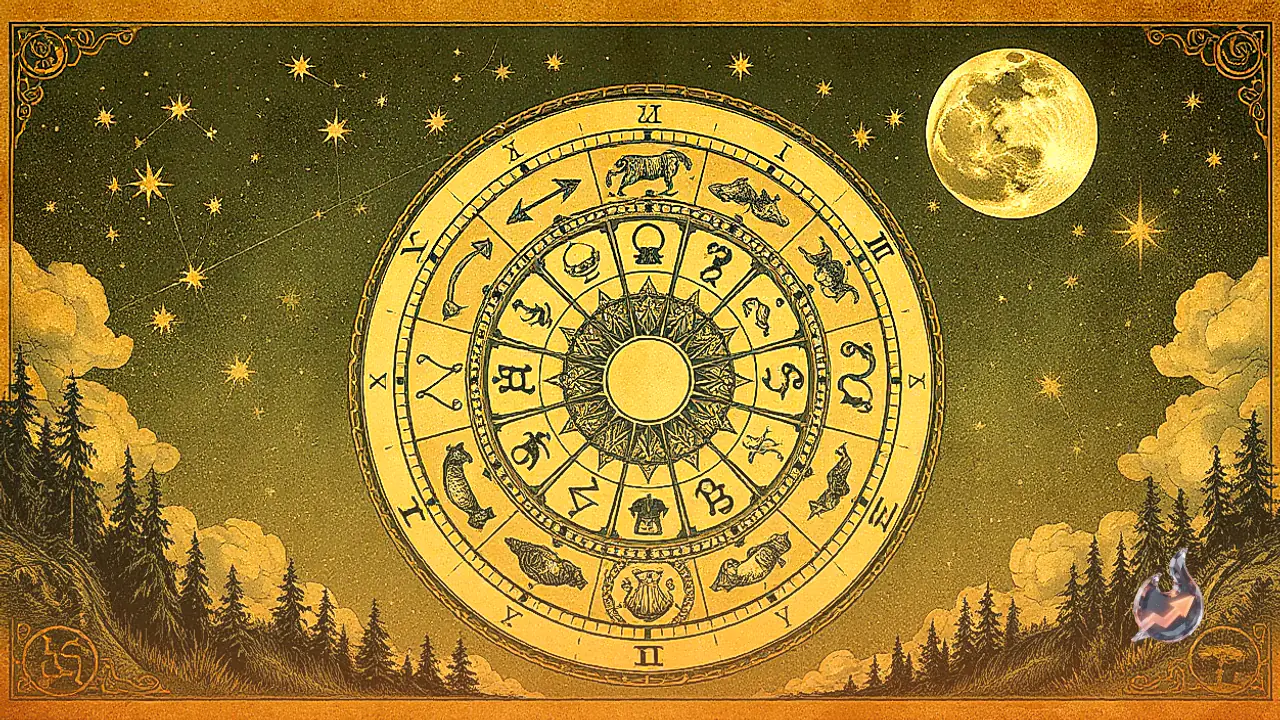
While Western calendar dates shift uniformly at midnight, tithis in the Hindu calendar have no fixed duration. Their calculation depends entirely on the angular distance between the sun and the moon in the sky. When the distance between the sun and the moon increases by 12 degrees, one tithi is completed and the next one begins. Based on this continuous cycle, a lunar month comprises 30 tithis, neatly divided into 15 tithis each for the waxing phase known as Shukla Paksha and the waning phase known as Krishna Paksha.
Why Every Tithi Is Not Exactly 24 Hours Long
The duration of a tithi is never uniform because of the varying speeds of both the sun and the moon. As the moon orbits the Earth, its position keeps shifting relative to the sun. During this movement, the rate at which the distance between the two celestial bodies increases also fluctuates constantly. Because of this natural variation, some tithis can conclude in less than 24 hours, while others can stretch beyond a full day. Consequently, a morning that starts with Panchami tithi might transition into Shashthi by the afternoon or evening of the same day.
How Two Tithis Fall on the Same Calendar Day
To understand how this works in practice, suppose Panchami tithi is active at the time of sunrise on a particular day. By afternoon, Panchami concludes and Shashthi begins. In such cases, two separate tithis fall within the same calendar day. Traditional panchang systems generally consider the tithi active at sunrise as the primary tithi for that day, while also noting the exact timing when it ends and the subsequent tithi commences.
Understanding Tithi Vriddhi and Extended Durations
Sometimes, a tithi begins before one sunrise and continues to remain active past the following sunrise, causing it to appear on the panchang for two consecutive days. This phenomenon is known as tithi vriddhi. For instance, if Ashtami tithi is active during sunrise on both Monday and Tuesday, the panchang will display Ashtami for both days. This occurs whenever the duration of a specific tithi stretches beyond 24 hours.
Why Certain Tithis Disappear from the Calendar
On the other hand, there are instances where a tithi begins and ends entirely within the gap between two successive sunrises, meaning it is not present during sunrise on any day. When this happens, that specific tithi does not appear as a distinct day on the calendar, a condition referred to as tithi kshaya. For example, if Chaturthi is active at sunrise on one day and Shashthi is active at sunrise the next, it indicates that Panchami arrived and elapsed entirely within that intervening period.
The Importance of Tithis in Fixing Festival Dates
In Hindu traditions, numerous fasts and festivals are observed according to panchang tithis rather than fixed Gregorian calendar dates. While certain festivals require observing the tithi present at sunrise, others demand the presence of a specific tithi during auspicious ritual timings. Because of these distinct astrological requirements, the rule for determining the exact date of every festival varies based on precise calendrical calculations.