


















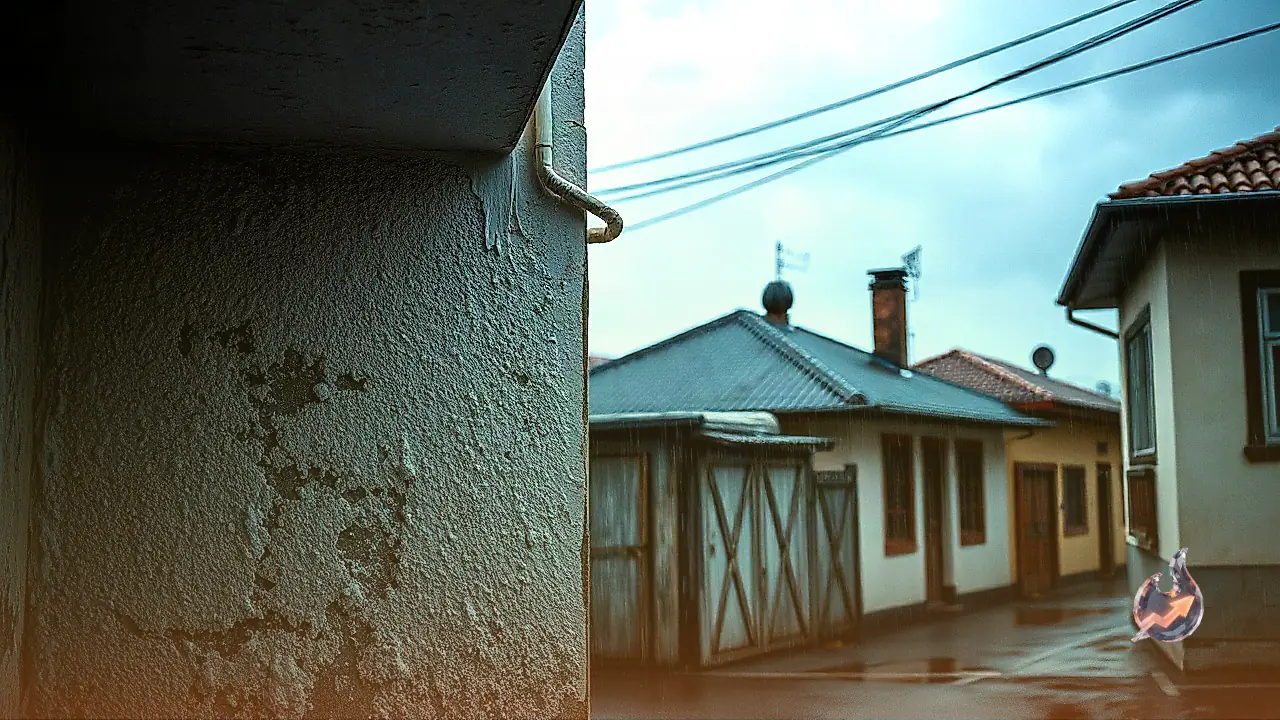

When a strange white powdery layer suddenly appears on house walls following a rainy spell, the immediate assumption is often that the paint has gone bad or the cement is deteriorating. Discovering this shortly after a fresh coat of paint can be quite frustrating for homeowners, but fortunately, it does not always signal a compromised or weakened wall structure.
This entire phenomenon is scientifically known as efflorescence. It occurs when soluble salts present deep within the wall travel alongside moisture all the way to the outer surface, leaving behind white deposits once the water evaporates. During the monsoon season, high humidity and moisture levels make this process much more visible. However, simply brushing away the white layer and forgetting about it is rarely the right approach, as it frequently masks persistent dampness, hidden leaks, or faulty waterproofing.
How the White Powder Travels from Inside the Wall to the Outside
Bricks, cement, and plaster may look completely solid to the naked eye, but they actually contain a vast network of extremely tiny pores. When rainwater, persistent seepage, or a leaking pipe forces its way through these microscopic pathways into the wall, the water dissolves various soluble salts along the way. This moisture gradually moves toward the exterior surface of the wall. As the water emerges into the open air and evaporates, the dissolved salts are left behind, forming a white powder or crust as they dry out.
Does This White Layer Actually Weaken Your Walls?
Jumping to the conclusion that a wall has become structurally weak simply by looking at a white residue is inaccurate. In many instances, efflorescence is primarily a surface-level issue that does not cause immediate structural damage. However, if the white powder keeps returning repeatedly, the paint begins to bubble, the plaster starts crumbling, or the wall remains damp for extended periods, it should not be ignored. Continuous moisture can eventually degrade building materials and affect other parts of the home over time.
Why This Problem Becomes Much More Noticeable During the Rains
External walls are subjected to constant rainfall and high humidity throughout the monsoon season. If a wall features minor hairline cracks, substandard waterproofing, or poor drainage, the likelihood of water penetrating deep inside increases significantly. This is precisely why these white marks suddenly become much more prominent after the rain stops. Older buildings tend to experience this issue relatively more often, especially in areas where exterior plaster or waterproofing has not been repaired or maintained for a long period.
White powder on walls is not caused exclusively by rain. Leaking pipes, bathroom seepage, ground moisture rising upwards, poor drainage systems, and soluble salts inherently present in construction materials can all act as triggers. Therefore, looking merely at the white stains makes it difficult to pinpoint exactly where the water originates, making it essential to inspect adjacent areas, the condition of the paint, and the overall state of the plaster.
Why Simple Cleaning and Repainting Is Not the Right Solution
Many individuals immediately scrape off the white layer upon noticing it and apply a fresh coat of paint over the area. While this makes the wall look clean temporarily, the white deposits will inevitably return if the source of moisture remains unaddressed. The better approach is to identify the source of water first. If water is entering from an exterior wall, inspecting cracks and waterproofing becomes necessary. If the moisture stems from plumbing or a bathroom, fixing the plumbing issues is vital.
If the white layer is accompanied by recurring bubbling or peeling of paint, softening plaster, persistently damp walls, widening cracks, or repeated white marks in the exact same spot, consulting a professional specialist for a thorough inspection is strongly recommended.