
















Middle-earth is home to numerous terrifying creatures lurking within its darkest corners. Beyond cave trolls, Balrogs, Orcs, and the tortured figure of Gollum, few figures evoke as much dread as the Ringwraiths. Immortalized in Peter Jackson's film adaptations of The Lord of the Rings, these fearsome ghouls were once mortal men corrupted by the nine rings of power. As the third season of The Lord of the Rings: The Rings of Power focuses on Lord Sauron, played by Charlie Vickers, asserting his dominance during the Second Age, viewers will finally witness how these iconic spectral antagonists came into existence.
Understanding the Nazgnagôl: The Linguistic Origins of Sauron's Servants
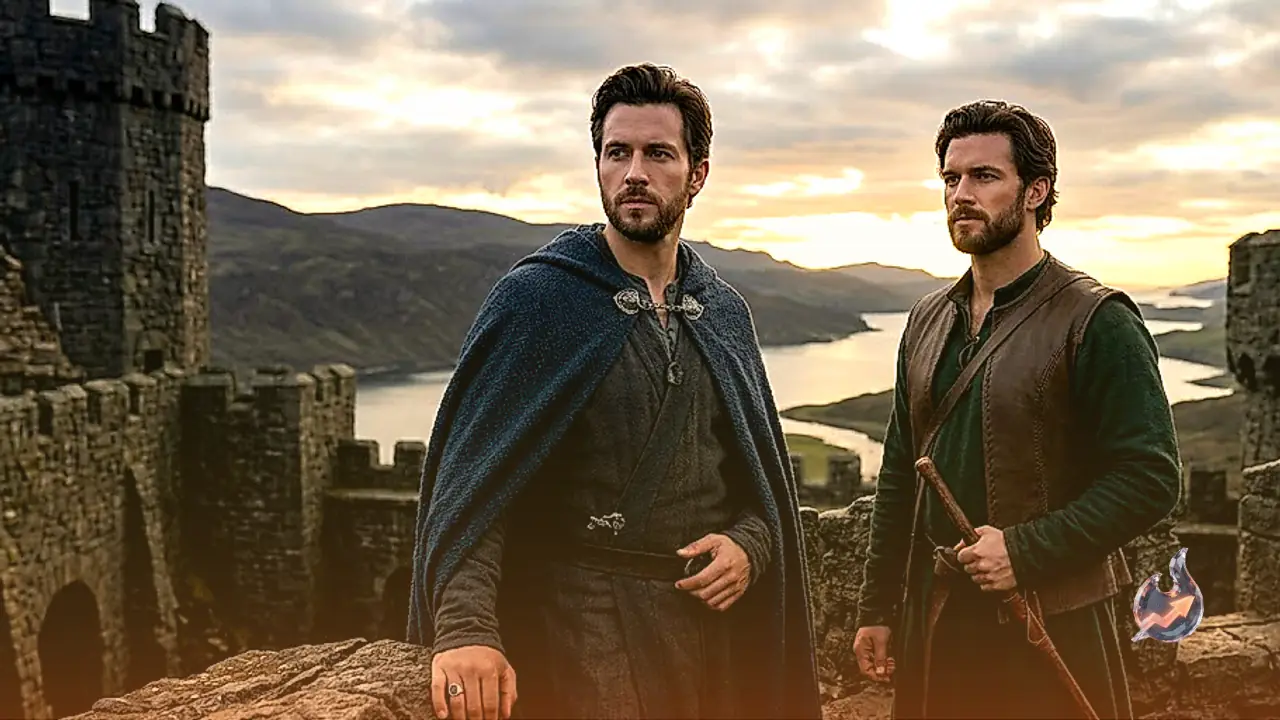
In the upcoming third season, these figures are not yet fully transformed spectral wraiths. Instead, they are introduced as the Nazgnagôl, representing an earlier human stage in Sauron's service. Driven by an unyielding desire for authority and status, these men actively align themselves with the Dark Lord before their humanity is completely stripped away.
To craft this proto-iteration of the Ringwraiths, showrunners J.D. Payne and Patrick McKay turned to J.R.R. Tolkien's meticulous linguistic framework. Payne explained that Tolkien consistently used language as the primary scaffold around which his grand mythology was constructed. While the term Nazgûl translates to Ringwraith in the Black Speech of Mordor, the showrunners recognized that these beings were originally ordinary men. Payne noted, "So we were able to derive in the Black Speech that 'nagôl' could mean 'servant'." Through this linguistic derivation, the term Nazgnagôl was created, translating literally to Ring-servant.
Khamûl the Easterling and the Corruption of Mortal Men
Among these newly introduced Ring-servants is Khamûl the Easterling, brought to life by actor Zubin Varla. Tolkien lore establishes that Khamûl is destined for eventual inhumanity, following a tragic arc of spiritual and physical erosion. Reflecting on this tragic downfall, Varla explained that the Nazgnagôl undergo a trajectory remarkably similar to Gollum's experience. Varla stated, "Evil begets evil, and violence begets violence." He noted that as corruption takes hold, their souls and physical bodies are slowly hollowed out until virtually no tangible form remains.
Despite their eventual horror, the Nazgnagôl do not view themselves as villains. Showrunner Payne emphasized that "Every character stays the hero of their own story." From the perspective of Khamûl, he considers himself a formidable warlord worthy of wearing a crown, whose legitimate rule was wrongfully usurped by a dark wizard. When Sauron approaches him with promises of restored authority, Khamûl sees a welcome opportunity to reclaim his rightful place at the top, serving as a grim reminder that some offers ought to be refused.
Production Insights and Global Release Date
The upcoming season offers a sweeping exploration of Sauron's manipulative tactics as he works toward forging the One Ring. Showrunners Patrick McKay and J.D. Payne, alongside key cast members including Charlie Vickers, Morfydd Clark, Robert Aramayo, Daniel Weyman, and Zubin Varla, have shared deep insights into the narrative direction of this epic Middle-earth saga.
Fans eager to return to Middle-earth will not have to wait much longer to see the rise of Sauron and the origins of his most devoted servants. The Lord of the Rings: The Rings of Power Season 3 is scheduled to begin streaming globally on Prime Video from November 11.