



















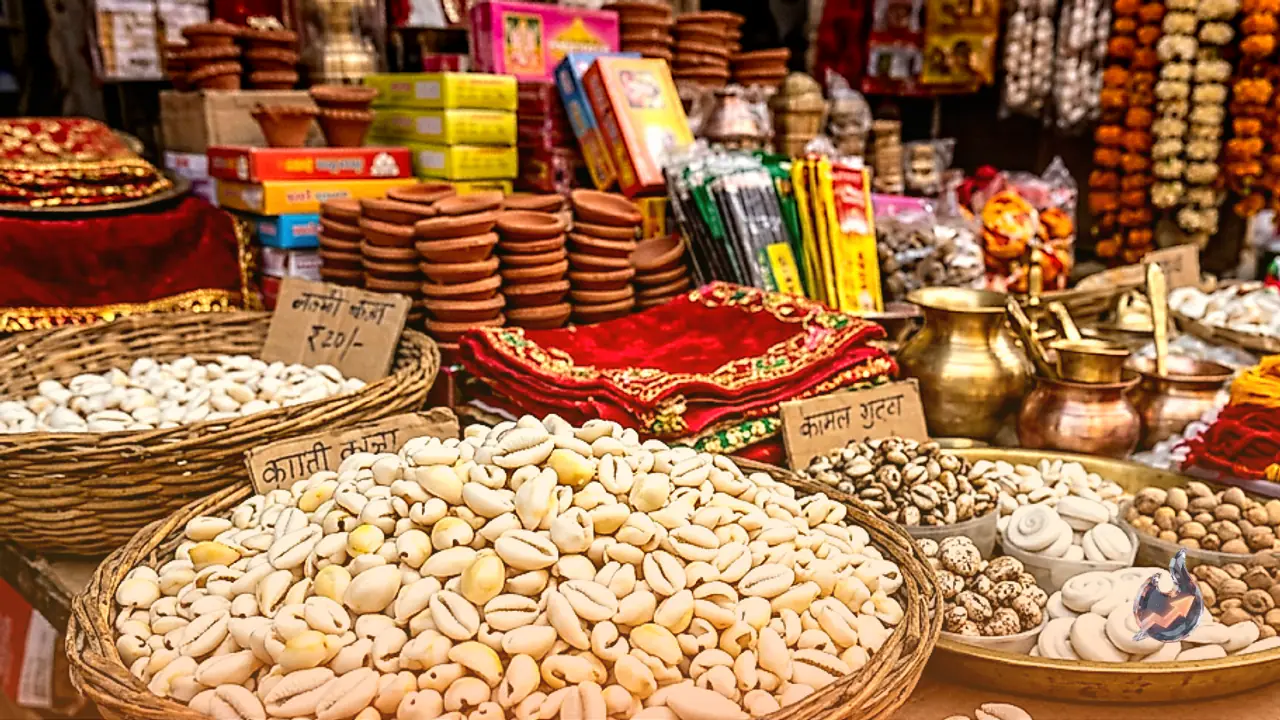

Kaudis, which once served as a primary form of currency, are currently witnessing significant demand across markets in Dehradun. Historically, the cowrie shell is regarded as one of the oldest mediums of exchange in the world. Before the Mughal era in India and until the 18th century in several African and Asian countries, kaudis functioned as the main currency. In traditional beliefs, they are considered a symbol of Goddess Lakshmi, making their purchase during Diwali highly auspicious and believed to attract wealth. People continue to seek them in large numbers to place in their home shrines and cash safes.
The Historical Calculations of Ancient Currency
Jyotirvid Sanjay from Dehradun explained that when a medium was needed for the barter and exchange of goods, the use of kaudis came into practice. He noted that it is recognized as the earliest form of currency in history. Referencing common historical idioms, he pointed out that people often use phrases about not receiving even a broken kaudi for their labor. Looking at the historical monetary breakdown, three broken kaudis were equal to one kaudi. Following that, 10 kaudis equaled one damdi, two damdis equaled one dhela, one dhela equaled one and a half paisas, three paisas made one paisa, and four paisas made one anna.
Symbol of Positivity and Prosperity
The kaudis being sold in local markets carry deep cultural significance beyond their monetary past. The expert stated that they hold immense importance during Diwali and are sometimes even used in the foundations of buildings during construction. They are traditionally tied around the waist of young children to ward off the evil eye. These shells bring prosperity and positive energy into households, and people also store them inside their lockers. According to traditional practices, they can be worn above the waist in specific quantities such as 11, 21, or 51 for personal protection.
Finding a Kaudi on the Road Signifies Good Fortune
Explaining further applications, the astrologer mentioned that kaudis can be utilized for ensuring safe travels. If someone happens to find a kaudi lying on the road during a journey, they are considered fortunate, as it is believed to enhance one's happiness and prosperity. Due to these traditional beliefs, the demand for procuring them for prayer rooms and lockers remains steady among people.