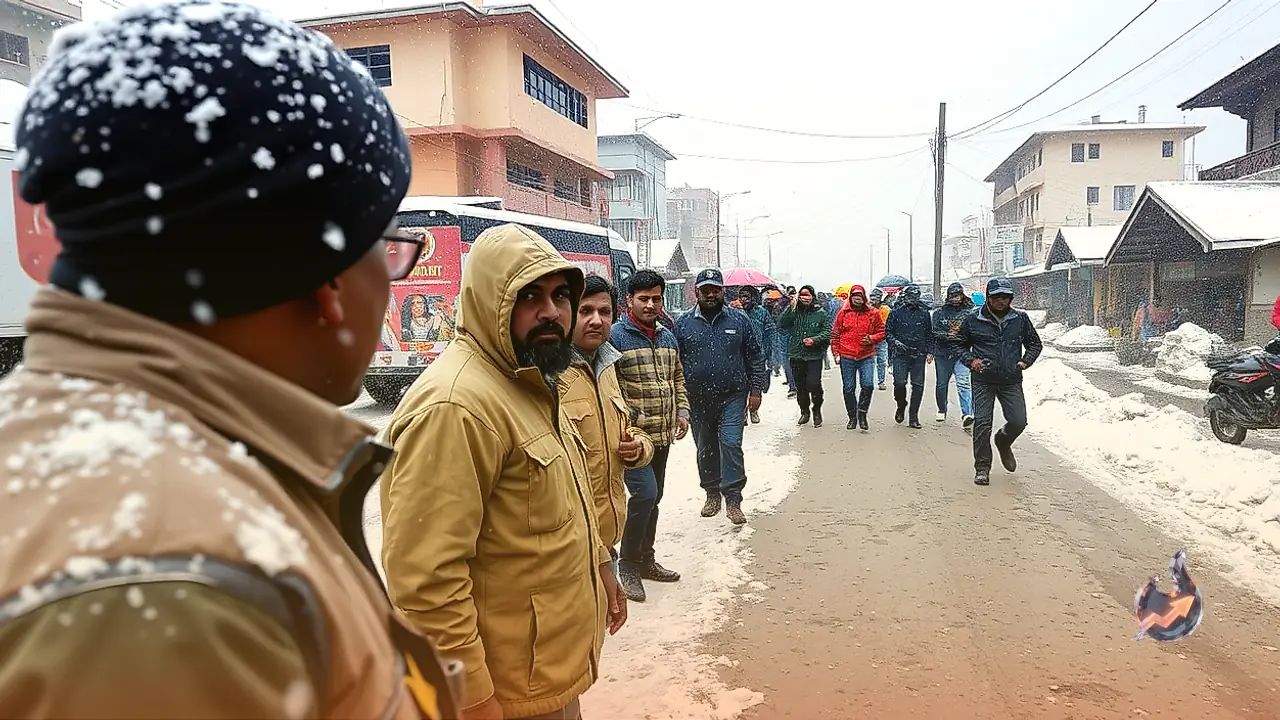

























A sudden and violent shift in atmospheric conditions brought daily life to a complete standstill across Haridwar on Friday morning. With the monsoon season having already receded and mild pre-winter chill beginning to set in, dense dark clouds unexpectedly enveloped the city sky. Within minutes, intense torrential downpours commenced, accompanied by an unusually heavy barrage of large hailstones. The sheer suddenness of the storm caught morning commuters, drivers, and local residents completely off guard.
The intense ferocity of the falling hail sparked immediate panic on the roads. Because the hailstones were large and crashing down at dangerous velocity, pedestrians and motorists scrambled for safety, taking shelter inside commercial storefronts and covered corridors to prevent serious physical injury. Within mere minutes, primary roads, intersections, and neighborhood alleys were entirely carpeted in thick deposits of white hail, creating a visual appearance reminiscent of heavy winter snowfall in a hill station and halting vehicular movement across the city.
Extensive Vehicle Damage and Plummeting Temperatures
The heaviest direct financial toll from the storm fell upon automobiles and two-wheelers parked out in the open along roadsides. Large falling hailstones shattered the windshields and window panes of numerous cars, leaving them completely smashed. Multiple two-wheelers also sustained severe structural and body damage, inflicting substantial repair expenses on vehicle owners. While the intense deluge caused a steep drop in mercury that eliminated lingering muggy humidity, the disaster-like hail severely disrupted local transit and normal urban functioning.
Meteorological Triggers Behind the Off-Season Storm
The occurrence of such extreme hail long after the seasonal retreat of the monsoon has raised questions regarding atmospheric instability. According to weather analysts, several interrelated environmental drivers converged to create the violent weather event.
Influence of Active Western Disturbances: Even after the formal monsoon departure, active Western Disturbances sweeping through northern India and adjacent mountain belts frequently inject sudden moisture and freezing conditions into upper air columns. When warm ground-level air rises rapidly and meets this freezing overhead air mass, intense atmospheric condensation takes place at rapid speed, causing the formation of dense, oversized hailstones.
Formation of Cumulonimbus Clouds: Localized thermal disparities between daytime surface heating and sudden pressure gradients in the upper troposphere catalyzed the rapid growth of massive cumulonimbus cloud structures. These specific storm clouds are inherently responsible for violent squalls, cloudburst-like rain, and dangerous hailstorms.
Shifting Climate Patterns: Environmental specialists highlight that global warming and broader climate change are fundamentally disrupting established weather cycles. Severe weather is no longer confined to traditional seasonal windows; instead, erratic and off-season extreme weather occurrences are escalating in both frequency and destruction.
Threat to Agriculture and Forecast Ahead
Beyond paralyzing urban road networks and damaging property, the ferocious hailstorm in Haridwar poses an immediate threat to remaining agricultural crops in surrounding rural belts. Such unexpected impacts demonstrate that regional weather patterns across foothill and plains belts are likely to exhibit sharp volatility in the days ahead. Weather authorities have advised the general public to maintain caution, noting that escalating ecological imbalances necessitate greater vigilance against unpredictable meteorological developments.