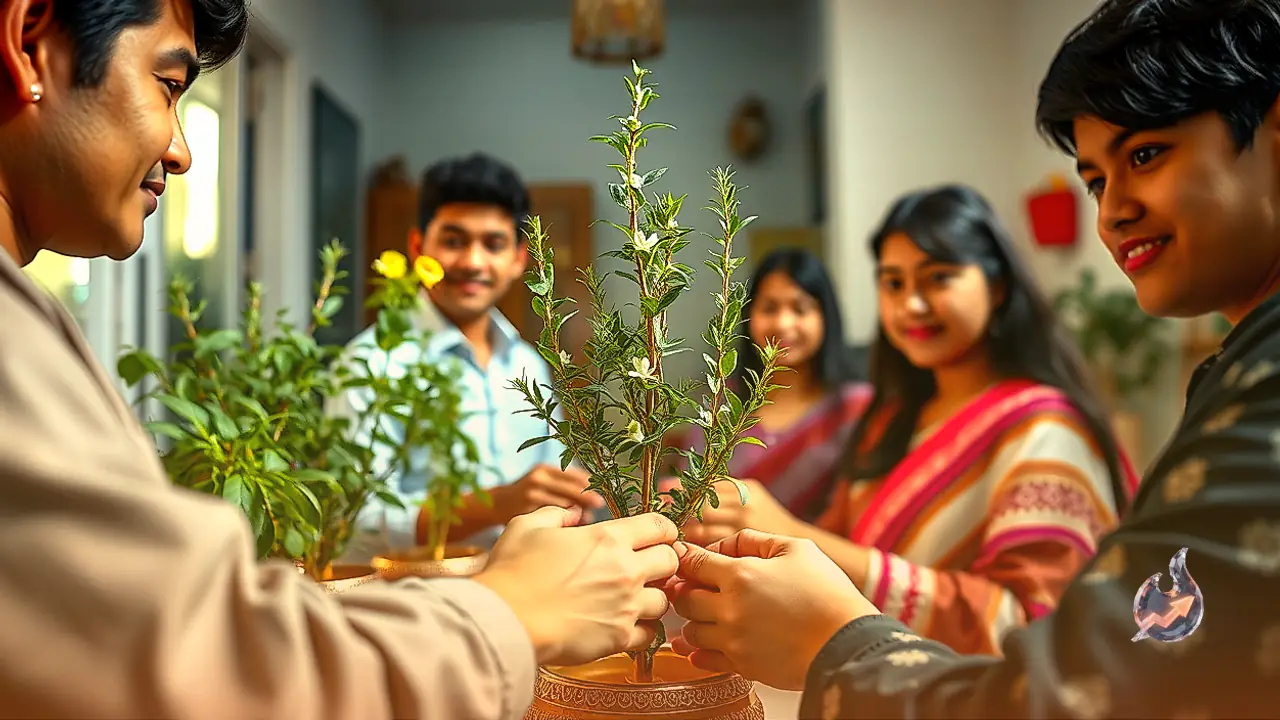























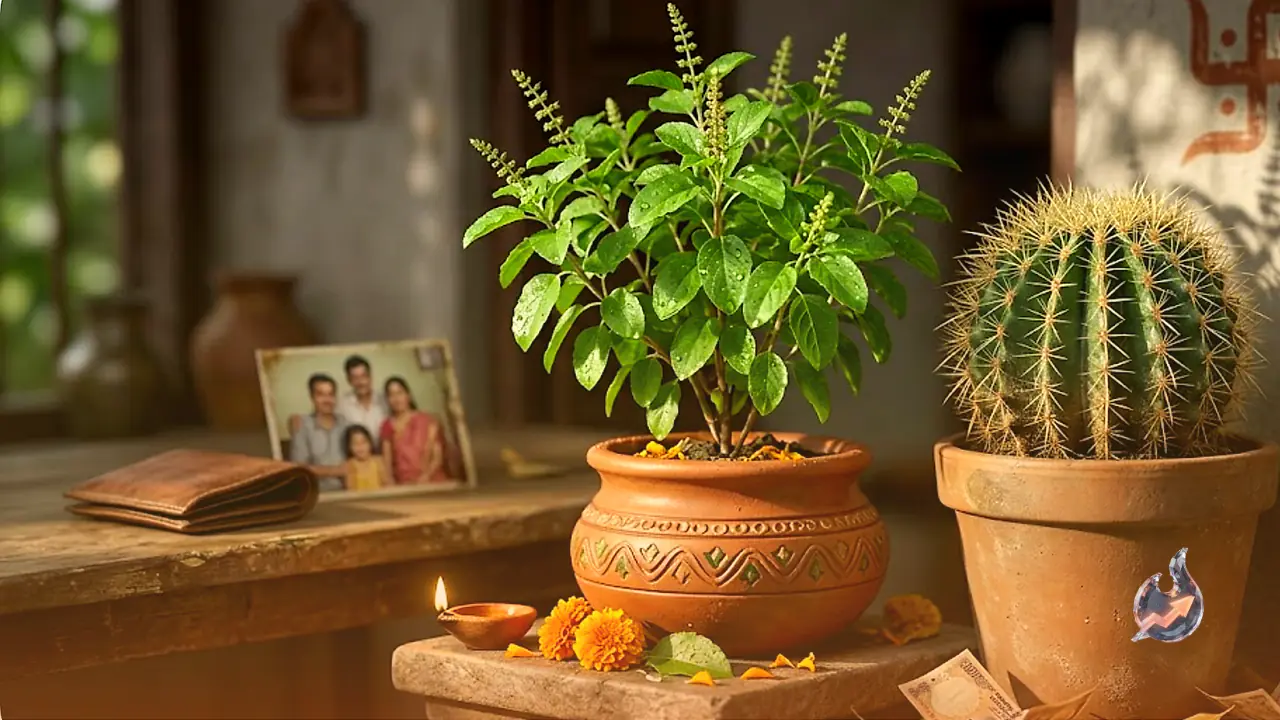

Tulsi, or holy basil, is one of the most sacred plants found in Hindu households and is believed to fill a home with positive energy. But according to Vastu Shastra, simply keeping a Tulsi plant is not enough, what grows right next to it matters just as much. Certain plants placed too close to Tulsi are said to disturb the balance of energy in a home, and this imbalance is linked to financial trouble and friction among family members.
Keep the Shami plant at a distance
Vastu experts advise against placing Tulsi and the Shami plant together or too close to each other. The belief is that keeping these two plants side by side can trigger money problems in the household. If a home has both plants, it is suggested to maintain a gap of at least 4 to 5 feet between them.
Bael and Tulsi carry different energies
The Bael plant is associated with Lord Shiva, while Tulsi is considered dear to Lord Vishnu. Astrological belief holds that the energies tied to these two plants are not alike, which is why they are not recommended to be grown near one another.
Thorny plants disrupt the balance
Cactus and other thorny plants have become popular as home décor, but Vastu does not consider it auspicious to keep them near Tulsi. It is believed that thorny plants placed close to Tulsi block the positive energy the plant is meant to bring in, leading to more stress and negativity inside the home.
Avoid citrus plants like lemon
Vastu beliefs also caution against growing citrus plants such as lemon near Tulsi. Doing so is said to affect the home's positive energy and create obstacles in financial matters.
Stay away from latex-producing plants
Some plants release a milky white sap when their stems or leaves are broken. Such plants are strongly advised against being kept near Tulsi. According to Vastu, their presence can increase negativity and tension within the family.
Jasmine should also be kept apart
Jasmine is another plant that Vastu suggests should not be planted right next to Tulsi. Astrological belief holds that the planetary energies linked to jasmine and Tulsi differ from each other, and placing them close together is said to create a Vastu imbalance.
The right direction to place Tulsi
According to Vastu Shastra, the northeast corner of the house, known as the Ishan corner, is considered the most auspicious spot for a Tulsi plant. It should be kept where it receives adequate sunlight. Placing Tulsi in a dark or damp spot is believed to weaken its auspicious effect, so sunlight and open space are important factors to keep in mind.
These beliefs are rooted in religious faith and folk tradition, and there is no scientific evidence to support them.