



















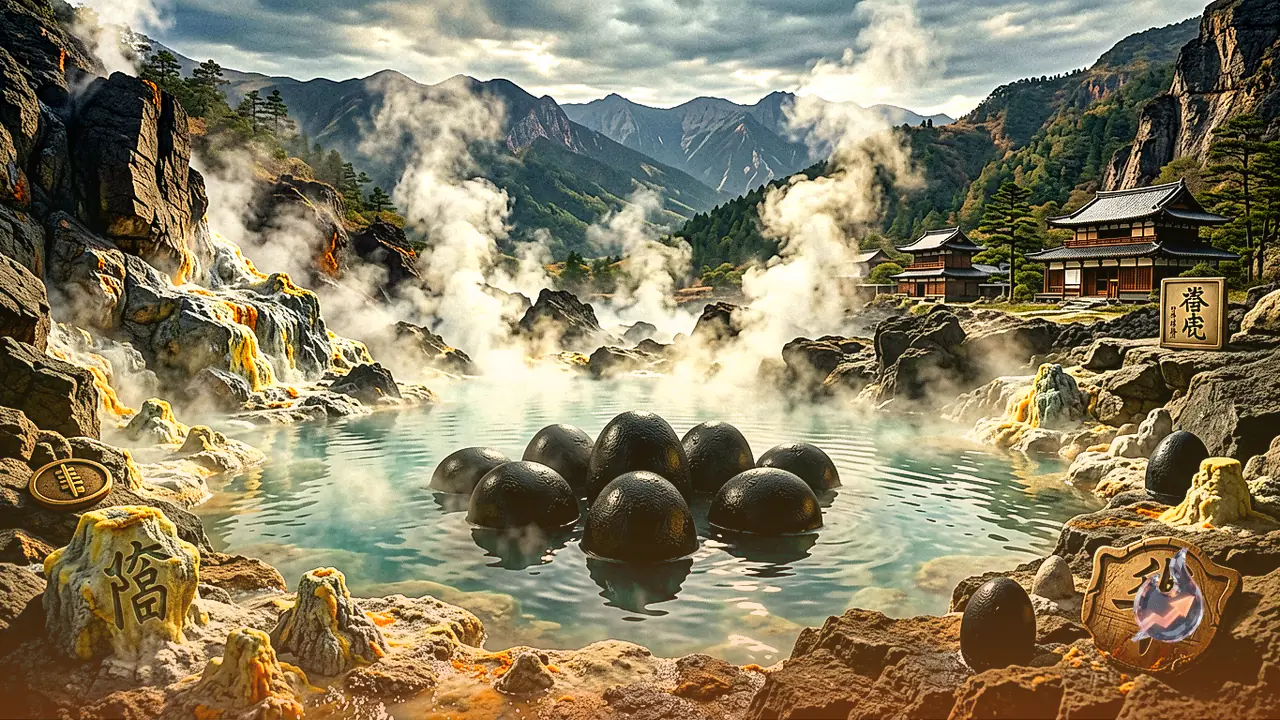

Deep within the mountainous terrain of Kanagawa Prefecture in Hakone lies a steaming, sulfurous landscape that looks remarkably like the edge of the underworld. Known locally as Owakudani, which translates to the Great Boiling Valley, this active volcanic zone is a stark contrast to the serene cherry blossoms and futuristic metropolises typically associated with Japan. Visitors stepping into this region are immediately greeted by roaring vents of scalding water, heavy white smoke, and the pungent aroma of sulfur hanging thickly in the air.
The Mystery Behind the Famous Black Eggs
Despite the intimidating environment, Owakudani draws countless travelers eager to witness its most famous culinary tradition known as kuro-tamago, or black eggs. These are ordinary chicken eggs boiled directly in the region s natural hot springs, which are heavily saturated with iron and sulfur compounds. As the eggs cook, the minerals react chemically with the calcium carbonate shells, turning the outer surface pitch black while leaving the inner white and yolk completely normal and safe to eat. According to local folklore, consuming just one of these sulfur-cooked eggs adds seven years to a person s lifespan.
Thousands of Years of Volcanic History
The dramatic topography of Owakudani was forged approximately 3,000 years ago during a massive phreatic eruption of the Hakone volcano that blew apart a significant portion of the mountain. That ancient cataclysm released immense subterranean pressure and exposed boiling hydrothermal fluids to the surface. Even millennia later, the underground heat engine remains active, venting superheated steam and gases continuously. Over the decades, engineers have constructed heavy concrete barriers and retaining walls across the slopes to mitigate ongoing landslide risks posed by the unstable terrain.
Historical Guardians and Safety Regulations
Centuries ago, around a thousand years back, the revered Japanese Buddhist monk Kobo Daishi visited the steaming ravines and erected a protective statue known as the Enmei-Jizo to safeguard travelers from the harsh elements and perceived hazards of the land. Visitors still frequent the area today to offer prayers for health and longevity near the historic site. Because of its volatile nature, the valley experiences periodic safety shutdowns. In May 2015, heightened volcanic tremors and gas emissions forced authorities to close the tourist zone entirely before reopening it in April 2016 with strict perimeter restrictions preventing visitors from approaching the most active sulfur vents.
Cultural Prominence in Anime and Pop Culture
Owakudani enjoys a legendary status beyond tourism, holding a cherished place in Japanese popular culture and animation. The acclaimed anime series Neon Genesis Evangelion and its manga adaptations prominently feature the mist-shrouded ravines and sulfuric landscapes of Hakone in key narrative sequences. For dedicated fans of the franchise, visiting the actual valley has become a pilgrimage. The combination of intense geothermal activity, local folklore, and pop culture footprint ensures that this dramatic valley remains one of Japan's most fascinating destinations.