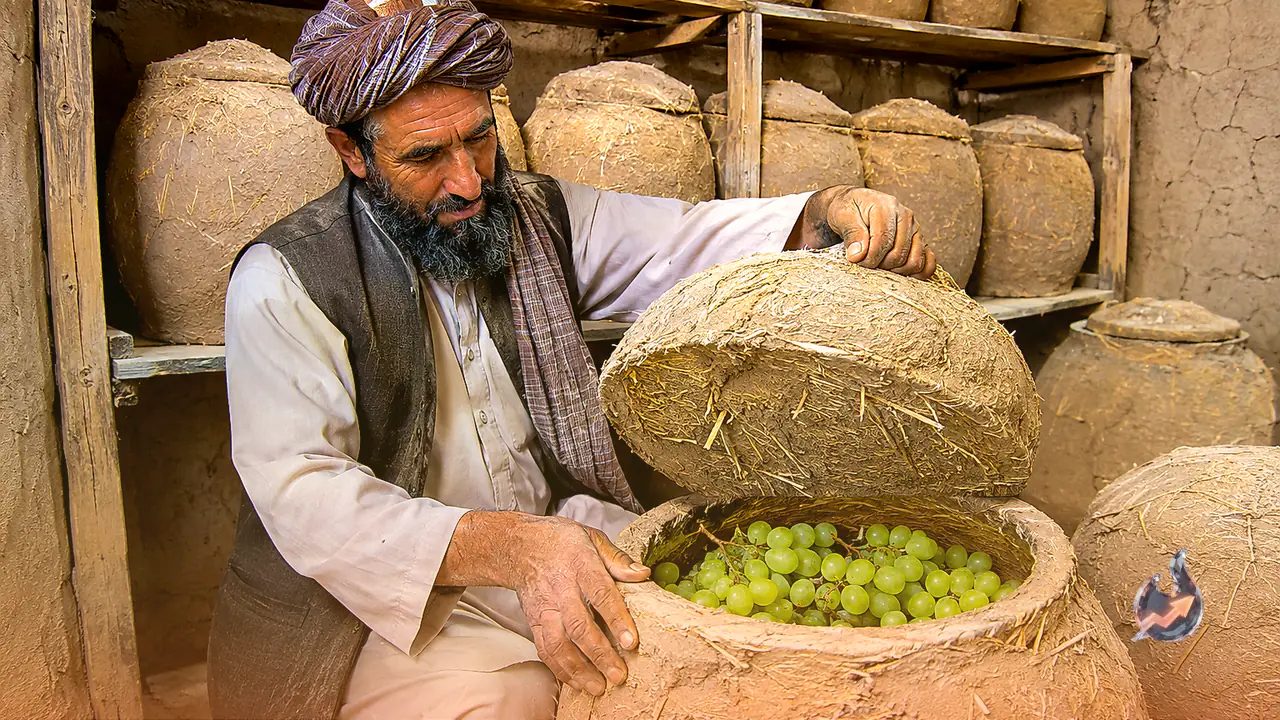

On the outskirts of the Afghan capital Kabul, a traditional agricultural preservation method continues to defy modern storage limitations by keeping harvested grapes fresh for months without any electricity or refrigeration. When winter temperatures drop and fresh produce becomes scarce, families like that of Mohammad Saber Shojai rely on special containers crafted from mud and straw to preserve their harvest. Known widely as Kangina, these vessels ensure that the stored grapes remain sweet and edible well into the spring months spanning from March to May.
Mud and straw vessels protect the harvest
Operating in the Kalakan district of Kabul, the 47-year-old farmer Mohammad Saber Shojai maintains numerous Kangina sets around his property. These unique dome-shaped plates are made by binding mud and straw together to create an airtight seal that protects the fruit from ambient air and moisture. Shojai inherited this specialized knowledge from his father, preserving childhood memories of gathering around a traditional heater known as a sandali during chilly evenings to share fruit pulled directly from these earthen containers. The preservation process involves placing a layer of grapes inside one dish, sealing a matching cover on top with mud, and storing the sealed units safely inside a dark room.
Overcoming modern cold storage limitations
During the peak harvesting season, Afghan markets overflow with abundant grape yields. While large quantities are packed into heavy plastic bags and shipped to distant commercial hubs for immediate sale, local growers still face major hurdles when attempting to store surplus yields over extended periods. Modern cold storage infrastructure remains severely limited across Afghanistan, making high-tech preservation largely inaccessible for everyday agricultural workers.
Weather adds to the seasonal tradition
Although the labor-intensive nature of the Kangina method prevents it from solving large-scale commercial export challenges, it remains a vital seasonal practice for rural households and orchard owners. Residents living near the grapevines can easily purchase sealed containers from local vendors or roadside stalls. Community members often wait for the winter season's first snowfall or rainstorms, as cracking open a fresh Kangina during inclement weather offers a cherished culinary tradition that has endured for generations.