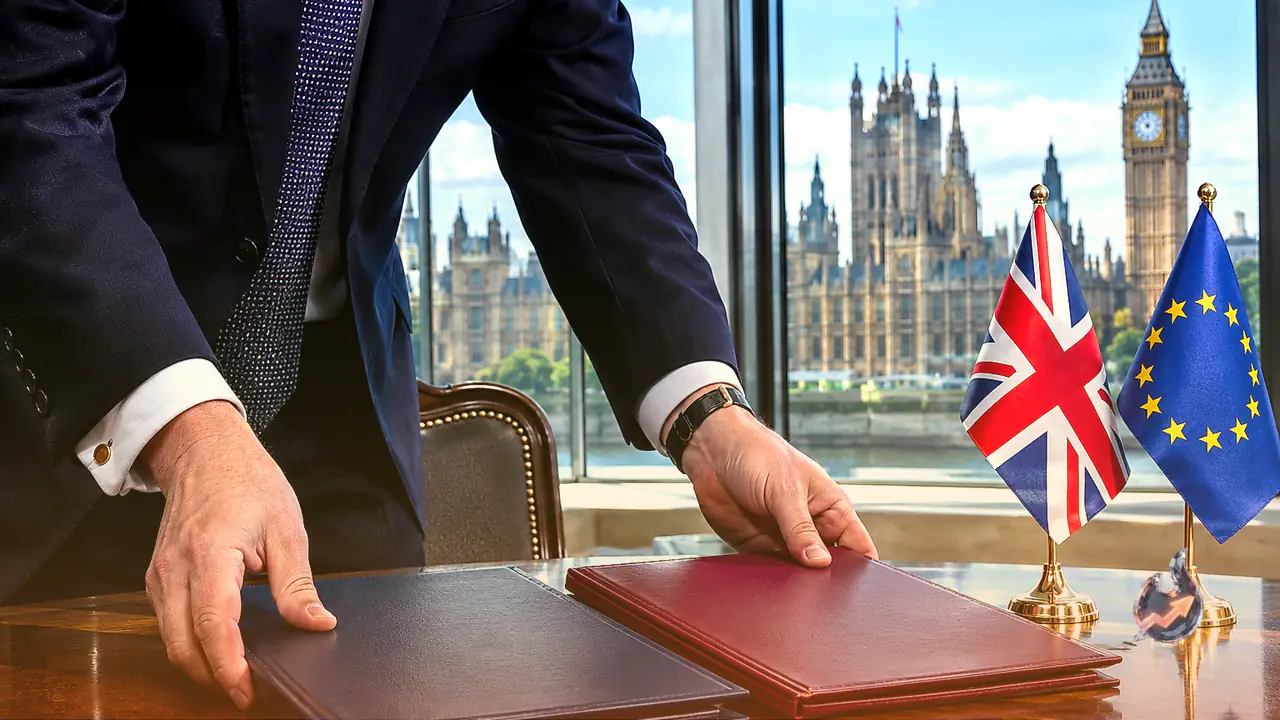

The British government and the European Union are preparing to release the official texts of two bilateral treaties agreed upon as part of a post-Brexit diplomatic reset. These legal documents will be published alongside primary legislation designed to implement the core components of the agreement. The unveiling of the pact has immediately triggered intense domestic debate regarding its financial costs, long-term trade benefits, and the future trajectory of UK-EU relations.
Overhauling Food Exports and Border Regulations
Under the terms of the new agreement, British agricultural exporters are slated to become major beneficiaries through the elimination of cumbersome bureaucratic red tape and the dismantling of various border inspection facilities. Internal governmental forecasts project a 16 percent surge in agricultural exports as a direct result of these streamlining measures. However, detailed scrutiny of the treaty texts reveals a 10-year termination clause stipulating that if either participating party chooses to terminate the pact, they would bear the financial responsibility of rebuilding the border inspection infrastructure that is currently being scaled back.
Political Backlash and Parliamentary Debate
The Brexit reset has already drawn sharp criticism from political opposition figures across the spectrum. Opposition leader Kemi Badenoch stated unequivocally that she would scrap the deal entirely if given the opportunity, while Reform UK leader Nigel Farage suggested he would refuse to pay associated costs. Meanwhile, senior political figures like Andy Burnham defended the broader direction of the government, though he faced pushback from several former prime ministers who urged politicians to avoid reopening deeply divisive European Union debates from the past.
Carbon Trading and Ministerial Legislative Powers
The released legal texts also outline specific frameworks detailing how the United Kingdom will observe and influence relevant European regulations without possessing voting rights. Plans are underway to link the British and European emissions trading schemes, which will extend regulatory coverage across the nation's maritime and aviation sectors. Furthermore, the accompanying legislation details the use of secondary powers, granting ministers direct regulatory authority to align domestic laws with European standards while minimizing extensive parliamentary oversight.