























If the world’s most powerful navy were measured solely by the total number of vessels, Beijing would hold the top spot today. According to the latest data, China’s fleet consists of 405 active warships, whereas the United States maintains a fleet of 232. Yet, the 2026 World Directory of Modern Military Warships (WDMMA) Naval Power Ranking still keeps the United States in the number one position, with China ranked second. The crucial question remains: how does the US retain its lead despite having fewer ships? The methodology behind the WDMMA ranking provides the answer.
The Math Behind the Ranking
As of 2026, the People’s Liberation Army Navy (PLAN) of China operates 405 active fleet units, compared to the 232 active vessels within the United States Navy (USN). The WDMMA clarifies that their ranking system is not based merely on raw numbers. Instead, it meticulously evaluates the overall military strength, existing vulnerabilities, and the balance of different warship categories within each nation's maritime force.
The American Edge
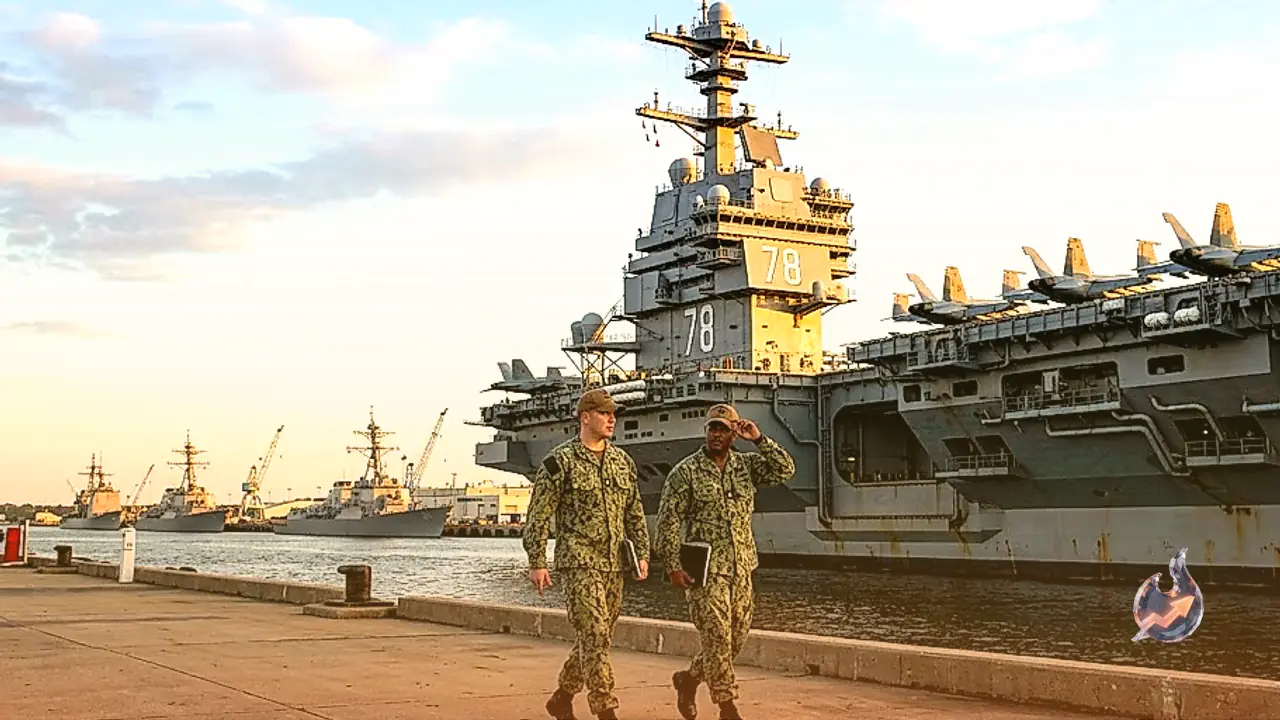
The WDMMA assigned the United States a TrueValue Rating (TvR) of 323.9, which slightly edges out China's TvR of 319.8. A primary pillar of US naval strength is its fleet of nuclear-powered aircraft carriers. Older Nimitz-class carriers are progressively being replaced by modern Ford-class supercarriers. Furthermore, destroyers account for approximately 30 percent of the US fleet, while submarines make up roughly a quarter of their strength, ensuring the US Navy is prepared for diverse tactical operations globally.
China's Rapid Expansion
China has pursued an aggressive expansion of its naval capabilities over the past few decades. The Chinese fleet now integrates advanced aircraft carriers, submarines, destroyers, frigates, corvettes, and amphibious assault vessels. Currently, China operates three aircraft carriers with two additional indigenous vessels planned for future deployment. With over 70 submarines and more than 40 frigates, China is adding naval capacity equivalent to the entire British Royal Navy on an annual basis, signaling a clear long-term goal of surpassing current global standards.
Structural Differences
The composition of the two fleets differs significantly. The American fleet of 232 ships includes 11 aircraft carriers, 68 submarines, 119 fleet core ships, and 34 amphibious assault ships. The WDMMA considers the US force balance to be "Good," meaning it possesses balanced capabilities across all critical mission categories. In contrast, China’s 405-strong fleet relies more heavily on Offshore Patrol Vessels (OPV), frigates, and corvettes. While China’s force balance is also rated as "Good," the US maintains a lead in high-end strike capacity and deep-water operational readiness.
Fleet Age and Future Outlook
There is also a stark difference in the age of the vessels. The average age of the US fleet is 31.1 years, while the Chinese fleet is significantly younger at an average of 19.2 years. To counter the rapid growth of the Chinese navy, the US has more than 65 warships currently under construction or on order, including new destroyers, submarines, and carriers. Conversely, China has 24 warships in the pipeline. Ultimately, the WDMMA ranking underscores that sheer volume does not dictate naval supremacy; the combination of ship classification, operational balance, and strategic architecture ensures that the United States remains the world's most powerful naval force in 2026.