



















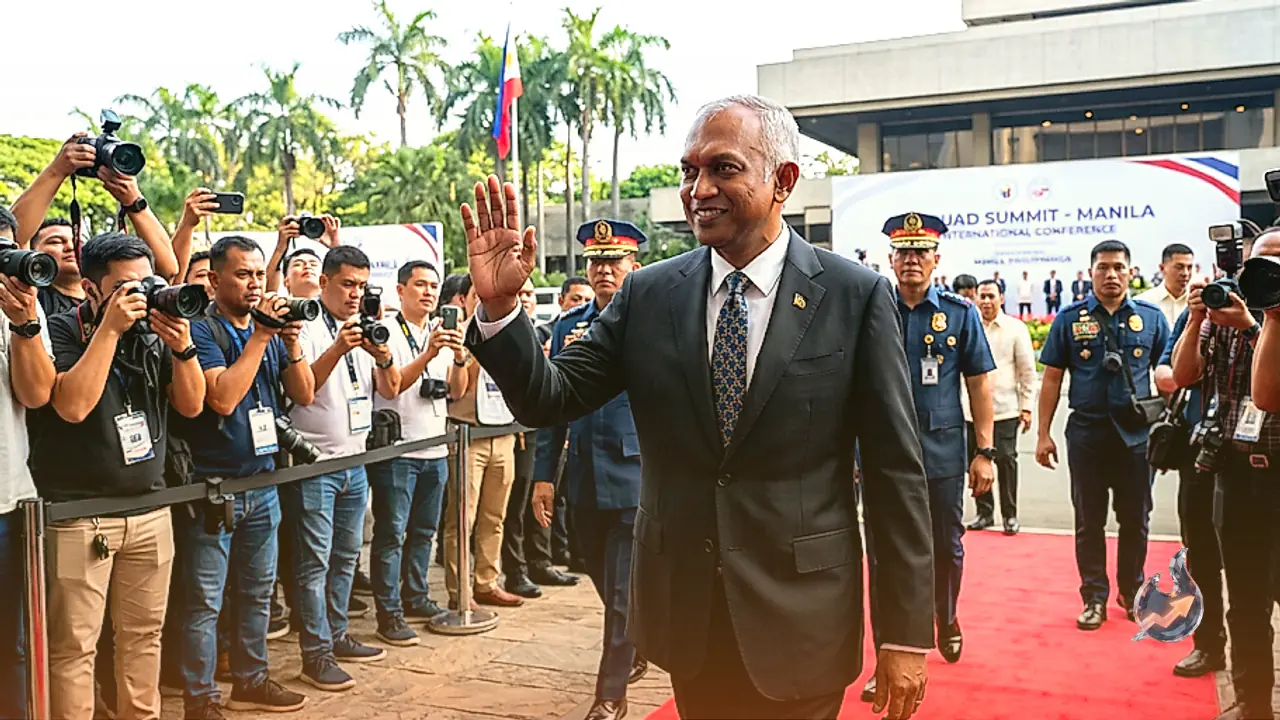

A unique diplomatic milestone is set to unfold as Indian Prime Minister Narendra Modi prepares to participate in the upcoming Quad Leaders Summit. While every other member nation within the four-country grouping has seen leadership changes in recent years, the Indian Prime Minister remains the constant figure who has attended every top-level meeting since the summit-level format was established. With this upcoming engagement, he will become the only world leader to have taken part in all seven Quad summits held so far, demonstrating India's sustained commitment and stability in regional diplomacy.
Manila to Host 7th Quad Summit on November 17
The seventh summit of the Quad leaders will take place on Tuesday, November 17, in Manila, the capital city of the Philippines. Although the physical venue is located in Manila, the high-profile gathering is being officially hosted by the United States. The summit will bring together the top leadership of India, the United States, Japan, and Australia to discuss vital regional issues, security cooperation, and shared economic objectives across the Indo-Pacific region.
Ending a Two-Year Gap in Top-Level Dialogues
The last Quad leaders summit was held on September 21, 2024, in Wilmington, United States. Since that gathering, no summit-level meeting of the four heads of state or government has taken place. Although foreign ministers of the member nations continued to meet in 2025 and 2026 to review ongoing initiatives, the top leaders had not assembled jointly. India was originally scheduled to host the summit in 2025, but the event could not take place due to scheduling mismatches and a lack of consensus on exact dates among the member nations. Similarly, no leaders summit materialized in 2026. Consequently, the upcoming Manila summit marks a crucial resumption of direct top-level dialogue after a hiatus of nearly two years.
Evolution from Disaster Relief to Strategic Coalition
The Quad coalition originated in response to the devastating Indian Ocean tsunami in 2004, when the four democratic nations initially joined hands to coordinate emergency relief and rescue operations. Recognizing the strategic value of this partnership, the group was elevated to a formal head-of-state level summit mechanism in 2021. Today, the primary objective of the Quad is to maintain peace, stability, security, and economic prosperity throughout the Indo-Pacific region.
Four Strategic Pillars Guiding Quad Cooperation
During the Manila summit, the four leaders will assess the progress made across key Quad initiatives and map out their future strategic roadmap. The coalition's core work is structured around four primary pillars: maritime security, economic prosperity and supply chain resilience, critical and emerging technologies, and humanitarian assistance with disaster relief. Under these broad pillars, member states are intensifying collaboration in maritime domain awareness, critical mineral supply chains, semiconductor development, artificial intelligence, cybersecurity, global health security, and emergency response capabilities.
Addressing Indo-Pacific Challenges and Supply Chain Security
The Manila gathering arrives at a critical juncture marked by intensifying strategic competition and rising challenges in the Indo-Pacific. Expanding maritime assertiveness by China, vulnerability in global supply chains, and rapid technological competition have heightened the need for collective action among democratic partners. Through this summit, the Quad aims to address the development priorities of regional partners while reinforcing a free, open, and resilient Indo-Pacific framework.