






















Global equity traders adopted a cautious stance at the start of the week as anticipation mounted ahead of quarterly earnings from semiconductor giant Nvidia and a scheduled initial public offering from AI startup Anthropic. Stock indexes across Asia presented a fragmented picture following disappointing macroeconomic updates from Tokyo and Beijing. While Japanese shares dipped on news of an unexpected economic contraction in the third quarter, South Korea's KOSPI recorded notable declines driven by persistent uncertainty around artificial intelligence valuations. Conversely, Hong Kong's benchmark Hang Seng managed to gain ground as investors stepped in to buy heavily discounted shares following recent market declines.
Japanese Economic Contraction Triggers Tokyo Market Decline
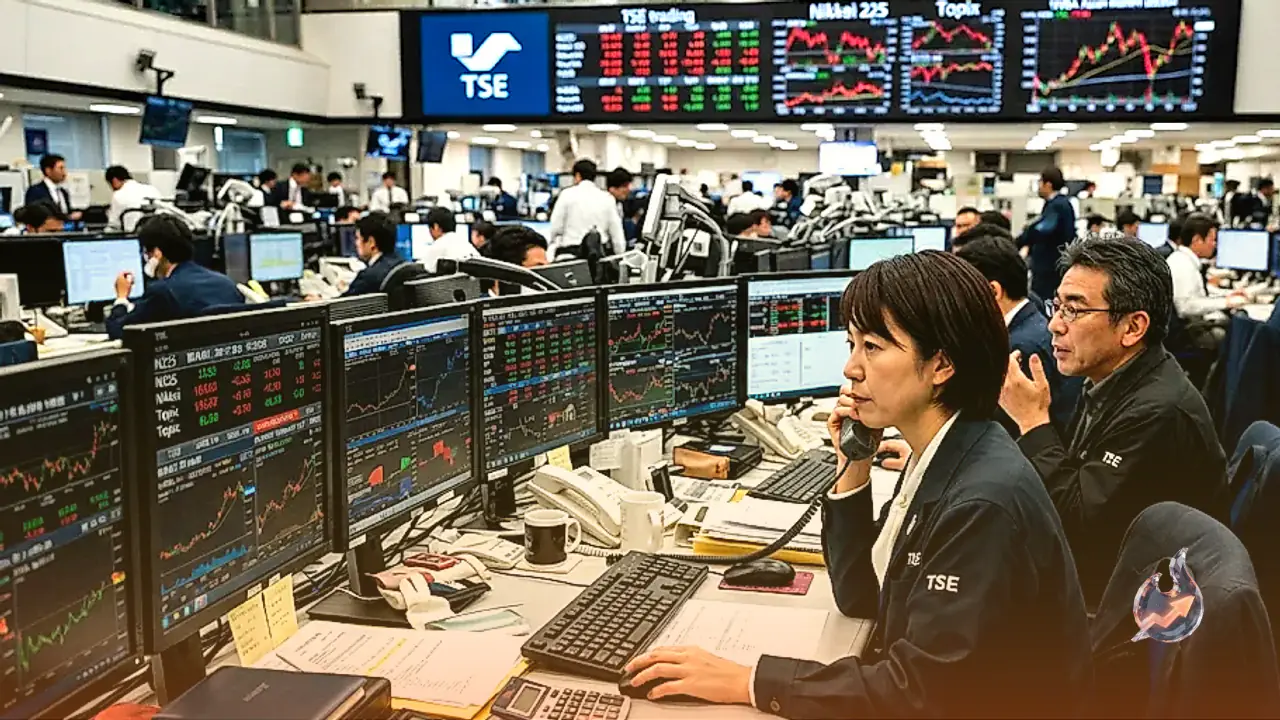
In Tokyo, the Nikkei 225 Index surrendered earlier gains as official preliminary figures revealed that Japan's gross domestic product shrank by an annualized 0.1% in the third quarter of 2026. The reading missed consensus estimates that had projected 0.1% growth, reversing the revised 1.7% expansion posted in the second quarter. Technology and hardware manufacturers bore the brunt of the market selloff, with Kioxia Holdings, Advantest, Ibiden, Lasertec, and Taiyo Yuden leading the decliners on the Tokyo exchange.
The macroeconomic picture in Japan showed some resilience in industrial activity. Industrial output increased by 2.0% month-over-month in September 2026. Although this fell slightly short of the flash estimate of 2.2%, it represented a significant rebound from the 2.4% contraction recorded in August, marking the strongest monthly growth pace recorded since January. Nevertheless, the contraction in overall GDP weighed heavily on broader equity sentiment.
Weak Chinese Retail Metrics Drag Shanghai as Hang Seng Rebounds
Stock benchmarks in mainland China also traded lower as market participants analyzed disappointing economic releases. China's retail sales grew by just 0.4% year-over-year in October, missing the 0.8% expansion expected by economists and trailing the 1.1% figure recorded in the prior month. Meanwhile, annual industrial production rose 4.8%, coming in below the forecasted 5.3% growth rate and down from 5.5% previously. Technology firms including Zhongji Innolight, Cambricon Technologies, and Eoptolink Technology were among the worst performers during the session.
In contrast, Hong Kong's Hang Seng Index advanced as market participants took advantage of lower equity valuations to re-enter positions. Market sentiment in Hong Kong was further bolstered by official commitments from Beijing to stabilize national financial markets, as well as optimism surrounding an upcoming summit between Trump and Xi scheduled for November 19 in Shenzhen. Gains in Hong Kong were widespread across multiple sectors, with financial institutions, software developers, consumer goods producers, and retail operators all registering price increases.
Forex, Commodities, and Crypto Markets Reflect Global Caution
Foreign exchange and commodity markets reflected the broader risk-off environment across global trading desks. The AUD/USD currency pair remained under pressure, consolidating near its lowest levels since January. As a liquid proxy for Chinese economic growth, the Australian dollar suffered from the disappointing retail and industrial metrics out of Beijing, alongside a generally firm US Dollar and heightened geopolitical tensions involving Iran. The pair struggled to regain momentum below the 0.6800 handle.
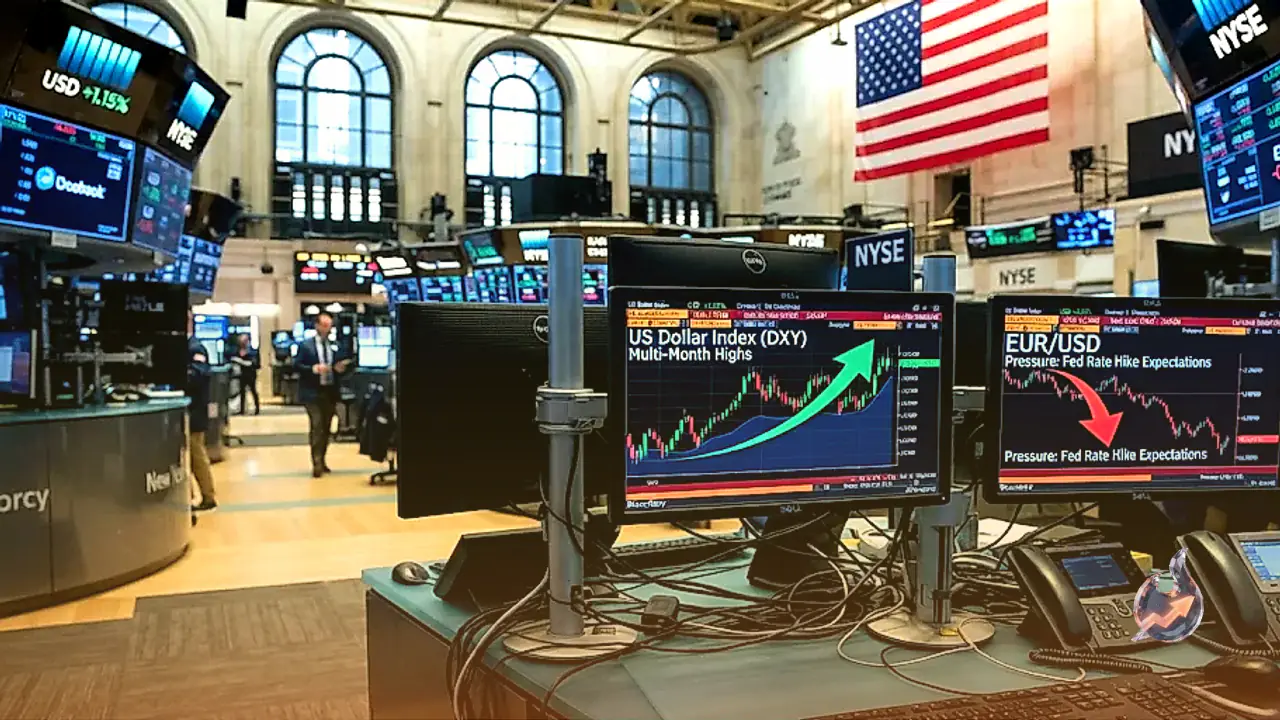
Meanwhile, USD/JPY drifted slightly lower toward the 159.50 level despite the negative Japanese GDP report, as market participants weighed the risk of foreign exchange intervention by official authorities to support the Yen. However, the US Dollar maintained strength near 19-month highs, sustained by expectations of elevated Federal Reserve policy rates and geopolitical risk premiums. In precious metals, Gold consolidated near $3,820 per ounce, close to October 2025 lows, as hawkish remarks from central bank officials and dollar strength created headwinds. In cryptocurrency markets, Bitcoin traded below $65,200 after hitting a low of $62,006 last week—its lowest point since mid-July. Capital outflows from spot Bitcoin Exchange Traded Funds reached over one billion dollars for a second consecutive week. Concurrently, US Treasury yields posted their sharpest weekly increase in over two years, and Nvidia shares endured their most severe weekly decline since the April 2025 tariff selloff.
Artificial Intelligence Landscape and Technological Architecture
The market focus on tech valuations comes amid an ongoing expansion of artificial intelligence across various industry sectors. At its core, artificial intelligence operates as an academic and engineering discipline aimed at recreating human cognitive functions, logical reasoning, perceptual capabilities, and pattern recognition within synthetic systems. The field encompasses several specialized domain areas, including artificial neural networks, machine learning algorithms, predictive analytics, symbolic reasoning, deep learning, natural language processing, speech recognition, image processing, and expert systems. The ultimate objective across these disciplines remains the realization of artificial general intelligence (AGI)—the creation of computational systems capable of solving novel problems without task-specific training.
Commercial applications for artificial intelligence have expanded rapidly across consumer and enterprise markets. Generative AI tools relying on large language models (LLMs) represent the most visible segment, with platforms like ChatGPT and Google's Bard providing conversational responses to text queries. Software programs such as Midjourney utilize text prompts to generate original imagery. In financial services, platforms like Upstart deploy machine-learning models to evaluate borrower creditworthiness by gathering data across online sources, financial profiles, and career histories. In life sciences, AI systems analyze vast chemical databases to identify promising candidate molecules for drug discovery. Additionally, digital content platforms such as YouTube, Spotify, and Facebook leverage recommendation engines powered by machine learning algorithms to personalize media feeds based on user interaction histories.
Hardware Infrastructure and Tech Bubble Valuation Dynamics
The physical infrastructure underpinning artificial intelligence applications relies heavily on hardware designers like Nvidia (NVDA). The company manufactures specialized graphics processing units and computing platforms that allow software engineers to build and deploy complex AI models. Because its hardware serves as a foundational component for AI deployment, industry analysts frequently characterize Nvidia as a central provider of the essential tools for the broader technology sector. In enterprise data analytics, Palantir Technologies (PLTR) supplies analytics platforms like Gotham, which is used by government intelligence agencies for pattern recognition, and Foundry, which enables commercial enterprises to perform predictive modeling on operational data. Meanwhile, Microsoft (MSFT) holds a significant ownership stake in OpenAI, the developer of ChatGPT, and has integrated OpenAI's algorithmic models directly into its Bing search platform.
Following the public release of ChatGPT in late 2022, equity valuations across the technology sector experienced a substantial rally. Nvidia shares appreciated by more than 200% within the six months following the launch. The rapid price appreciation prompted debate among Wall Street analysts regarding whether financial markets were experiencing a speculative technology bubble. Prominent investor Stanley Druckenmiller, who has held substantial equity positions in both Nvidia and Palantir, observed that financial market bubbles historically persist for longer than six months. He noted that if public enthusiasm for artificial intelligence developed into a true market bubble, elevated valuations would likely persist for at least two and a half years, drawing comparisons to the DotCom bubble of the late 1990s. By mid-2023, market metrics suggested valuations had not reached historic bubble extremes; while Nvidia traded at approximately 27 times forward sales, consensus forecasts anticipated robust multi-year revenue growth. At the peak of the late-1990s DotCom era, the NASDAQ 100 index traded at 60 times earnings, compared to a valuation multiple of 25 times earnings recorded in mid-2023.