


















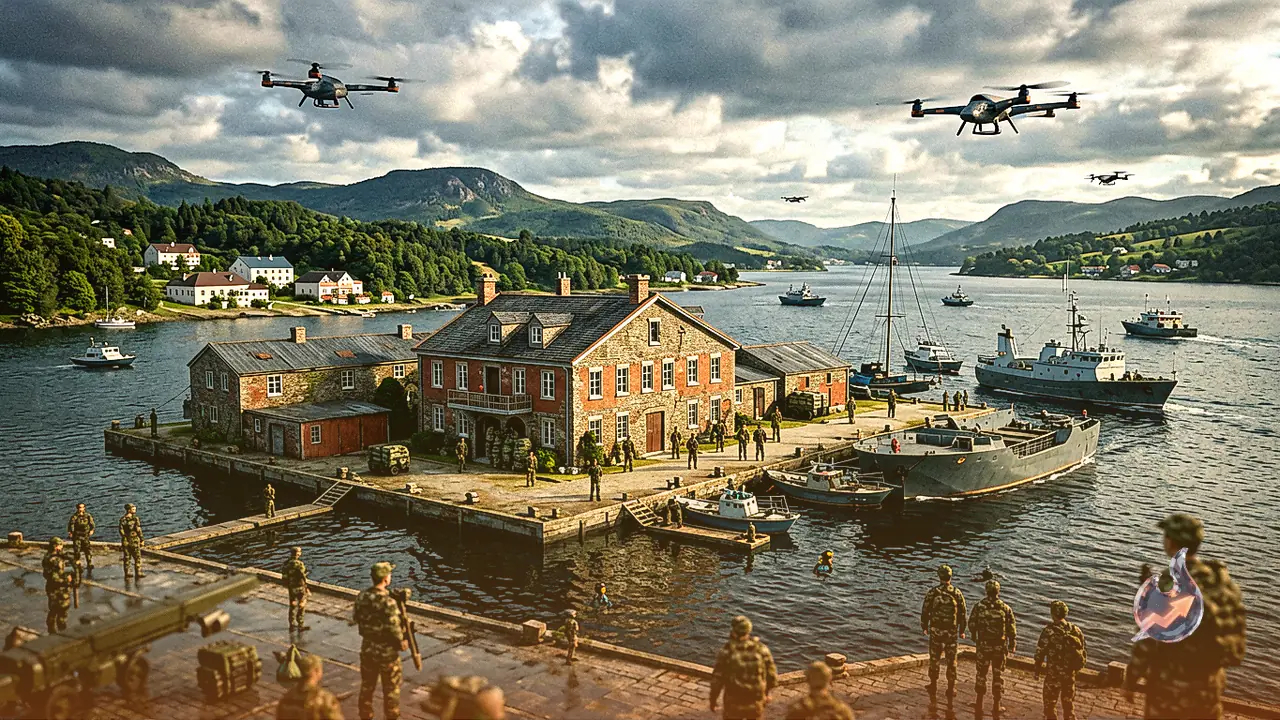

Sweden's armed forces have formally asked the government to expropriate a property owned by Russian interests located near a vital naval base, citing pressing national security concerns. The military's seizure request targets a scenic beach plot situated close to the Muskö base within the Stockholm archipelago, with officials explicitly pointing to potential risks stemming from Russian drones and complicated property ownership dynamics.
Strategic Importance of the Muskö Naval Base
The picturesque island of Muskö is not only a scenic location but also serves as the operational home for a major naval base critical to the nation's defense infrastructure. In their official request, military leaders emphasized that the targeted coastal plot offers unique conditions essential for reinforcing the defense capabilities of the Muskö Naval Base, particularly in terms of countering unmanned aerial vehicles. The rapid advancement of Russian drone warfare has fundamentally altered the threat landscape for Sweden, making tactical positioning around such sensitive military installations a top priority for defense planners.
Property Ownership and Ongoing Construction
According to reports by public broadcaster SVT, the estate has long proven to be a thorn in the armed forces' side. Investigative reporting indicates that a businessman with established links to the Russian state has been actively constructing a luxury house on Muskö island. Official property records show that the registered owner of the estate is his wife, who holds dual citizenship in both Russia and Sweden. While it remains unclear whether the Russian businessman is currently residing inside Sweden, records indicate that his wife has held ownership of the property since 2017.
Heightened Regional Tensions and NATO Alignment
Defense Minister Pål Jonson stated that the country must ensure there is no risk of anyone gaining visibility into the site or acquiring any kind of tactical edge, as reported by TV4. The armed forces' official statement further highlighted remarks from Chief of the Defence Staff Carl-Johan Edström, who warned that Sweden is currently facing the most serious security situation since the end of World War Two. This heightened security posture follows a historic shift in Swedish foreign policy two years ago, when the nation abandoned two centuries of military non-alignment to formally join NATO in the wake of Russia's full-scale invasion of Ukraine.