

















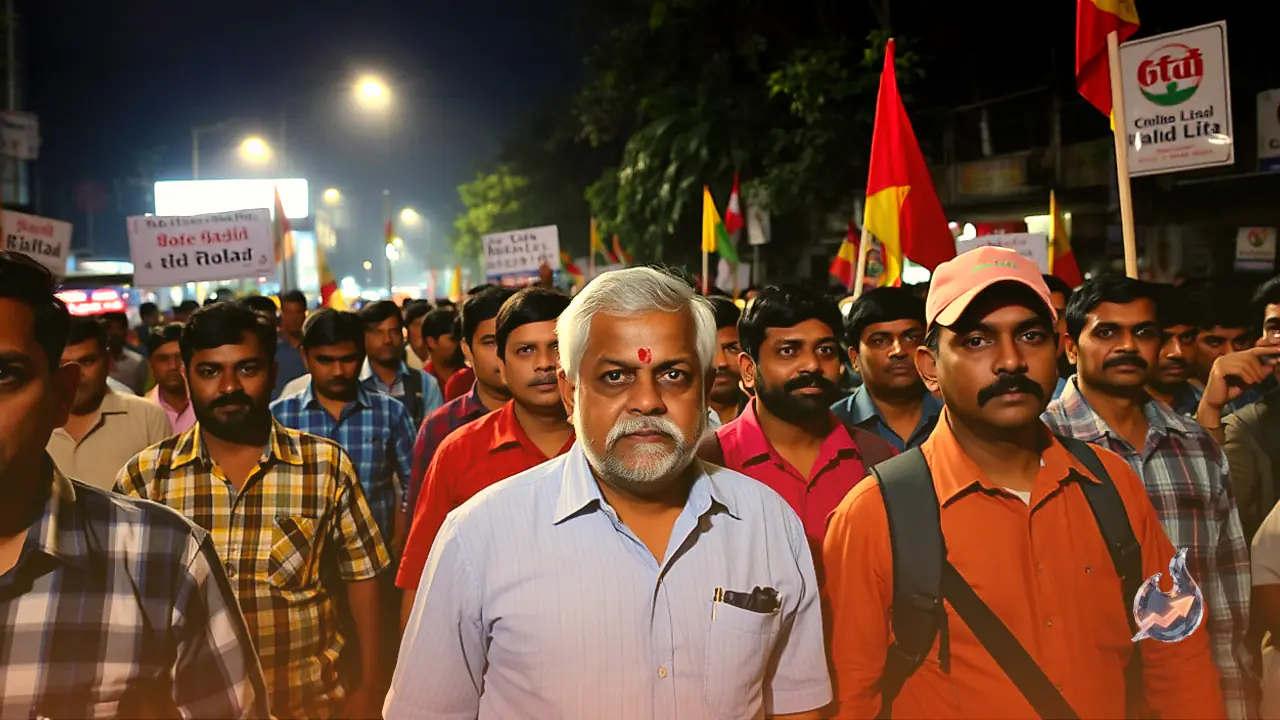

In the chronicles of the struggle for a separate hill state of Uttarakhand, the date of October 2, 1994, remains inscribed as an indelible and horrifying chapter. On that fateful day, thousands of passionate demonstrators set out from their hometowns with a unified goal: to gather at Jantar Mantar in New Delhi and raise a peaceful, collective voice demanding statehood. They traveled in buses and private vehicles, energized by the hope of shaping their own political and cultural future. However, their convoy was violently intercepted at Rampur Tiraha in Muzaffarnagar, Uttar Pradesh, where armed police opened fire on the unarmed demonstrators, leaving families shattered and extinguishing numerous young lives. For activist Ambuj Sharma, who was an integral member of that convoy, three decades have done nothing to dull the agony of that night.
Setting Out for Jantar Mantar with Shared Hopes
Reflecting on that historic mobilization, Ambuj Sharma recounts how activists from across the Himalayan hills were preparing to march toward the national capital on October 2, 1994. Convoy after convoy of buses, cars, and other transport were filling up with people eager to reach Jantar Mantar and demand statehood directly from the central government. The atmosphere along the departure routes was brimming with determination and camaraderie. None among the demonstrators could have anticipated that their journey would be derailed by such extreme brutality, or that they were heading straight into a terrifying scene that would haunt them for the rest of their lives.
Arriving into Panic and Gunfire at the Muzaffarnagar Checkpoint
Ambuj Sharma arrived at Rampur Tiraha in the pre-dawn darkness, around 3:30 to 4:00 AM. The scene that greeted him on arrival was complete pandemonium and horror. Bullets had already been fired by the security personnel, and bodies were being carried across the area in utter chaos. In the darkness and confusion, nobody could immediately identify who the victims were or how many had fallen. Vehicles carrying demonstrators from various parts of Uttarakhand were arriving in rapid succession, only to be engulfed in the escalating disorder.
People were desperately shouting, trying to locate their companions, and struggling to comprehend the scale of what had just transpired. Amid this frantic scramble, a severely wounded activist, struck by a bullet and bleeding heavily, came before Ambuj Sharma. Recognizing that every second was vital to save the young man's life, Sharma and fellow demonstrators resolved to transport him to medical care without any delay.
Rushing the Wounded in an Ambassador Car
Ambuj Sharma was driving an Ambassador car during the march. He immediately helped the gunshot victim into the vehicle and sped toward the nearest hospital. Upon examining the patient's critical injuries, local doctors realized that their facilities were inadequate to stabilize him and ordered that he be urgently referred to a tertiary hospital in Chandigarh. The situation was complicated by the fact that the injured youth had no family member accompanying him, nor was there anyone in the immediate vicinity who recognized him.
Desperate to identify him and notify his loved ones, Sharma searched his clothing and discovered a small slip of paper in his pocket. Written on it were his name and the registration number of the bus in which he had traveled from the hills. Armed with that single lead, Sharma and other activists made strenuous efforts to trace passengers from that specific vehicle. After extensive searching in the midst of the chaos, they managed to track down an acquaintance from the bus. Tragically, despite all medical interventions and the race against time, the wounded activist could not survive the fatal injury and succumbed, becoming yet another martyr of the statehood movement.
Despair at Muzaffarnagar Hospital and the Loss of a College Friend
Following this ordeal, Ambuj Sharma proceeded to the main hospital in Muzaffarnagar, where conditions resembled a crisis zone. The premises were crowded with wounded activists lying in pain, many suffering from bullet wounds and physical assault. The air was filled with anxiety and grief as people frantically moved from room to room, searching for missing friends, inquiring about casualty lists, and checking on the critically hurt. The deep psychological trauma of that night remains permanently etched in Sharma's memory.
For Sharma, the personal sorrow of the tragedy was compounded by the death of someone extraordinarily close to him. Among those who did not survive was Ravindra Golu Rawat, known affectionately to him as Golu. Rawat was like a younger brother to Sharma. The two had studied together in college and had subsequently joined the Uttarakhand statehood agitation side by side. Sharma recalls that it had never crossed his mind, even in his worst nightmares, that the friends who embarked on a peaceful journey to demand an autonomous state would be snatched away so brutally.
A Broken Convoy and Memories That Never Fade
Looking back at the departure and the eventual return, Ambuj Sharma describes the stark contrast that defines the memory of that day. When the vehicles first rolled out from the hills, everyone was traveling together, united by camaraderie, youthful enthusiasm, and a common dream. But when the time came to head back home, the convoy was irrevocably fractured. Several close companions were no longer there; some had fallen as martyrs to the gunfire, while others remained hospitalized with debilitating injuries.
Even after thirty years, the harrowing events of Rampur Tiraha remain a living, breathing reality rather than a distant historical footnote for those who lived through it. The profound grief of watching trusted friends fall remains locked inside Sharma's chest. Every year, as the anniversary of the Rampur Tiraha incident arrives on October 2, it serves as a solemn tribute across Uttarakhand to the sacrifices of the activists who laid down their lives for the creation of their home state.