


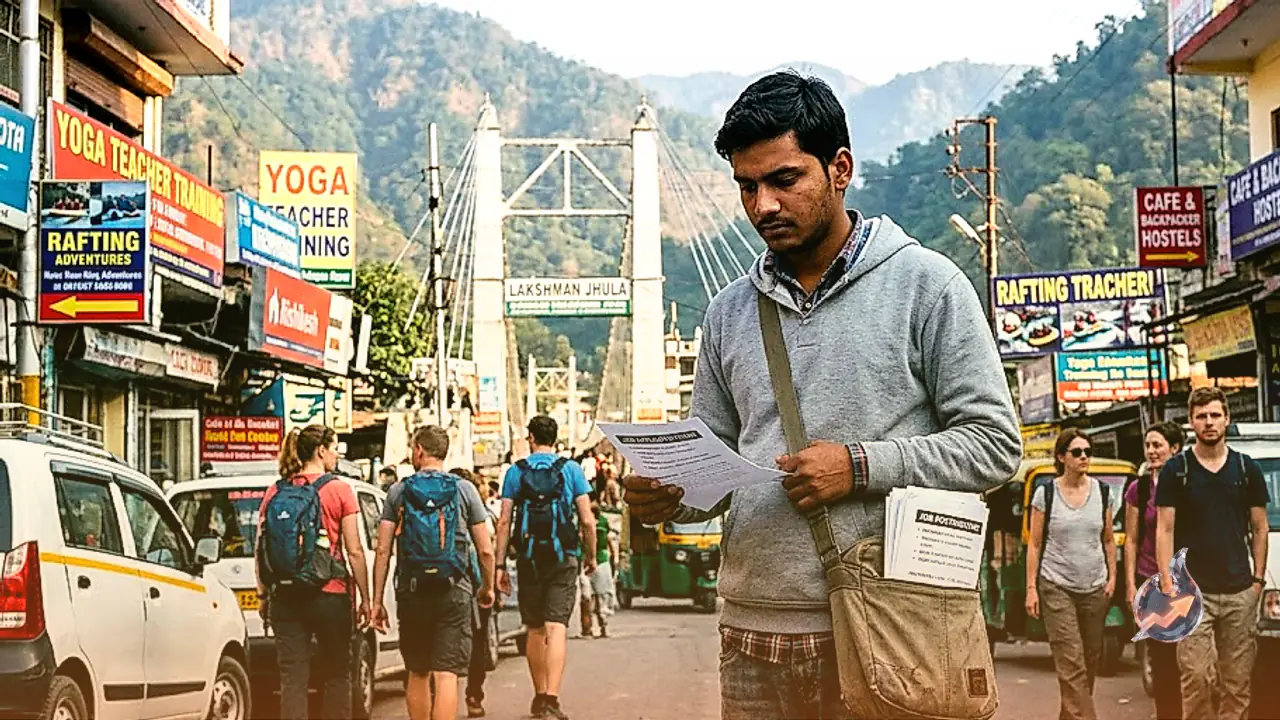
















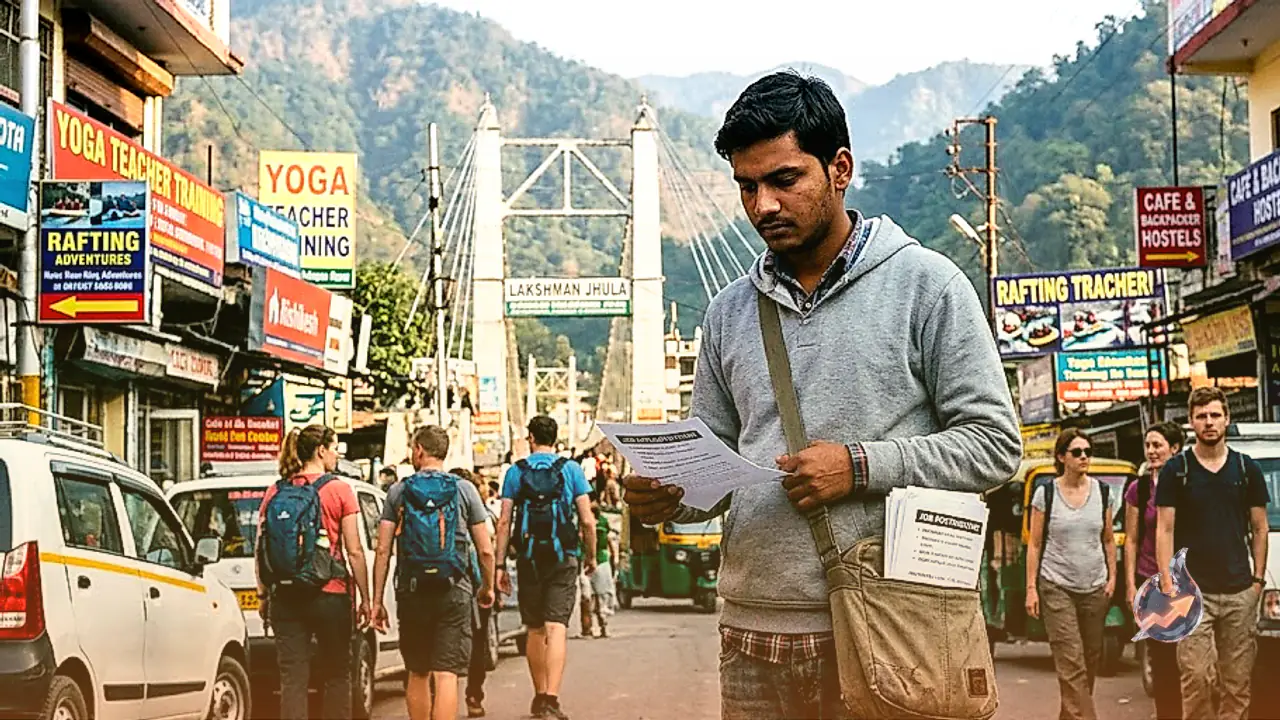

Throughout the year, the holy and picturesque town of Rishikesh draws steady streams of domestic and overseas travelers. On long weekends and during peak vacation seasons, the local hospitality infrastructure, vibrant riverside cafes, river rafting setups, and adventure tourism circuits experience brisk business and continuous footfall. While this hospitality boom anchors the regional economy and generates direct and indirect livelihood opportunities for thousands of people, an underlying economic imbalance persists beneath this prosperous exterior. A growing number of educated and professionally trained local youth find themselves unable to secure quality jobs aligned with their educational qualifications, leaving them with little choice but to relocate to larger cities.
The Dilemma Of Low Starting Wages And Seasonal Tourism Roles
Rishikesh offers an extensive network of enterprises across hotels, restaurants, dynamic cafes, travel consultancies, river rafting operators, and adventure sports. These operations regularly create openings for tour guides, hotel hospitality crew, front-desk receptionists, general managers, social media coordinators, sales executives, and allied tourism roles. A formidable hurdle lies in the compensation structure and operational cycle of these positions. Most entry-level jobs offer modest starting salaries and are heavily reliant on tourism seasons, fluctuating significantly during monsoon or travel lulls. For graduates with specialized academic credentials or professional capabilities, these seasonal assignments offer very narrow scope for meaningful career progression.
Local resident Amit pointed out that while opportunities do exist across the town, they do not match the professional requirements of educated youths. He explained that although tourism-related assignments are abundant, anyone seeking respectable remuneration and a profile corresponding to their educational background must head toward Dehradun or broader commercial hubs. Amit emphasized that the local ecosystem requires modern corporate enterprises and formal business establishments so that educated individuals can build progressive career paths without abandoning their hometown.
Lack Of Corporate And Service Industry Diversification
Sharing similar concerns regarding the local employment landscape, Shivani noted that visitors and outsiders often notice plenty of casual employment in the bustling cafes and hotels. However, from the perspective of residents looking for long-term career viability, substantial trajectories remain notably absent. She observed that if Rishikesh witnesses growth across information technology, media organizations, higher education institutions, corporate establishments, and diversified service sectors, the compulsion for skilled youngsters to migrate would decline substantially.
The pursuit of jobs outside the town is driven not merely by a need to find immediate employment, but by the pursuit of competitive compensation, long-term stability, and continuous career development. Today's educated workforce is disinclined to take up any generic role simply to get by; rather, they expect positions that utilize their qualifications and skills. The prospect of professional mentorship, continuous skill-building, and vertical mobility has become vital, explaining why young professionals continue to seek out metropolitan environments despite the booming tourism economy at home.