






















Mushroom cultivation is increasingly establishing itself as a practical micro-enterprise for individuals seeking independent livelihoods on a modest budget. In the Tajpur block of Bihar's Samastipur district, Rita has been guiding local women and aspiring young entrepreneurs to build self-sustaining ventures from minimal inputs. Her operational framework demonstrates that commercial cultivation does not require expansive farmland or heavy infrastructure. Starting with just a 120 rupee packet of spawn, a grower can generate a harvest valued between 800 and 1000 rupees under proper management, with net margins determined by regional market demand and yield quality.
Input Economics and Raw Material Requirements
The core operating expenditure of this model remains remarkably accessible. Rita produces mushroom spawn independently and distributes it to prospective growers at 120 rupees per kilogram. Setting up the substrate requires approximately 10 kilograms of dry straw per kilogram of seed. With prevailing straw rates in Samastipur hovering between 8 and 10 rupees per kilogram, procuring the required volume costs around 80 to 100 rupees.
Additional operational steps, including boiling the substrate for sterilization and handling processing bags, bring the overall setup cost to approximately 400 rupees. Because regional prices for raw materials and transport may vary, final expenditure figures can fluctuate slightly depending on local conditions. Nevertheless, the entry barrier remains low enough for households lacking formal credit access to launch production without outside borrowing.
Cultivating Oyster Mushrooms in Sheds and Homesteads
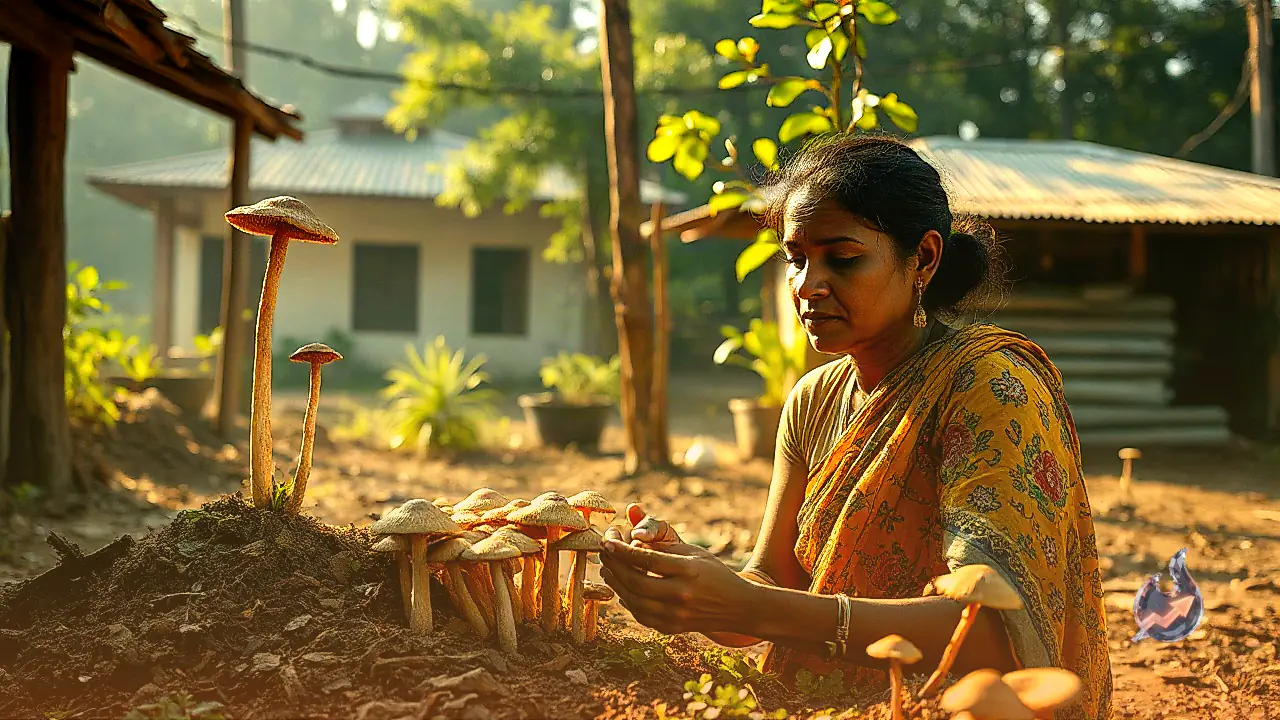
The oyster variety is well-suited for decentralized rural settings because it thrives inside simple huts, thatched sheds, or unused household corners. The cultivation cycle takes approximately 30 days from seeding to harvesting, creating a rapid turnaround that provides timely financial returns for underemployed individuals. This quick cropping timeline makes it an attractive alternative to traditional seasonal agriculture.
Beyond supplying spawn, Rita provides hands-on technical guidance on temperature maintenance, humidity control, and sanitation to help beginners avoid crop loss. Prospective farmers can obtain spawn and technical instructions directly at her center located in Kotia within the Tajpur block. For market access, growers can distribute their produce through the Motipur vegetable market in Tajpur, which handles regional sales and trade for local produce.