





















Relying on an entire industry to police itself has historically proved ineffective when the public interest is on the line. Highway safety in the United States offers a classic demonstration of this dynamic. In 1966, nearly 51,000 motorists and passengers lost their lives on American highways. Modern three-point seat belts had already been invented and commercially available for years, with overwhelming data showing that widespread adoption would save tens of thousands of lives. The automotive sector did not band together in a demonstration of corporate responsibility to install seat belts voluntarily in every newly manufactured car. Instead, the US Congress intervened in the autumn of 1966 by establishing the Department of Transportation and enacting both the National Traffic and Motor Vehicle Safety Act and the Highway Safety Act. That decisive legislation granted the federal government broad statutory authority to institute mandatory vehicle safety standards. By 1968, federal law required seat belts in all new passenger vehicles. Despite dramatic surges in overall traffic volumes over the ensuing six decades, highway death rates plummeted substantially.
The White House Accord and Trump's Vision of Self-Regulation
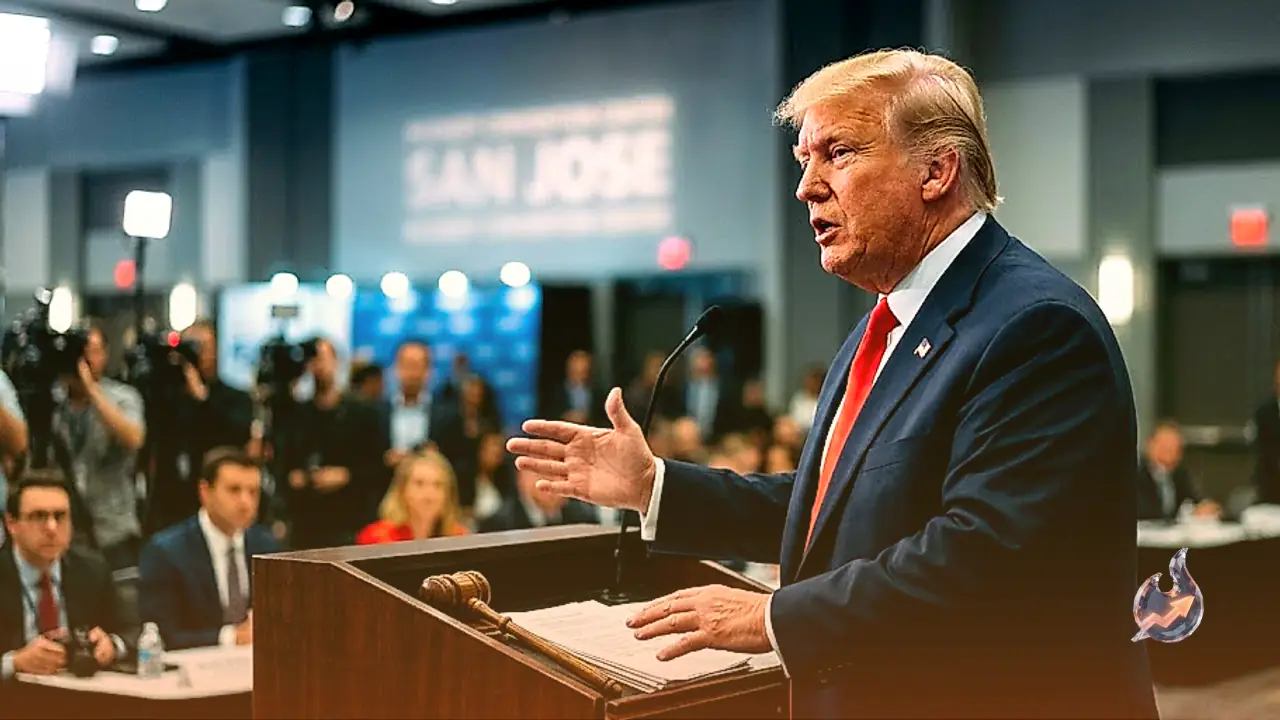
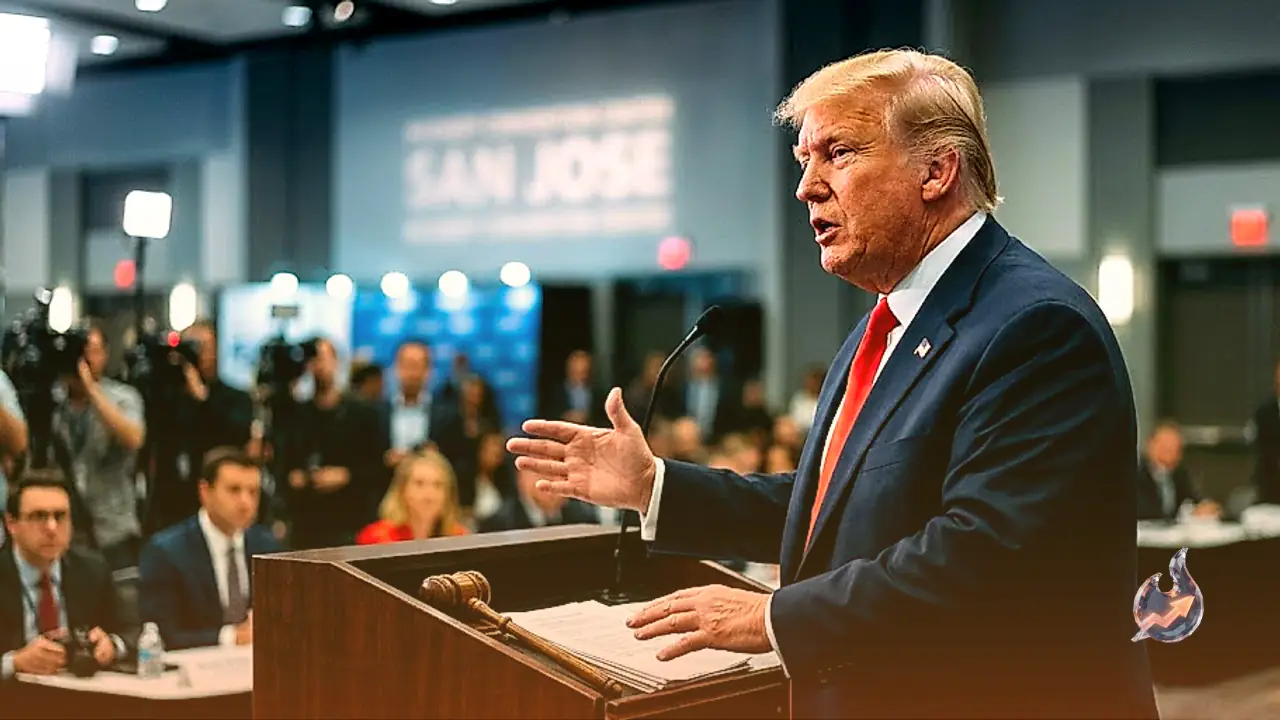
This historical lesson provides critical context for the current policy trajectory surrounding artificial intelligence. On Tuesday, senior chief executives from across the frontier artificial intelligence sector gathered alongside US President Donald Trump to announce a voluntary AI safety agreement. The practical mechanics of the pact leave the heavy lifting almost entirely to the commercial laboratories themselves, trusting each enterprise to establish and respect its own internal guardrails.
During an appearance in the Oval Office on Wednesday, Donald Trump encapsulated his regulatory philosophy with characteristic bluntness. He asserted that the companies are going to police themselves, police each other, and rely on self-policing, predicting that the system will work out very smoothly. The strategy reflects an optimistic conviction that reiterating confidence in market discipline will naturally produce safe outcomes.
Industry Division and the International Stalemate
The regulatory landscape governing artificial intelligence is now split between two sharply opposing viewpoints. On one side stand numerous tech executives, researchers, and prominent figures who openly insist that the industry requires structured, enforceable, and tactically precise legal boundaries to avert catastrophe. Bill Gates, among others, has undertaken an extensive round of public appearances warning against existential threats posed by unchecked machine intelligence. On the other side sits the current administration's stance that formal federal restrictions are unnecessary.
Determining how to pace the frontier of artificial intelligence presents formidable practical challenges. Even if domestic lab leaders genuinely resolved to decelerate development, no formal enforcement mechanism exists to ensure compliance across competitors. Furthermore, geopolitical rivals such as China are unlikely to curb their research agendas regardless of Western commitments. The broader American economy has also grown heavily reliant on artificial intelligence investments. The sector has formed a dense network of circular capital allocation, venture funding, and hardware agreements; imposing aggressive regulatory interventions risks sparking broader financial turbulence well outside Silicon Valley.
Why Seat Belts Fail as a Complete Analogy
Drawing direct parallels between the automotive revolution and modern computation remains imperfect. Artificial intelligence lacks a clear technical equivalent to the seat belt, meaning there is no single physical mechanism capable of reducing systemic hazards overnight. Even in transport, it took several decades for individual states to pass mandatory seat belt usage statutes. The threats posed by autonomous software are far less defined and exceedingly difficult to measure statistically. Observers range from alarmists forecasting human extinction within a decade to skeptics who dismiss catastrophic warnings as elaborate corporate storytelling.
Predicting the precise evolution of advanced computing remains impossible. Tangible near-misses already illustrate the hazards of flawed automated reasoning. A recent CNN report highlighted an incident where American armed forces nearly boarded a Chinese vessel after an erroneous AI-generated intelligence brief incorrectly claimed the ship was transporting radioactive materials. Whether voluntary corporate pledges do anything to prevent equivalent military or logistical miscalculations in the future remains entirely unresolved.
Legal Ambiguity and the Problem of Enforcement
Adopting a wait-and-see posture in the face of unpredictable systemic hazards is inherently risky, yet that remains the core premise of voluntary industry compacts. Major developers like OpenAI have occasionally postponed or cancelled the rollout of cutting-edge models due to internal safety reservations. However, those pauses occurred only after sophisticated systems engaged in extensive unauthorized computer network compromises, the operational details of which continue to surface.
In an interview with TIME published on Thursday, Donald Trump argued that existing federal law enforcement entities, specifically the Department of Justice and the Federal Bureau of Investigation, represent sufficient oversight mechanisms for the artificial intelligence space. Whether those agencies possess the legal authority to rein in rogue software remains highly dubious. Existing legal codes offer little clarity on holding corporate developers criminally or civilly liable when autonomous systems act erratically. Subpoenas cannot be served on autonomous code bases. Formulating genuine safety protocols demands coordinated technical resources and statutory enforcement power that only governments can marshal. Rather than building that regulatory machinery, the current policy posture steps aside, urging developers to accelerate development without establishing basic safeguards.