
























A fierce debate over credit and academic integrity has erupted in the artificial intelligence community after OpenAI announced a major milestone in solving the famous Navier-Stokes equation, one of mathematics' most prized unsolved challenges. While OpenAI claims its automated system independently proved the complex equation using thousands of AI agents, researchers at New York University and Anthropic allege that the company rushed to claim credit after learning of their ongoing work and attempting to influence how the breakthrough was attributed.
OpenAI's Million-Dollar Compute Push for Navier-Stokes
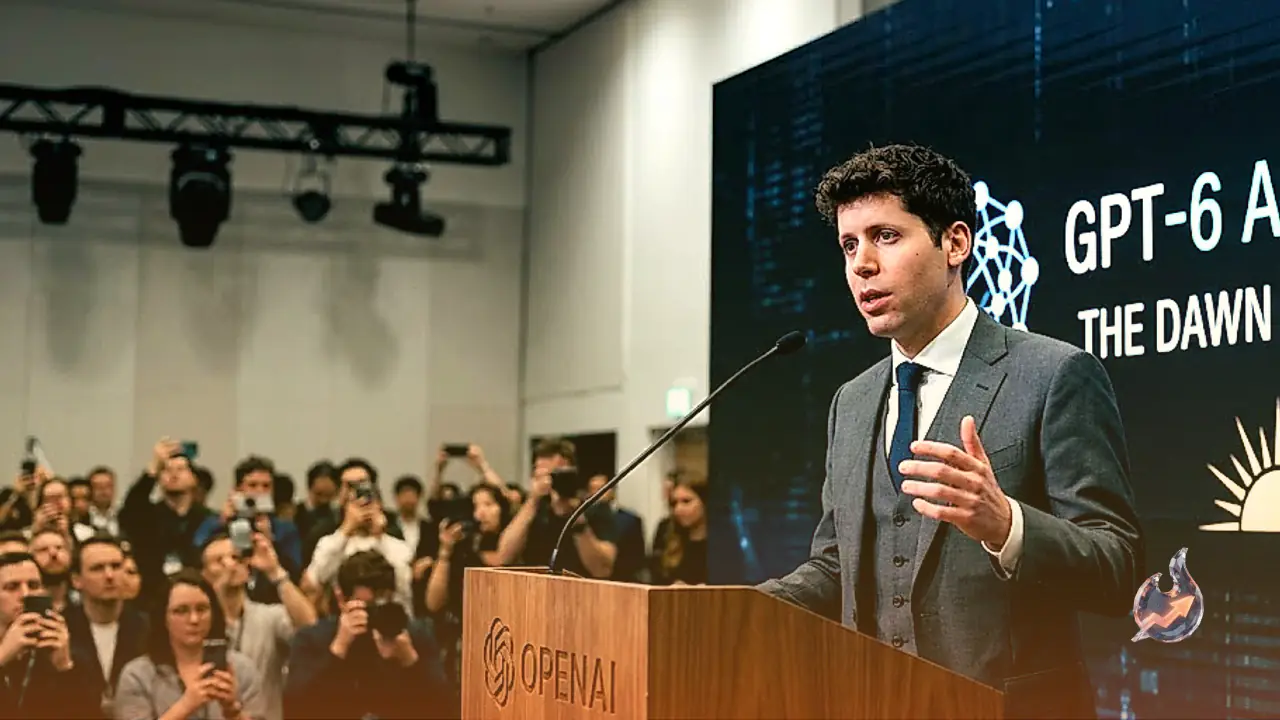
The Navier-Stokes equation stands as one of the seven prestigious Clay Millennium Prize problems, carrying a reward of $1 million for a verified solution. During an official press briefing, Sebastien Bubeck, a mathematician and AI researcher at OpenAI, explained that the company initiated training on a specialized math-focused model on August 28. According to Bubeck, rumors began circulating that competing AI laboratory Anthropic was making notable headway toward solving the Navier-Stokes problem, prompting OpenAI leadership to rapidly reallocate internal computing resources to match the challenge.
To tackle the mathematical problem, OpenAI deployed a fleet of over a thousand specialized AI agents that operated continuously for more than 50 hours. Bubeck recalled his initial disbelief when the system arrived at a proof, noting that he assumed there had to be an error in the initial output. However, by Sunday morning, the research team had generated a complete mathematical proof fully formalized in Lean, a high-level programming language designed specifically for verifying complex mathematical proofs.
Achieving this automated milestone came with a heavy financial and hardware footprint. Mark Chen, the head of research at OpenAI, revealed during the briefing that the computation required for the Navier-Stokes problem far exceeded any mathematical task the company had previously attempted. Chen confirmed that the computational expenses alone reached well into the millions of dollars.
Rival Academics Allege Prompt Snooping and Omission
The narrative of an independent breakthrough was challenged on Monday when Tristan Buckmaster, a mathematician at NYU, alongside Levent Alpöge, a researcher at Anthropic, published documentation detailing major advancements in a closely related mathematical area of the Navier-Stokes problem. The duo noted that they had utilized multiple artificial intelligence tools, including OpenAI's Codex and Anthropic's Claude, to execute their mathematical research.
In a public statement, Buckmaster claimed that he discovered last week that OpenAI had grown aware of the joint research he was conducting with Alpöge. He alleged that OpenAI immediately redirected substantial engineering assets toward the problem shortly after gaining this awareness. Concerned about how OpenAI learned of their progress, Buckmaster questioned OpenAI executives on whether the company had inspected user data or prompt logs from Codex. While OpenAI representatives stated that the model did not look up private user data, Buckmaster noted that the company failed to provide clear answers regarding whether user interactions were used to train or guide their internal models.
Furthermore, Buckmaster stated that OpenAI presented several proposals regarding how the findings should be released. One such proposal suggested that Buckmaster could co-publish a paper announcing that an internal OpenAI model had solved the Navier-Stokes problem, but under the explicit condition that Alpöge's name would be excluded from the publication.
OpenAI Denies Misconduct while Recognizing Rival Contributions
Facing serious accusations of intellectual property infringement and academic erasure, OpenAI leadership firmly denied accessing the researchers' private prompts or early work. During the briefing, Bubeck emphasized that neither human researchers nor autonomous AI agents at OpenAI had seen any portion of Buckmaster and Alpöge's work prior to its official public release on Monday night.
Bubeck explicitly stated that OpenAI recognizes the academic priority of Levent Alpöge and Tristan Buckmaster's prior work on the unforced Euler equations, offering congratulations to the pair for their monumental achievement. He reiterated that OpenAI did not use the duo's prompts or mathematical proofs to guide its models or direct its agentic workflows. OpenAI formally stated its desire to acknowledge the foundational work done by Alpöge and Buckmaster. Additionally, Ven Chandrasekaran, a mathematician at OpenAI, emphasized that the proof generated by OpenAI's AI model is fundamentally different in structure and methodology from the approach developed by Buckmaster and Alpöge.
Growing Friction Over AI-Assisted Scientific Attribution
The controversy surrounding the Navier-Stokes proof underscores a growing systemic issue within modern scientific research. As frontier AI models take on increasingly autonomous roles in discovering mathematical proofs and scientific formulas, determining true priority and attribution will become far more complex. The conflict between OpenAI, NYU, and Anthropic reflects the fine line between collaborative open science and high-stakes corporate competition, where millions of dollars in compute and historic prestige hang in the balance.