





















A high-stakes gamble to monopolize power generation for artificial intelligence infrastructure has dealt a punishing multi-billion dollar financial blow to Japanese investment conglomerate SoftBank. Known for deploying immense capital behind burgeoning technological shifts, the firm rarely moves cautiously when it identifies an emerging trend. Its massive $30 billion commitment to OpenAI in early 2025 and an announcement that subsidiary SB Energy would allocate $33 billion toward a 9.2-gigawatt natural gas power facility underscored that aggressive playbook. However, extending that philosophy into the procurement of critical electrical machinery has produced severe financial repercussions.
Strategic Over-Ordering and Market Cornering Tactics
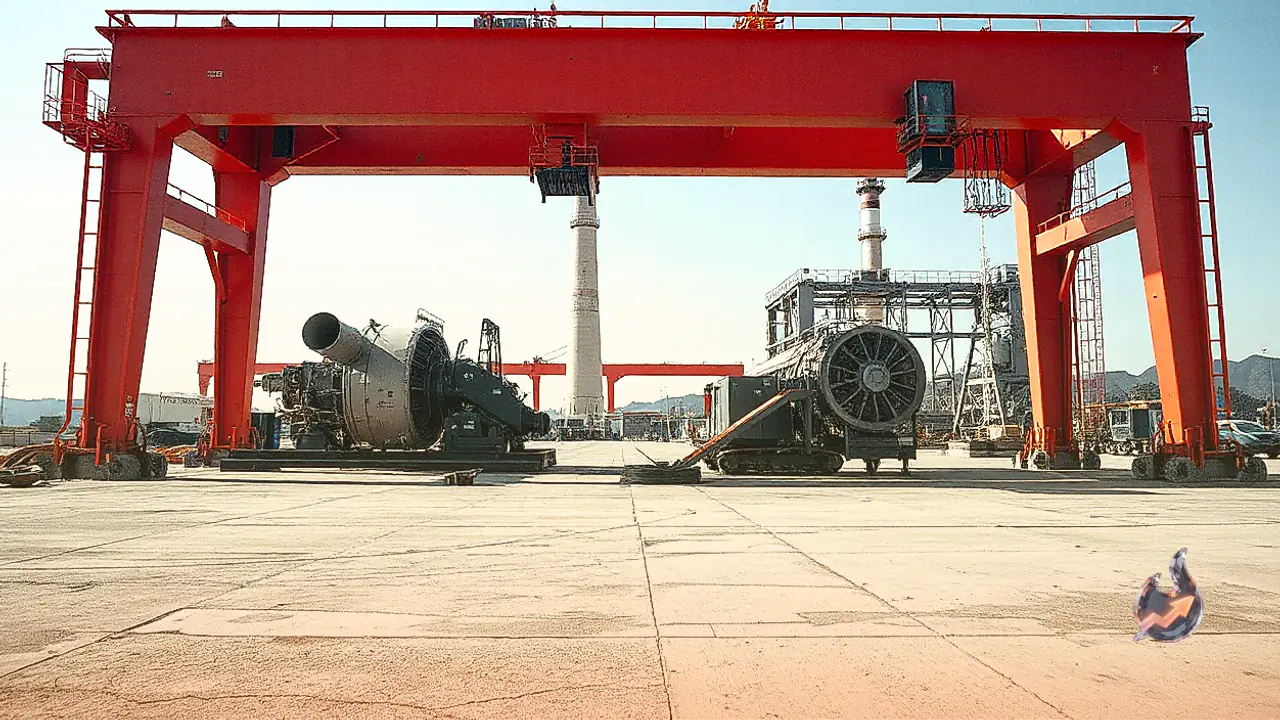
Beginning roughly two years ago, SoftBank adopted an unusually aggressive posture in hardware procurement by placing nonrefundable cash deposits on more than 13 gigawatts worth of electrical turbines. This purchase volume exceeded the company's operational requirements by nearly 50 percent. The strategy initially allowed the group to bypass congested vendor backlogs and accelerate its project construction schedules. Surging computational demands from modern machine learning clusters had caught utilities and power markets unprepared, pushing global delivery queues for utility-scale turbines well into the early 2030s.
Peter Gardett, chief executive officer of Noreva, pointed out that SB Energy effectively had no alternative other than to overbook future manufacturing slots if it wanted guaranteed access to any hardware immediately. Masayoshi Son, chief executive of SoftBank, calculated that by utilizing his firm's vast capital resources, he could corner a dominant share of available generation capacity. Under that premise, technology developers needing dedicated baseload electricity for large-scale data campuses would have had no choice but to negotiate directly with SoftBank.
A $7.1 Billion Quarterly Deficit Unveils Severe Write-Downs
That ambitious market-cornering thesis has now unraveled, leaving a deep mark on the investment group's corporate balance sheet. SoftBank revealed a quarterly loss of $7.1 billion, with more than half of the deficit originating from heavy impairments tied directly to power-generating assets. Having committed nonrefundable down payments to turbine manufacturers to lock in order queues, the company has now determined that a substantial portion of those commitments holds little to no remaining value.
Gardett characterized the resulting writedown as an exceptionally expensive exercise in commercial price discovery. Rather than risking a shortfall by under-purchasing, SoftBank opted to overpay while dramatically over-ordering production volumes. The substantial impairment charge simply reflects the market establishing the realistic commercial value of those secondary assets and contracts.
Natural Gas Complexities Versus Grid Power and Battery Storage
The write-down exceeding $3 billion captures the frenzied atmosphere that has dominated corporate boardrooms seeking electricity for artificial intelligence workloads. Faced with interconnection queues spanning multiple years to plug into conventional utility grids, cloud hyperscalers initially embraced natural gas as a familiar and expedient bridge fuel. On-site gas generation offered the appearance of energy independence and rapid deployment away from regulatory bottlenecks.
Yet, as facilities accumulate operational history, operators are uncovering distinct technical and operational vulnerabilities inherent to standalone fossil fuel generation. Brent Nelson, senior managing director of markets and strategy at Ascend Analytics, emphasized that gas infrastructure carries significant hazards, notably mandatory fuel curtailments during freezing winter weather when pipeline supplies tighten and residential heating demand surges.
Consequently, Nelson argued that traditional regional utility grids remain the most sensible foundational power source for high-density computational facilities. Most server campuses achieve superior economic efficiency by securing a somewhat smaller utility grid allocation and supplementing it with utility-scale battery storage assets. Industrial batteries provide a cost-effective mechanism to shave peak power spikes and maintain continuous uptime whenever local electric utilities request mandatory load shedding.
The Realignment of Data Center Energy Strategies
A growing number of infrastructure developers are arriving at similar operational conclusions, causing private behind-the-meter natural gas adoption to expand far more gradually than SoftBank originally anticipated. Despite SoftBank's painful balance-sheet impairment, the setback is unlikely to trigger widespread cancellations of planned natural gas generation projects across the tech sector. The sheer magnitude of enterprise computational demand ensures that natural gas will retain a substantial role in the broader energy portfolio, even as SoftBank discovers the sharp limits of speculative equipment stockpiling.