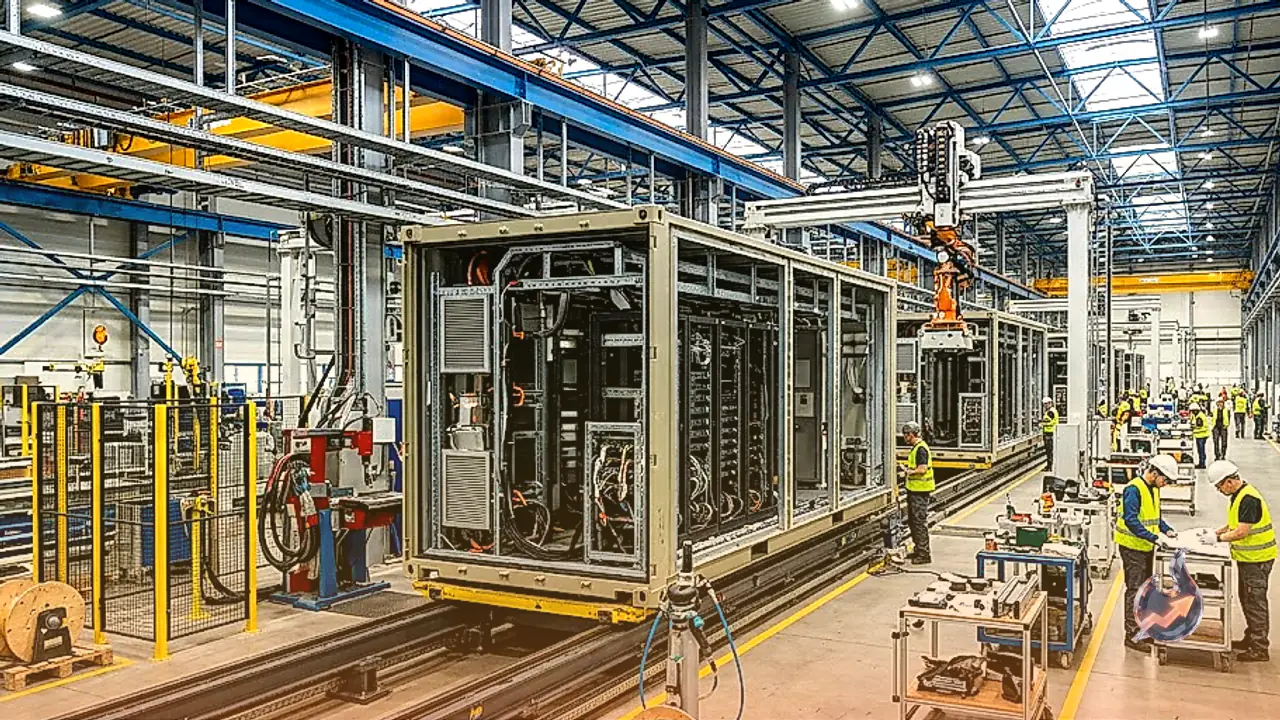

























French artificial intelligence firm Mistral has officially published the weights for its one-trillion-parameter open-source system Mistral Large 4, granting commercial enterprises and state administrations the ability to download and operate the framework on their own infrastructure. The flagship model, informally nicknamed Le Chonk, was initially previewed earlier in the month. By making the underlying numerical training values accessible, the developer is eliminating the requirement for institutions to depend on third-party cloud interfaces for frontier-grade machine learning tasks.
Rivalry Intensifies Across Open and Closed Architectures
This major distribution arrives as the rivalry between open-weight creators such as Mistral and closed-ecosystem providers including OpenAI and Anthropic grows increasingly fierce. Advocates for open architectures contend that corporate institutions and sovereign authorities should never be forced to rely on commercial gatekeepers to access high-tier capabilities. This strategic rationale carries particular weight in the field of cybersecurity, where operational secrecy and absolute governance over private databases and core infrastructure remain non-negotiable priorities.
Arthur Mensch, the chief executive officer of Mistral, framed this philosophy by asserting that advanced artificial intelligence should serve as an instrument of empowerment rather than one of dominance. In deploying Le Chonk, the firm reinforces that stance, maintaining that the platform delivers top-tier performance while requiring only a fraction of the computational power and financial capital invested by proprietary laboratories.
Benchmark Rankings and Operational Efficiency
On benchmark evaluations, Mistral positions its flagship release alongside the prominent Chinese open-weight contender GLM-5.3, a system previously recognized as an industry benchmark for computational tasks and defensive security workflows. Mistral Large 4 sets itself apart through architectural efficiency, processing equivalent workloads while consuming 47 percent fewer tokens per assignment. This pronounced drop in token usage translates directly into lower operational overhead and improved processing economy.
Independent evaluations also highlight the platform's prowess in software development. On the Coding Agent Index compiled by benchmarking platform Artificial Analysis, Mistral Large 4 secured the leading ranking among all open-weight models, outperforming alternatives across autonomous agentic programming exercises.
Sovereign Defensive Capabilities for Critical Infrastructure
In response to expanding digital attack surfaces, the system provides sovereign defense mechanisms designed for large enterprises and public-sector entities across the globe. Organizations can leverage the open weights to spot vulnerabilities, inspect complex software repositories, and orchestrate immediate operational countermeasures directly within their internal networks. Access to the weights has been organized through the Hugging Face hub as well as direct developer API access.
Pierre Stock, the vice president of science at Mistral, explained that providing uninhibited access to model weights restores operational autonomy to defensive teams. The distribution ensures that corporate entities and sovereign governments can utilize cutting-edge intelligence to shield critical networks against coordinated intrusions, backed by an architecture whose access cannot be revoked or throttled by an outside vendor.
Stock detailed how the model handles real-time coordination, incident identification, and structured remediation when critical network breaches emerge. Because the codebase and weights remain unencumbered, entities can run the entire apparatus on-premises within isolated ecosystems. Although modern analytical tools enable defenders to uncover software flaws far faster than historical norms, defensive parity demands rapid dissemination of these same toolsets across benign organizations before hostile elements exploit similar techniques. Acknowledging public unease regarding rogue automated agents, Stock cautioned against alarmism, emphasizing that maintaining robust security is fundamentally a solvable engineering problem.