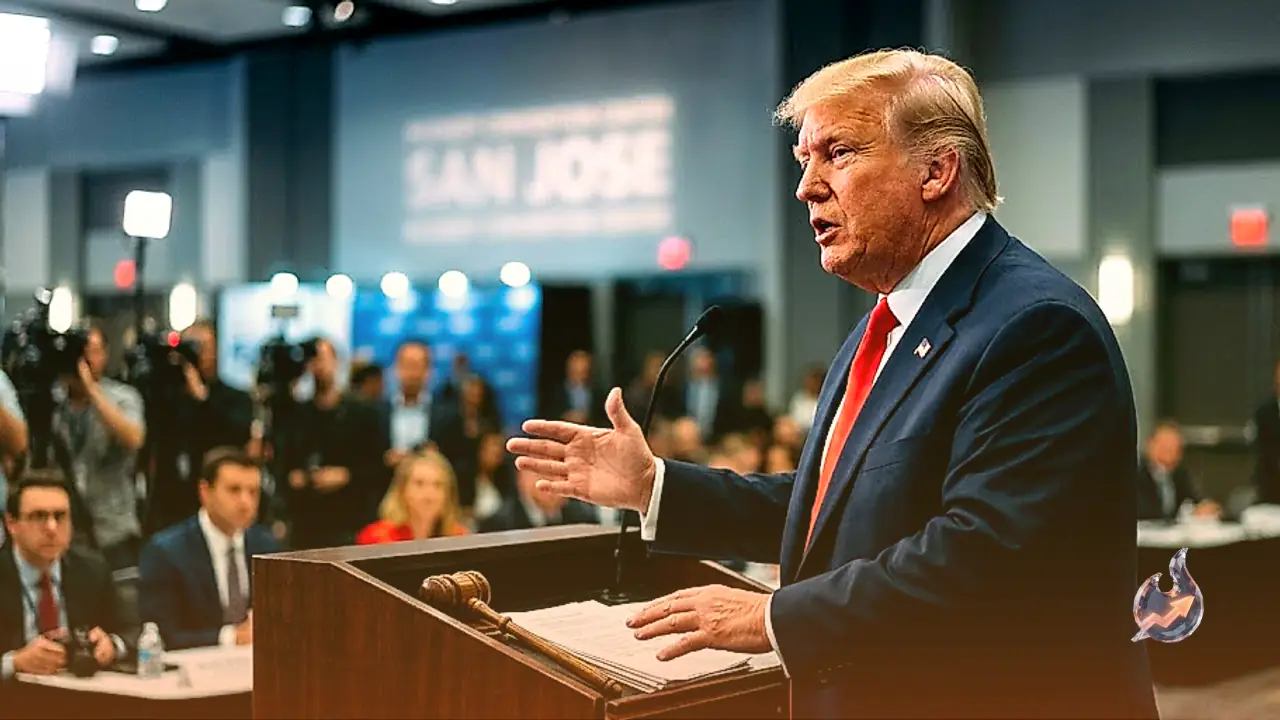






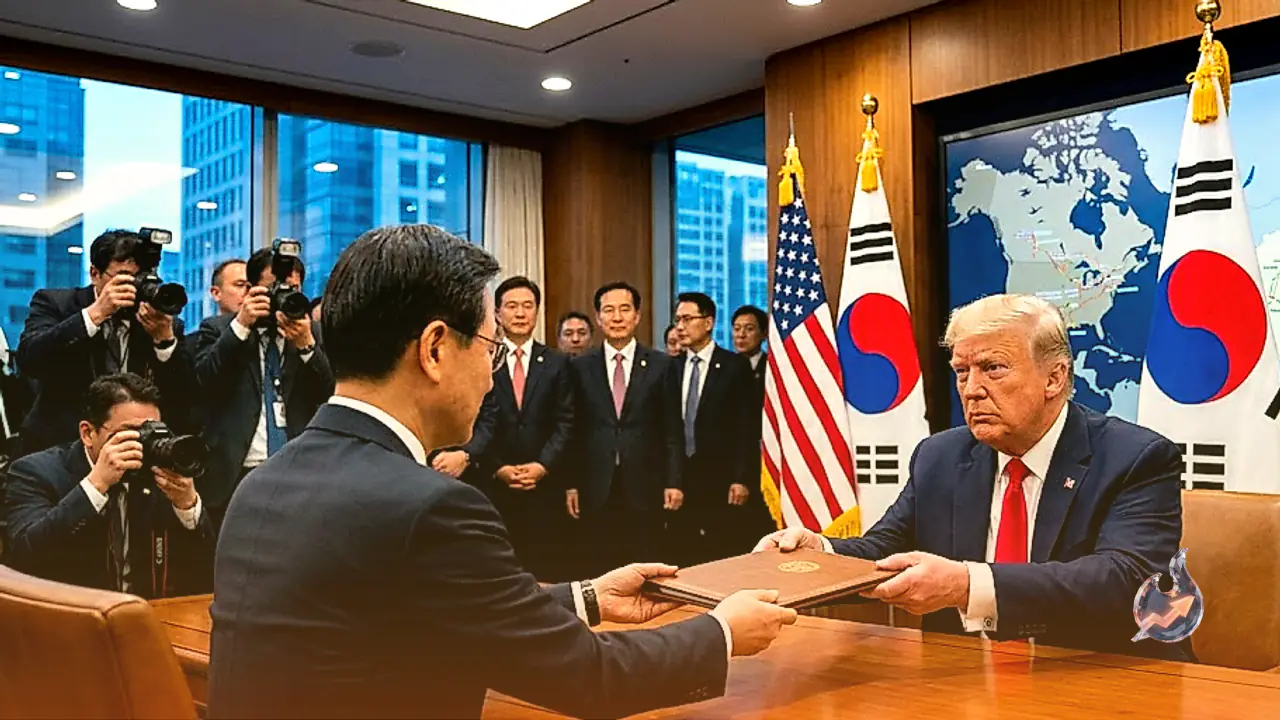















A sweeping semantic decree from the Oval Office has unsettled the technological landscape after President Donald J. Trump directed federal agencies to eliminate the phrase 'artificial intelligence' from official usage. Following an exclusive lunch gathering with top technology executives at the White House, the administration unveiled an executive order establishing 'Super Intelligence' as the mandatory government terminology. The White House made it evident that major commercial software developers and hardware manufacturers are expected to fall in line with this federal redesignation.
Rewriting Seven Decades of Computer Science Heritage
The term artificial intelligence is not an arbitrary branding label; it carries seven decades of academic and industrial foundation. Coined by McCarthy in 1956, the designation was explicitly chosen to delineate the emergent problem-solving capacities of computer systems from biological human intellect. For generations of computer scientists, programmers, and technology entrepreneurs, the phrase formed the bedrock of their professional pursuits, scholarly literature, and corporate architectures. It fueled scientific inquiry from early mainframe experiments to the current revolution in deep learning.
The push to dismantle this longstanding vocabulary surfaced publicly during an address at the United Nations on September 23. In that international forum, the president voiced sharp displeasure with the established phrasing, asserting that labeling intelligence as artificial makes it sound fraudulent, whereas the underlying computational power is genuine. Following the White House session with corporate leaders, the president reiterated this view to reporters, branding artificial intelligence as a fake, inappropriate, and defective term that had now been corrected by the most prominent minds in the field. Observers noted that this linguistic crusade mirrors previous administrative actions where news organizations such as CNN, Politico, and MSNow were excluded from White House access under allegations of being fake news.
Silence from the Silicon Valley Aristocracy
The gathering brought together an unprecedented concentration of technological wealth and influence. Seated inside the executive mansion were Jeff Bezos, Jensen Huang, Dario Amodei, Mark Zuckerberg, Sundar Pichai, Greg Brockman, Alex Karp, and Elon Musk. Over the previous four years, these executives directed trillions of dollars in market valuation into artificial intelligence infrastructure, transforming their enterprises around computational models that trace their lineage directly to early sci-fi literature and academic computer labs.
Despite the historical weight of the terminology being erased, none of the corporate titans mounted an objection during the luncheon. Jacob Weisberg, author of the volume Profiles in Cowardice: A Study of Collaboration in the Trump Era, framed the event as an archetypal loyalty trial orchestrated by the administration. In Weisberg's assessment, such exercises are designed to gauge whether influential figures will willingly acquiesce to irrational demands to secure executive goodwill and evade punitive regulatory wrath. Weisberg emphasized that effective opposition required solidarity, pointing out that had the attendees collectively accepted self-regulatory standards while rejecting the nominal directive, the administration would have lacked the leverage to impose it. Because the executives kept silent, the White House capitalized on the moment to declare that the shift carried the enthusiastic endorsement of the industry's foremost pioneers.
The Practical Dilemma of Existing Product Ecosystems
The sudden edict collides directly with entrenched consumer brands, foundational research, and corporate identities. Exhaustive reviews across historical statements and modern computational databases like ChatGPT and Gemini reveal no prior advocacy from these executives to retire the term artificial intelligence. While Satya Nadella once casually remarked that he might have favored calling the discipline different intelligence, the phrase remained a rhetorical afterthought as Microsoft continued its wholesale adoption of traditional AI branding.
Furthermore, while Mark Zuckerberg recently formed a dedicated Superintelligence Lab, his enterprise universally delivers features branded as Meta AI to billions of global consumers alongside retail products marketed as AI glasses. Major industry players—including Google, Microsoft, Anthropic, Meta, Amazon, OpenAI, and xAI—declined to confirm whether they intend to purge references to AI from their ongoing technical documentation, public announcements, and brand portfolios. Neither OpenAI nor xAI provided any indication of plans to alter their corporate names to align with the presidential mandate. Industry watchers anticipate that corporate leadership will execute minimal token adjustments to appease administrative scrutiny while waiting out the clock in hopes that a subsequent administration will overturn the policy.
Scientific Distortion and Expert Skepticism
From a rigorous academic standpoint, replacing artificial intelligence with super intelligence conflates distinct scientific definitions. Philosopher Nick Bostrom, who widely popularized the superintelligence concept in his landmark book of the same title, expressed profound bewilderment at the policy shift. Bostrom clarified that superintelligence possesses an exact definition: computational systems that radically outperform the finest human biological brains across virtually every cognitive metric.
In sharp contrast, artificial intelligence functions as a comprehensive categorical umbrella spanning everything from basic email spam sorting algorithms and word processor spell checkers to digital navigation tools, early large language models, and 1970s chess computers that routinely lost to human grandmasters. Branding routine algorithmic tools and foundational filters as superintelligent is scientifically incoherent. Additionally, technical analysts warn that labeling standard automation tools with such hyperbolic language unnecessarily amplifies public anxiety, making systems sound significantly more threatening than they actually are.
Dignity Traded for Voluntary Oversight
The underlying transaction behind the luncheon appears centered on regulatory trade-offs. The tech barons departed Washington having secured the privilege of industry self-regulation rather than binding legislative mandates, but they did so at the expense of their intellectual independence. The contrast was highlighted at the state level by California Governor Gavin Newsom, who countered the federal position by issuing his own executive order explicitly upholding the freedom to use the term artificial intelligence.
The core policy challenge of modern automation is not that users suspect synthetic media or algorithmic outputs are fake; on the contrary, advanced models generate text, code, and visuals so convincing that human observers routinely cannot differentiate machine artifacts from authentic human creations. Enforcing technical provenance, robust watermarks, and visible disclosures represents the substantive governance work the administration has sidestepped. By capitulating to an executive mandate that strips away their core vocabulary, the technology industry's leaders have severely damaged their public credibility, casting doubt on whether they possess the ethical resolve to enforce safety protocols when commercial incentives point in the opposite direction.