






















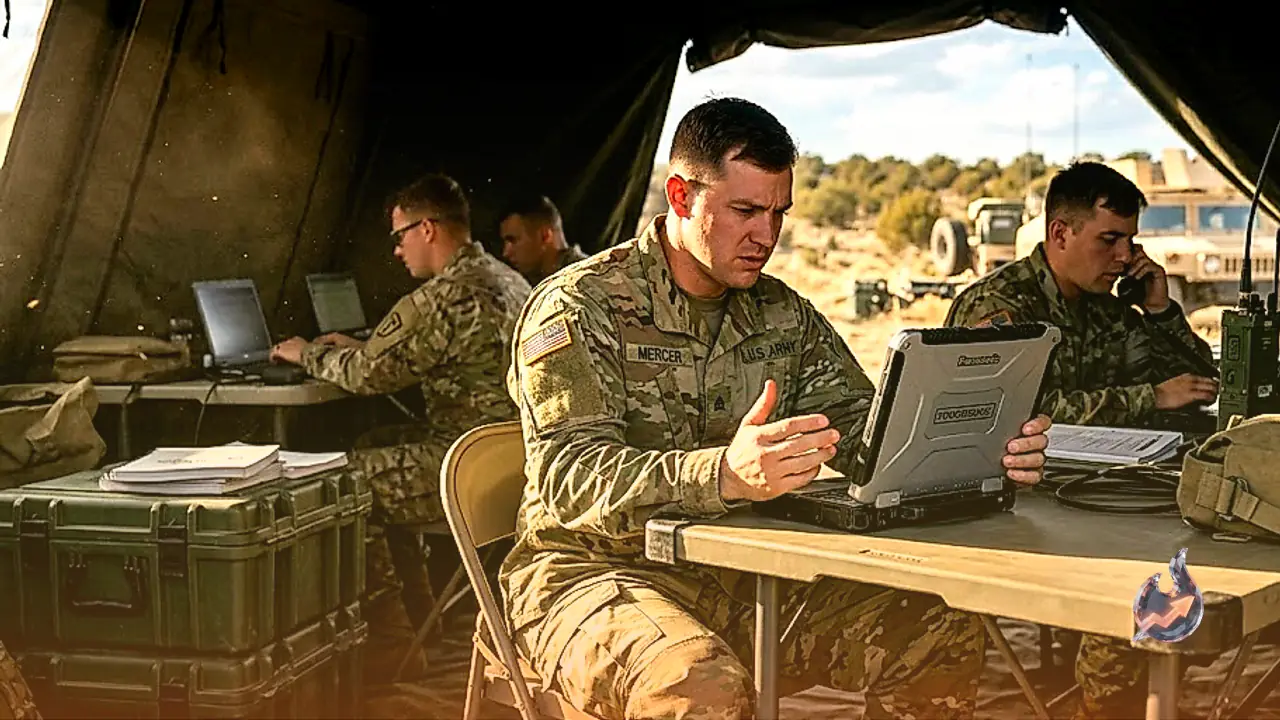

The United States Army has hit a wall with its artificial intelligence experiment: barely six weeks after promising troops and civilian staff unlimited access to generative AI, it ran dry and had to bring back usage caps.
A Promise That Didn't Last
In May 2026, the Army's Chief Information Officer told the force it could use generative AI tools without limits. That pledge didn't survive the summer. An internal email says that by mid-June, the CIO's token pool had been completely used up, forcing officials to reimpose restrictions on how much AI output soldiers and civilian employees could generate. The same email notes that while the Army has agreed to keep usage running at its current levels for now, nobody has confirmed whether that pool will be topped up again once the current allotment expires on October 1.
One Platform, One Year's Supply, Six Weeks
An Army employee, who spoke on condition of anonymity because they weren't authorized to talk to the press, said the branch appeared to have chewed through an entire year's worth of tokens on a single service in a matter of weeks. That service is Ask Sage, a multimodal generative AI platform that lets users tap into a range of large language models at once, including Alphabet's Gemini, Meta's Llama and OpenAI's ChatGPT.
What Ask Sage Actually Does
Ask Sage powers the Army's enterprise large-language-model workspace and is accredited to handle Controlled Unclassified Information, making it usable for a wide range of internal Army business. The Pentagon's Chief Digital and AI Office also relies on the platform for acquisition work. On its own website, the Army lists tasks Ask Sage has handled, including reclassifying personnel descriptions, work that involves defining and aligning job duties, experience and background requirements.
A Push to Use More, Not Less
Rather than rationing access, the Army spent months encouraging employees to lean harder into the tool. According to emails reviewed for this story, staff were handed a baseline allotment of at least 200,000 tokens a month, and the system automatically issued more once someone burned through that initial batch. Employees who had signed up for Ask Sage accounts but weren't actively using them received follow-up emails nudging them to put their allocation to work.
The Scale of the Subscription
The numbers behind the shortage are enormous. As part of an annual enterprise pack subscription, the Army had access to 100,000,000 tokens for use on Ask Sage. A token is the basic unit of output an AI model produces, whether text or image, and on Ask Sage, a single token works out to roughly 3.7 characters. For context on how fast that supply can vanish during high-intensity operations, the Defense Department burned through about 20 billion tokens a day over the 38 days of Operation Epic Fury in Iran. The Army and the wider Defense Department did not respond to requests for comment, and neither did Ask Sage. It also remains unclear whether tokens used by ordinary DOD staff are drawn from the same pool as those used by personnel working with AI tools on classified or secret material.
AI Push Continues Even as Oversight Shrinks
None of this has slowed the Pentagon's enthusiasm for AI. The Pentagon has kept leaning on AI tools even as it has cut staff at the Civilian Protection Center of Excellence, the unit whose job was preventing civilian casualties in conflict zones. In its place, the Defense Department is building an AI tool meant to speed up the kind of assessments that center's staff used to carry out by hand.
The Army Isn't Alone
The Army isn't the only eager AI adopter having second thoughts about near-unlimited access. Meta once urged its own employees to tokenmaxx, but has since quietly pulled down the internal leaderboard that tracked how much each worker was consuming, and is now trying to rein in usage instead. Just last week, Adam Mosseri, who runs Instagram at Meta, raised the idea of capping how many tokens each engineer can use. Uber's engineers ran into a similar wall, burning through what was meant to be a full year's supply of generative AI tokens in just four months.
Not Going to Result in an Effective Rollout
The Army employee who described the shortage said they personally haven't found the generative AI tools especially useful for their day-to-day work, and that when they have used them, the outputs have often been unreliable; in one case, a model even claimed to have finished a task it never actually completed. The employee believes some corners of federal bureaucracy could genuinely benefit from these tools, but cautioned that "an unthinking application and use is not going to result in an effective, efficient, and trustworthy rollout."