























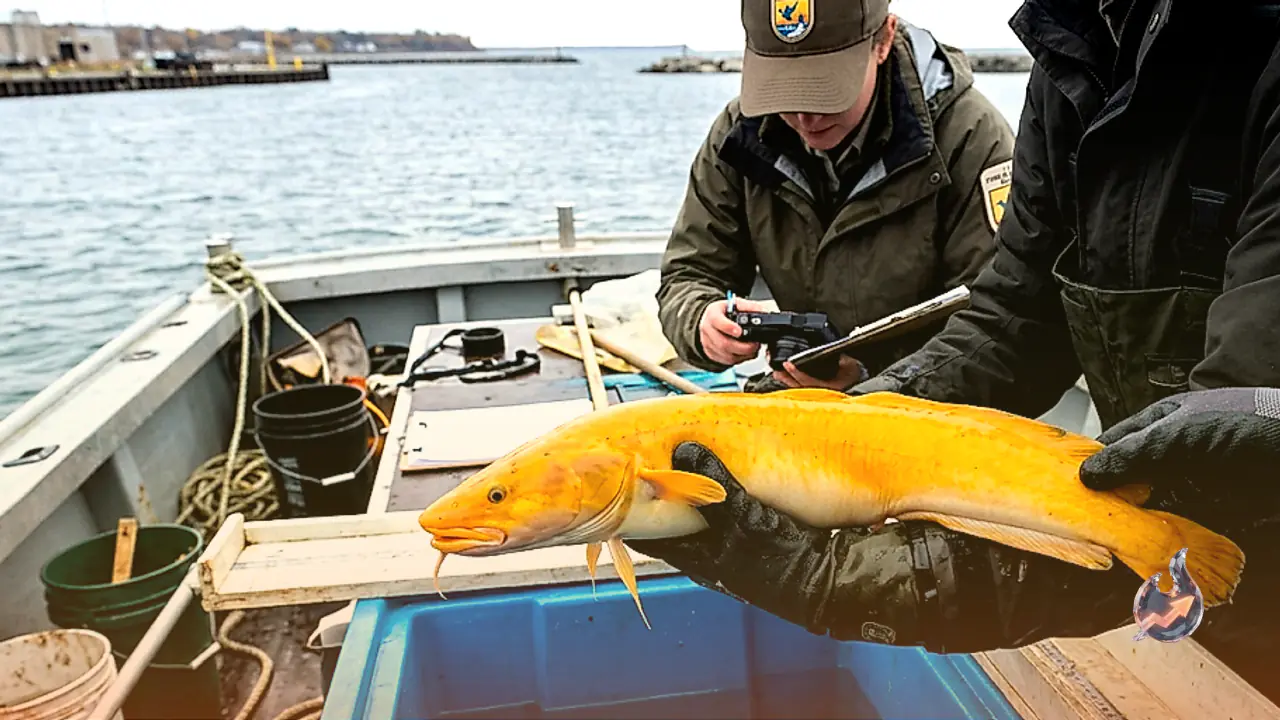

Nature frequently presents remarkable anomalies that astonish even seasoned scientists. A recent discovery in New York has captured the attention of marine biologists, featuring an exceptionally rare fish with a striking bright yellow and orange body. While members of this species typically sport dark coloration, this particular specimen stands out due to a rare genetic phenomenon, leading researchers to classify the find as a one-in-a-million occurrence.
Discovery in Oswego Harbor
The unusual specimen was located in Oswego Harbor, New York, during field operations conducted by U.S. Fish and Wildlife Service (USFWS) biologists. The animal belongs to the Burbot species, known scientifically as Lota Lota. Its abnormal golden-yellow hue is the direct result of a rare genetic variation called xanthochromism, which alters normal pigmentation across the body.
Understanding Xanthochromism
This specific genetic condition appears much less frequently in wild fish populations than comparable conditions like albinism or melanism. While albinism reduces melanin production to create pale skin and melanism increases dark pigmentation, xanthochromism introduces an unusual dominance of yellow and orange pigments. This distinct biochemical shift is what gives the newly found fish its vibrant appearance.
Aquatic Survey Techniques
Specialists from the wildlife agency captured the specimen last month during an aquatic invasive species survey. These regular monitoring efforts track fish populations across ports, rivers, and coastal waters within the Great Lakes region. To gather accurate data on aquatic species and their numbers, researchers employ methods such as electrofishing, fyke netting, gill netting, and environmental DNA (eDNA) analysis.
An Unusual Habitat for Burbot
This marks the first time a Burbot has been officially documented during a fishery survey in Oswego Harbor, though local anglers had previously reported occasional sightings. The find is particularly significant because Burbot populations in the Great Lakes are already relatively low. The species generally prefers deep, cold waters, making the environmental conditions of Oswego Harbor quite distinct from its preferred habitat.
Health Concerns and Further Study
Despite the excitement surrounding the rare pigmentation, researchers noted that the fish appeared thin and in poor physical condition during initial evaluations by U.S. Geological Survey (USGS) biologists. Given ongoing concerns regarding declining Burbot numbers, the specimen was transferred to the Cornell University College of Veterinary Medicine for comprehensive health assessments.
Aiding Species Conservation
Scientists hope that studying this extraordinary specimen will yield valuable insights into the health and population dynamics of the Burbot species in the Great Lakes basin. By analyzing how this genetic mutation affects the individual's overall well-being, researchers can better understand the broader challenges facing the population and refine future conservation strategies for the region.