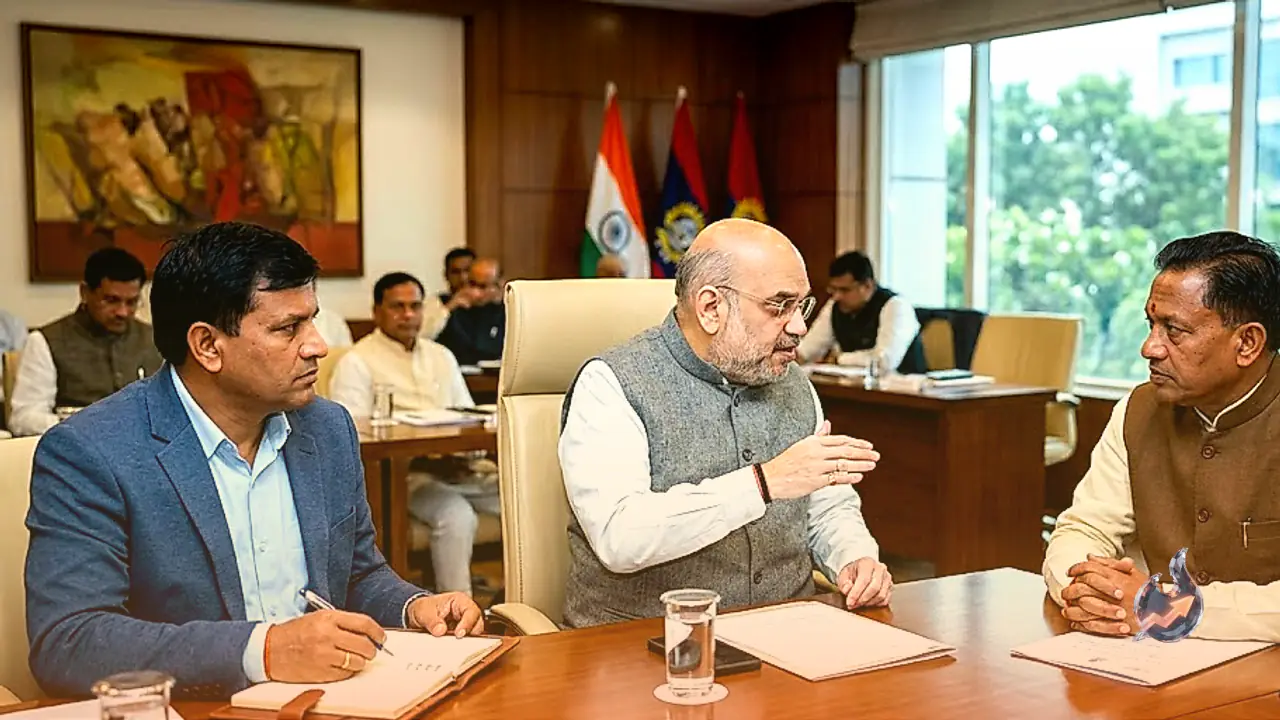





















A fundamental policy shift in the recruitment framework for academic leadership in government colleges has been enacted across Chhattisgarh, significantly altering career pathways for higher education aspirants. The state government has formally amended the service regulations governing the appointment of professors across state-run degree colleges. Under the revised framework, an overwhelming 75 percent of the total sanctioned professor vacancies will now be filled through internal departmental promotions. Consequently, direct open recruitment conducted through the Chhattisgarh Public Service Commission (CGPSC) has been curtailed to a mere 25 percent quota. This structural modification has been executed through amendments to the Chhattisgarh Educational Service Recruitment Rules-2019 (College Branch, Gazetted), ending the longstanding convention of filling the entirety of these senior academic posts through open public competition.
The Preceding Hundred Percent Open Selection Mechanism
Prior to this administrative notification, the higher education department operated under a recruitment mandate where 100 percent of professor positions in state-run colleges were earmarked exclusively for direct hiring. Under those former guidelines, qualified academicians, experienced lecturers, and doctoral researchers employed across private colleges or private universities had an equitable opportunity to compete for public service positions. Any applicant meeting the academic thresholds could participate in the open examination and interview rounds managed by the public service commission. That mechanism provided a direct entryway for external talent from private higher education institutions into prestigious Class-I government positions, a route that has now been dramatically restricted by the newly enforced quota division.
Distribution Across 343 Government Colleges and 781 Sanctioned Posts
Statistical records from the state higher education administration show that 343 government colleges currently operate within Chhattisgarh. Across this network of institutions, the state has established 781 sanctioned posts in the professor cadre. Following the introduction of the amended service terms, the allocation of these 781 positions will be realigned in favour of existing faculty. A commanding 75 percent portion of these vacancies will now be processed through departmental promotion committees, elevating in-service assistant professors and associate professors already serving in the government system. Only the remaining 25 percent tranche will be made available for open public advertisements, written testing, or selection interviews coordinated by the state public service commission.
Age Boundaries and Eligibility Guidelines for Direct Entrants
The revised regulations outline precise age parameters governing candidates aspiring to contest the limited direct recruitment quota. Applicants seeking entry through the open stream must have attained a minimum age of 31 years, with the baseline upper age limit fixed at 56 years. While standard statutory age relaxations remain applicable to various reserved categories as per government norms, the rules explicitly dictate that even after incorporating every category relaxation, an applicant's maximum age cannot exceed 61 years. The college professorship holds a Class-I gazetted status, carrying substantial institutional prestige along with significant administrative duties. With open vacancies effectively compressed to one-fourth of total capacity, veteran PhD holders and private university educators face unprecedentedly fierce competition for a marginal pool of opportunities.
The Stalled 2021 Recruitment Drive and Future Openings
This policy transition unfolds against the backdrop of an earlier recruitment effort that remains unresolved. In 2021, the state public service commission had invited applications for 595 professor positions, representing the largest single direct recruitment notification for state colleges since the formation of Chhattisgarh. Although document verification for participating candidates was concluded by the commission during the previous year, the official publication identifying eligible and ineligible candidates has remained stalled, leaving the interview stage pending. That 2021 drive was originally initiated under the older 100 percent direct recruitment guidelines. With the fresh amendments now shrinking direct recruitment to only 25 percent of sanctioned posts, the likelihood of new recruitment advertisements being issued for external candidates in the coming years appears exceptionally low.