























Military tensions between the United States and Iran have escalated to a critical flashpoint in the Persian Gulf and adjacent maritime passages. US Central Command (CENTCOM) executed a series of high-precision military strikes on September 8, 2026, destroying and disabling five Iranian crude oil carriers. According to US defense officials, this decisive action followed two separate attempts by Iran's Islamic Revolutionary Guard Corps (IRGC) to strike a US Navy warship with ballistic missiles over the preceding 48 hours. The US Department of Defense confirmed that the targeted warship successfully evaded both Iranian missile strikes without sustaining any damage and maintained its routine maritime security patrols in the region. No US military personnel were injured in the incidents.
US Navy Operations: Detailed Breakdown of the September 8 Action
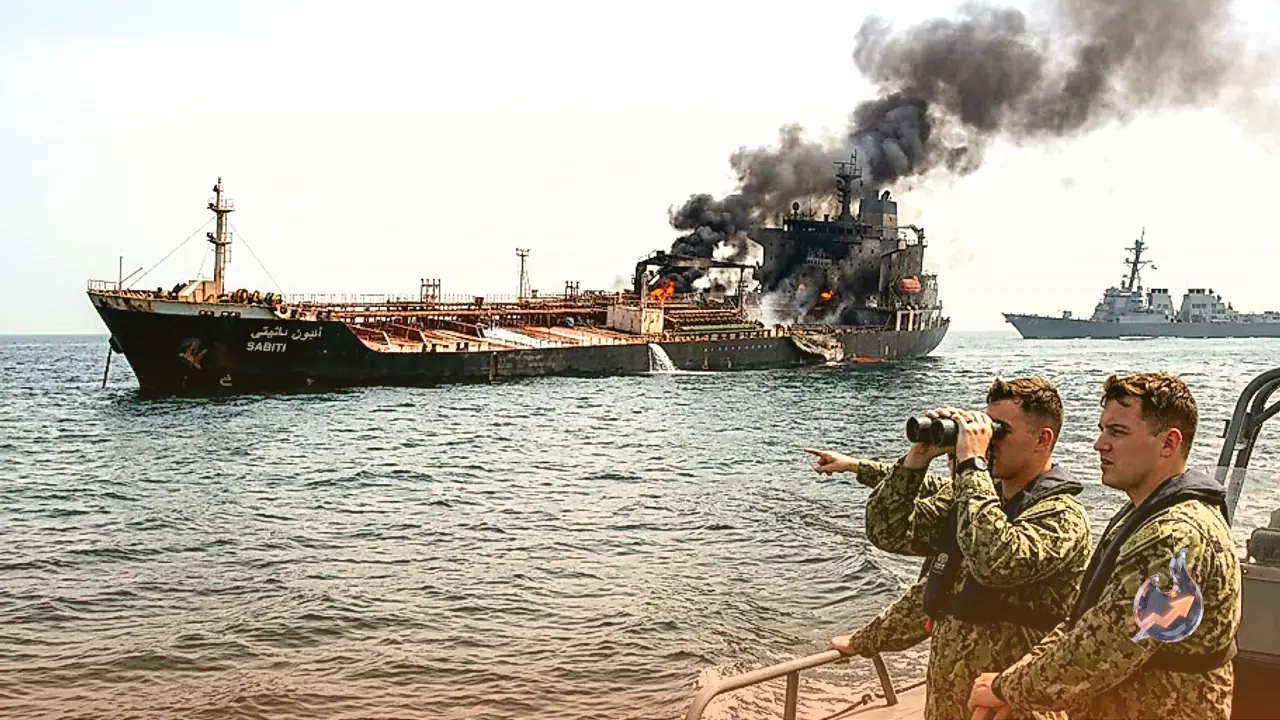
CENTCOM officially confirmed that the targeted strikes on September 8, 2026, effectively neutralized five large Iranian crude oil vessels, rendering them entirely incapable of navigation or commercial operations. Adhering to international maritime engagement protocols, US naval forces issued clear evacuation warnings to the crews aboard all five vessels prior to launching the strikes. Once the crews had safely vacated the ships, US forces disabled the vessels' key operational infrastructure, removing them from Iran's active maritime transport capabilities.
Identified Tankers and Strategic Attack Locations
Geographic data provided by CENTCOM indicates that four of the targeted Iranian crude carriers were operating within the Gulf of Oman, while the fifth vessel was anchored near Kharg Island, Iran's primary crude oil export hub. The four tankers neutralized in the Gulf of Oman were identified as the Kaviz, Charminar, Horizon 1, and Riesco. The fifth vessel, targeted in the coastal waters near Kharg Island, was the Derya. Because Kharg Island handles the vast majority of Iran's seaborne crude exports, disabling a vessel in its immediate vicinity inflicts a severe operational and economic blow on Tehran's energy apparatus.
Targeting Tehran’s Shadow Oil Network
CENTCOM stated that these crude oil carriers formed an integral part of Iran's multi-billion dollar illicit 'shadow oil network'. According to US intelligence assessments, Tehran utilizes this clandestine fleet to bypass international sanctions and sell crude oil on global black markets. The revenues generated from these illicit petroleum sales are directly funneled into funding IRGC military operations and supporting proxy militia networks across the Middle East. US officials emphasized that these strikes were designed not merely as a tactical military reprisal, but as a strategic initiative to choke the financial pipelines sustaining Iranian regional influence.
US Secretary of State Marco Rubio underscored Washington's firm stance following the operation. He issued a explicit warning that any attempts by Iran to target US naval vessels would directly cost Tehran its commercial oil fleet. Rubio indicated that future Iranian aggression against American maritime assets will consistently meet with retaliatory strikes against Iran's underlying energy infrastructure.
The Earlier September 5 Retaliatory Strikes
The strikes on September 8 build upon a prior military engagement that occurred on September 5, 2026. CENTCOM previously reported that on September 5, IRGC forces launched ballistic missiles targeting two US Navy warships conducting routine patrols in international waters. The targeted American vessels included an aircraft carrier and a guided-missile destroyer. Both warships deployed defense countermeasures, evaded the incoming ballistic missiles, and sustained zero damage or casualties.
In immediate retaliation on September 5, US forces struck three Iranian crude oil carriers: the M/T Downy near Kharg Island, the M/T Kylo (also known as Noxen) in the Gulf of Oman, and the Stark 1. CENTCOM confirmed that the M/T Downy and Stark 1 were permanently rendered non-operational, while key structural and propulsion systems on the M/T Kylo were targeted to render it unseaworthy. Prior warnings were issued to all crews to evacuate before weapon impact. Combined with the five tankers struck on September 8, US forces have disabled a total of eight Iranian-linked crude carriers within a four-day span.
Impact on the Strait of Hormuz and Global Energy Routes
The core vulnerability of this unfolding military conflict lies in its proximity to the Strait of Hormuz and surrounding maritime choke points. The Strait of Hormuz is the world's most critical transit route for crude oil and liquefied natural gas (LNG), carrying approximately 20 percent of global petroleum consumption. Escalating direct exchanges between US naval forces and Iranian military units carry profound risks beyond immediate combat operations, threatening to trigger severe disruptions in global oil supply chains and sharp volatility across international energy markets.
Iranian Missile Counter-Attacks and Regional Threats
Following the destruction of five oil tankers on September 8, Iran launched retaliatory measures across the region. According to Iranian state media and IRGC statements, Iranian forces fired a volley of ballistic missiles at the Al-Azraq air base in Jordan, a facility utilized by US forces. However, Jordan's military confirmed that its air defense systems intercepted 18 out of the 20 incoming ballistic missiles. The remaining two missiles landed in unpopulated areas, resulting in zero casualties or critical infrastructure damage.
Iran also claimed to have launched additional attacks against US naval vessels and other commercial ships navigating regional waters, though these claims remain unverified by independent international observers. Heightening regional anxieties, Iranian authorities issued warnings threatening commercial oil tankers docked at ports in Kuwait and Bahrain. This posture has heightened concerns among global shipping firms and energy logistics operators managing commercial traffic throughout the Persian Gulf.