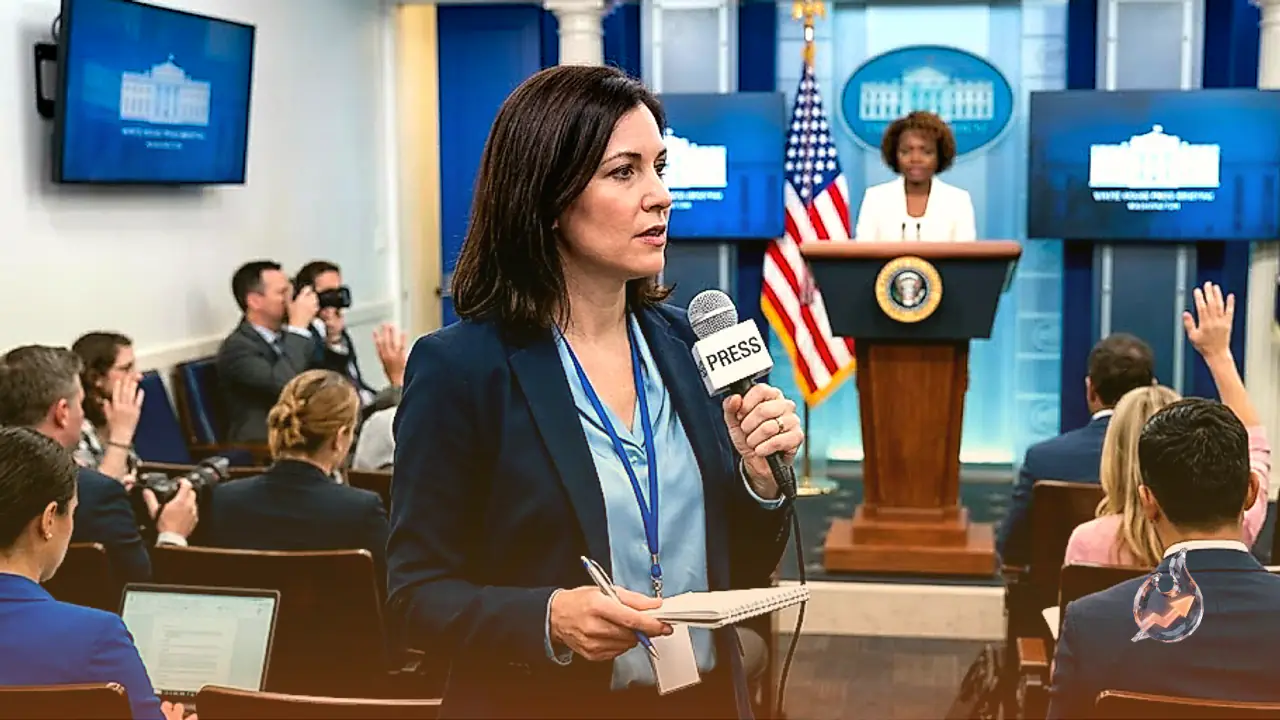























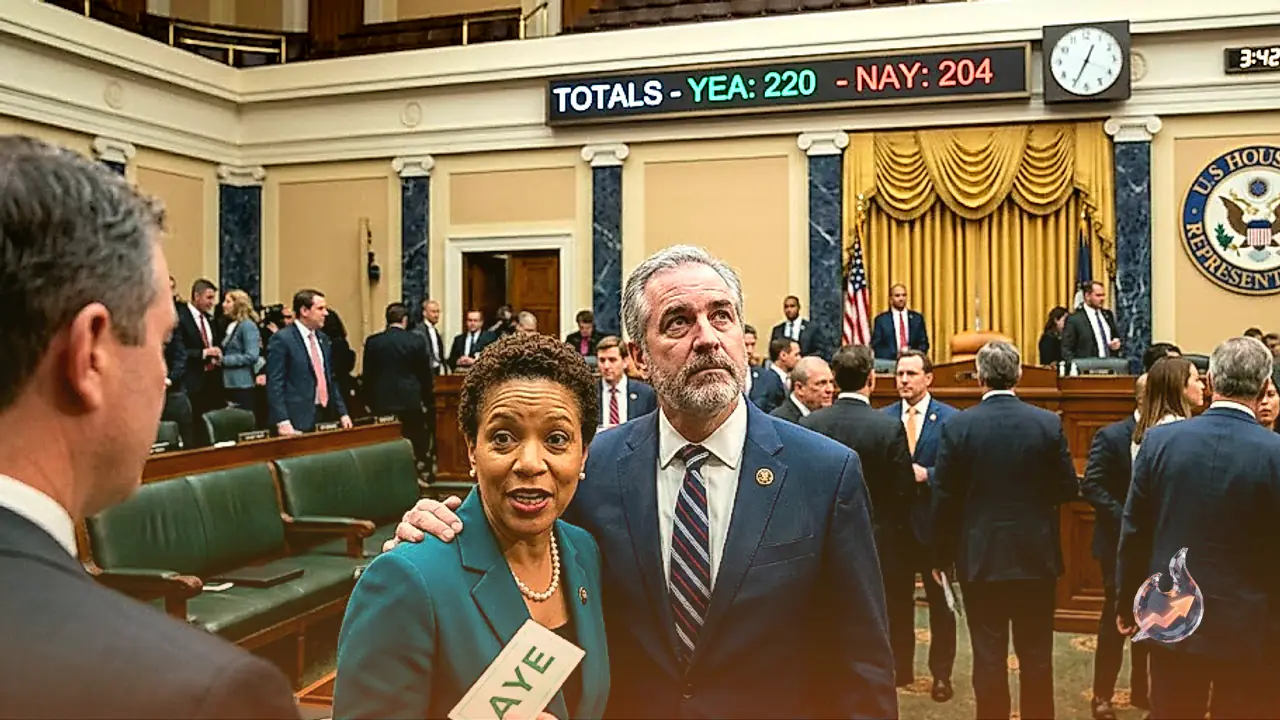

In a late-night legislative development on Capitol Hill, the United States House of Representatives voted to approve a resolution designed to curb President Donald Trump's authority to conduct military operations against Iran without explicit congressional authorization. The measure cleared the chamber by a tally of 220 to 204. The decisive factor in the vote was an internal party break, as seven Republican lawmakers crossed the aisle to cast their ballots alongside the Democratic minority to rein in executive military authority.
Third Legislative Push in Seven Months Against Unilateral Military Engagements
The passage of this measure marks the third time across a seven-month conflict that the House has moved to halt unauthorized military action against Tehran. Similar legislative initiatives were approved by the chamber in June and July. The persistent friction between Capitol Hill and the administration underscores an escalating unease among lawmakers regarding prolonged foreign conflicts conducted without clear statutory limits or defined strategic endpoints.
Representative Seth Moulton, a Democrat who previously served as a US Marine commander during the Iraq War, sponsored the measure and led the floor debate with sharp criticisms of current foreign policy decisions. He reminded fellow lawmakers of earlier assurances from the administration suggesting that the confrontation would wrap up within a matter of weeks. Emphasizing constitutional prerogatives during the floor debate, Seth Moulton argued,
"The Constitution gives Congress the responsibility to ask hard questions, not to bow down before a pro-war administration."He stressed that legislators have a sworn constitutional duty to oversee executive branch actions rather than passively accepting an expanding theatre of conflict.
Seven Republican Members Who Broke Ranks to Support the Measure
The success of the Democratic-led measure hinged entirely on the votes of seven Republican lawmakers who chose constitutional oversight over partisan alignment on the House floor.
Representative Tom Barrett of Michigan was among the group of four established Republican dissenters who had also voted in favour of constraining presidential war powers during the earlier roll calls in June and July. Barrett has consistently maintained that major military engagements must remain accountable to the nation's elected representatives.
Representative Warren Davidson of Ohio has long championed strict adherence to the principle that prolonged foreign military operations cannot legitimately proceed without an unambiguous, formal mandate approved by the United States Congress. Davidson reiterated his constitutional stance by supporting the measure.
Representative Brian Fitzpatrick of Pennsylvania parted ways with party leaders for the third consecutive time on this specific question, arguing that ongoing military conflicts must be subjected to structural legislative oversight and formal debate.
Representative Thomas Massie of Kentucky, widely known for taking uncompromising libertarian and constitutionalist positions, once again affirmed his conviction that any foreign military conflict waged without congressional authorization undermines legislative supremacy.
Representative Nancy Mace of South Carolina shifted her legislative stance during this vote. While Mace had backed the administration during the prior roll calls in June and July, she decided on this occasion to vote in favour of the resolution restraining military action.
Representative Mariannette Miller-Meeks of Iowa also reversed her previous voting pattern. Highlighting mounting budgetary allocations and pressing domestic security concerns, Miller-Meeks chose to vote with the coalition seeking to limit unilateral war-making authority.
Representative Zach Nunn of Iowa provided additional momentum to the dissenting group by casting his vote for the resolution. Nunn's vote expanded the cadre of conservative lawmakers openly challenging current executive policy regarding the conflict with Iran.
Escalating Budgetary Strain and Congressional Budget Office Projections
A primary driver behind the widening dissent within Congress is the staggering financial price tag of the confrontation. The legislative showdown unfolded alongside the release of an authoritative economic assessment compiled by the non-partisan Congressional Budget Office.
According to the official figures published by the CBO, the Department of Defense had expended approximately 38 billion dollars—equivalent to roughly 3.1 lakh crore rupees—on military operations targeting Iran up through 1 August 2026. The fiscal watchdog issued a stark warning in its findings, projecting that if active hostilities continue at their current operational intensity, American taxpayers will be forced to shoulder an ongoing expenditure of between 2 billion and 3 billion dollars each month.
The protracted military dispute has generated severe disruptions across global crude supply corridors, translating directly into elevated fuel prices, higher diesel rates, and climbing electricity tariffs for everyday American households. Responding to economic anxieties, House Speaker Mike Johnson voiced hope that prices at the fuel pump and costs for essential household goods would eventually ease once international partners step forward to help secure lasting stability throughout the Middle East.
Procedural Hurdles Ahead in the Upper Chamber
While the House vote serves as a notable legislative rebuke of unilateral executive action, the resolution must still navigate procedural and political realities across Capitol Hill. Under American legislative procedure, statutory constraints require concurrence from the Senate and the signature of the president to enter into full legal force, facing the potential hurdle of an executive veto that would demand a two-thirds majority in both chambers to override.
Nonetheless, the emergence of bipartisan resistance inside the House signals deep political weariness after seven months of open conflict. With economic costs accelerating and key lawmakers insisting on their constitutional authority to decide matters of war and peace, the administration faces mounting pressure from both ends of the political spectrum over its ongoing posture toward Iran.