






















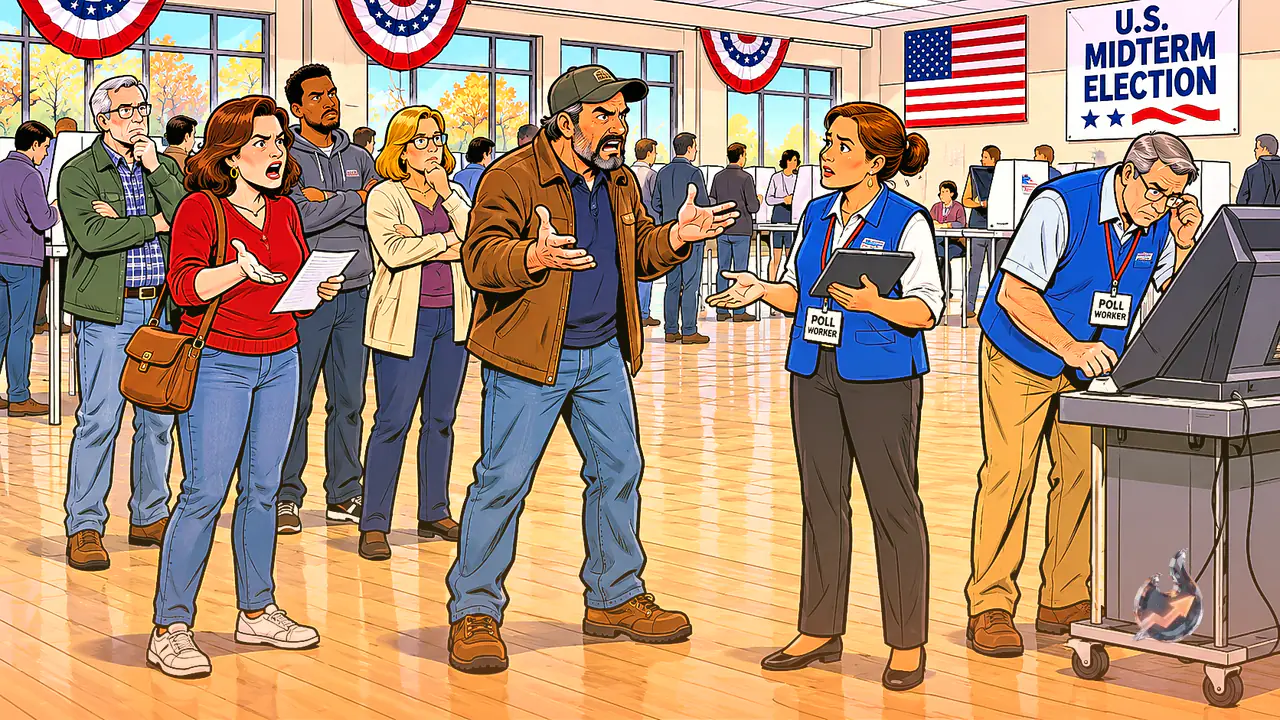

United States President Donald Trump has sharply criticized the outcomes of the recent midterm elections, openly questioning the integrity and fairness of the entire voting process. Taking to his social media platform Truth Social, Trump expressed profound frustration over how pre-election polling predictions could go so wrong, arguing that voting machines have somehow become more important than actual voters casting ballots.
Voicing his deep skepticism about the electoral process, Trump alleged that during early voting, massive blocks of ballots emerged in a manner that made it mathematically impossible for Republican candidates to secure a victory. He questioned how mainstream surveys completely missed predicting a sweeping victory for the Democrats. This sharp outburst marks a dramatic departure from his initial, relatively mild reaction immediately following the electoral defeat of the Republican Party.
Concerns Over Voting Machines and Electoral Integrity
In his social media posts, Trump directly asked if anyone genuinely believed that the election was conducted honestly, reiterating his astonishment at the massive discrepancies in pre-election polling. He argued that the entire operational framework now revolves around machines, which he believes have eclipsed the importance of individual voters. According to him, the strange surge of votes during early polling windows sealed the fate of Republican candidates regardless of voter turnout.
This aggressive stance contrasts sharply with his initial remarks after the results first came in last Tuesday. At that time, Trump had congratulated the Democrats for doing a good job and told reporters that he did not view the outcome as a personal defeat since he was not personally on the ballot. However, as the political ramifications of losing control of both chambers of Congress became clearer, his tone shifted significantly toward active confrontation and skepticism.
Analyzing the Defeat and Policy Pressures
The midterm elections held on November 3 dealt a severe blow to the Republican Party, with the Democrats capturing control of both the House of Representatives and the Senate by flipping several key seats. Discussing the primary reasons behind the party's heavy losses, Trump pointed to multiple external and domestic grievances held by voters. He cited the ongoing war involving Iran, surging gasoline prices, and widespread public anger regarding Israel as major factors.
Trump noted that the public disapproved of the conflicts and was frustrated by rising fuel costs, despite his previous efforts to lower them. Regarding his immigration stance, he acknowledged that his administration's policies were exceptionally strict. In an interview on the CBS program 60 Minutes, he admitted that the measures might have been excessively tough, conceding that his aggressive immigration crackdown yielded both political advantages and heavy disadvantages.
Major Administrative Shakeup at the White House
Following the significant electoral setbacks, President Donald Trump announced a major administrative reshuffle within the White House. He appointed Stephen Miller as his new Chief of Staff, replacing Susie Wiles. Miller has long been recognized as one of Trump’s closest advisors and served as the primary architect behind the administration's hardline immigration policies.