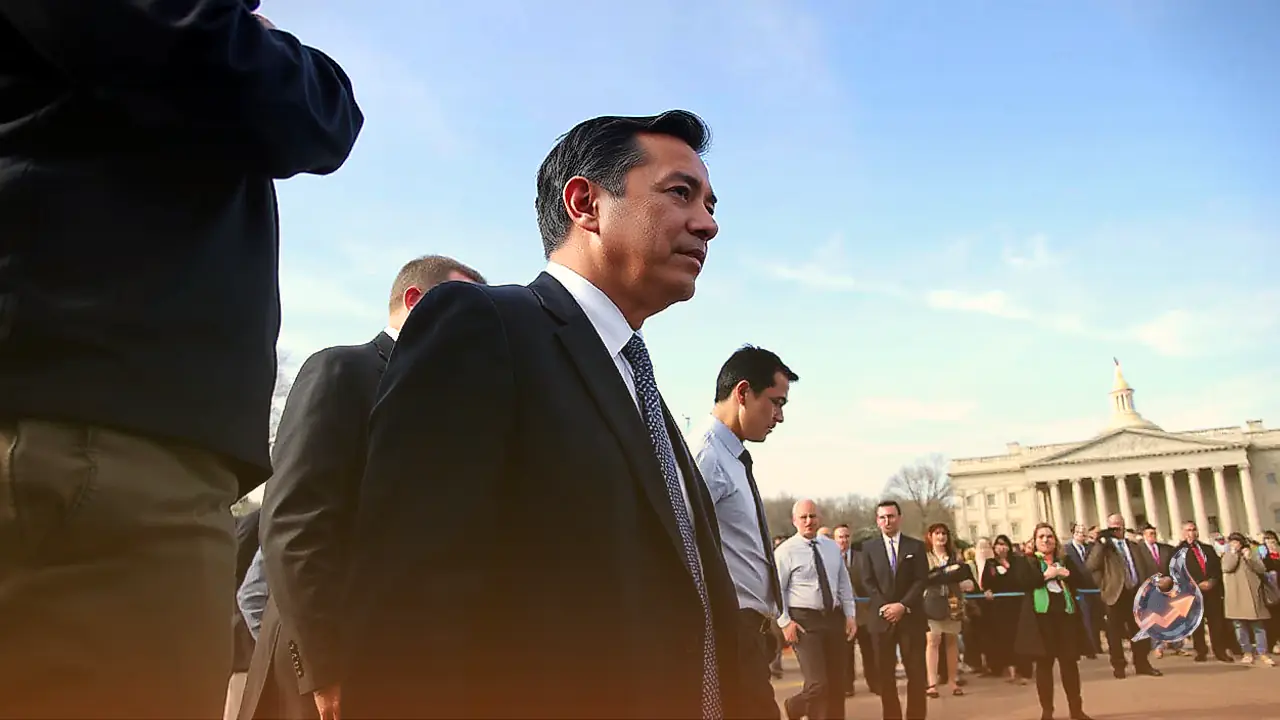
























Political circles in the United States have been stirred following sharp remarks on foreign policy and international assistance by a newly elected Muslim lawmaker. Abdul El-Sayed, who recently made history by becoming the first Muslim senator in the United States, has directly raised questions regarding the economic and military aid provided to Pakistan. This statement has the potential to escalate anxiety in Islamabad, as funding originating from Washington faces closer scrutiny by domestic lawmakers.
El-Sayed asserted clearly that the United States must re-evaluate financial support directed toward any country accused of utilizing American funds in ways that contravene international law. Notably, his critical stance is not limited to a single nation in the Middle East; he explicitly included Pakistan, Egypt, and Jordan within the same framework. This indicates that among nations receiving Washington's backing, Pakistan's utilization of funds is coming under fresh scrutiny.
Making History in Michigan
As a member of the Democratic Party, El-Sayed secured a historic victory in Michigan by defeating Republican candidate Mike Rogers, thereby becoming the first Muslim senator in the United States. Following his electoral success, he articulated his perspective on American foreign policy and the aid extended to foreign governments. He maintains that taxpayer dollars should not be channeled into activities that run contrary to global legal standards.
Statements Regarding Pakistan and Other Nations
During an interview with ABC, El-Sayed emphasized that the United States must first ensure its own actions align strictly with international law. He noted that this issue should not be restricted solely to Israel. El-Sayed stated that his perspective applies equally to Egypt, the country from which his family immigrated to the United States, as well as to Pakistan and Jordan. He added that if Washington provides financial assistance to a nation and that country uses those funds to breach international law, accountability measures must begin right there.
This declaration holds particular significance for Pakistan, given that India has long questioned the economic assistance extended to Islamabad on various international platforms. India's persistent concern has been that funds sourced from international organizations and foreign governments could potentially be channeled toward fostering terrorism or expanding military operations within Pakistan.
Scrutiny Over Aid to Israel
El-Sayed also voiced support for proposals to reduce military assistance to Israel, aligning with a stance attributed to US President Donald Trump. He suggested that the administration's direction on this matter is correct and called for halts to specific arms sales. He argued that certain weapons supplied by the United States have been deployed in campaigns he characterized as involving genocide and apartheid.
Currently, the United States provides Israel with approximately 3.8 billion dollars in annual military assistance under an agreement slated to run through 2028. Meanwhile, proposals to wind down roughly 4 billion dollars in annual military aid to Israel by the end of the year have been discussed. El-Sayed argued that American foreign policy must apply consistent standards, ensuring that whenever a nation receives assistance, the actual application of those funds is thoroughly examined.
Questioning Assistance to Additional Nations
Beyond Pakistan, Egypt, and Jordan, El-Sayed also raised questions regarding military aid delivered to Saudi Arabia. He contends that American taxpayer funds ought to be prioritized for domestic needs within the country. This policy position carries weight because the United States has historically maintained a long-standing practice of supplying economic and military backing to numerous countries across South Asia and the Middle East. El-Sayed advocates for establishing strict accountability rather than continuing such aid unconditionally.