





















A major sanctions bill recently passed by the United States Senate aimed at slashing Russia’s energy revenues has triggered intense debate within Washington’s political establishment. The proposed legislation seeks to empower the administration to slap steep tariffs on countries purchasing Russian crude oil and natural gas. However, the prospect of targeting India with up to 100 percent import duties has met with sharp pushback from prominent American lawmakers, highlighting growing concerns over the strategic fallout of such economic penalties.
Rand Paul Warns Tariffs on India Are 'Self-Defeating'
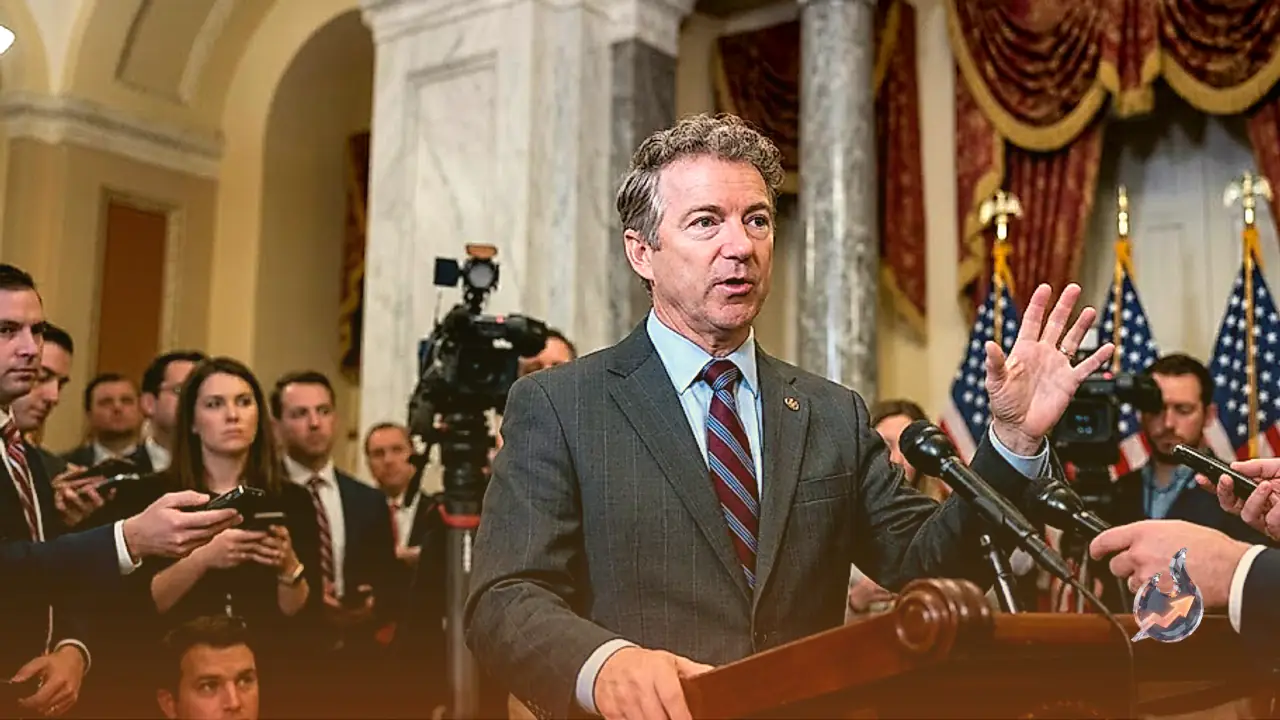
Leading the opposition within the governing party, senior Republican Senator Rand Paul spoke out against the tariff proposal, characterizing it as a self-defeating measure akin to shooting oneself in the foot. He emphasized that at a juncture when the United States is actively seeking India's cooperation to counter China’s expanding global influence, penalizing New Delhi with severe trade barriers would prove counterproductive. According to Rand Paul, imposing a 100 percent tariff would not only inflict financial harm on the American economy but also risk alienating a critical partner, potentially driving India closer to Moscow and Beijing in contradiction to broader US geopolitical objectives.
Key Provisions of the Russia and Iran Sanctions Act of 2026
The legislation, formally titled the 'Lindsey O. Graham Sanctioning Russia and Iran Act of 2026', passed the Senate with a decisive majority. Designed to curtail Moscow's financial pipeline from energy exports, the bill explicitly authorizes President Donald Trump to institute tariffs reaching up to 100 percent on goods originating from nations that maintain oil and gas purchases from Russia.
Major buyers of Russian energy, including India and China, feature prominently among the countries affected by the legislative framework, alongside European nations such as Azerbaijan, Hungary, and Slovakia. Beyond trade measures, the bill incorporates comprehensive sanctions targeting Russian President Vladimir Putin, key political figures, oligarchs, and major financial institutions across Russia.
Political Division and Legislative Next Steps
Despite gaining strong momentum in the Senate, the bill has exposed friction across party lines. In addition to conservative dissent, several Democratic lawmakers have expressed reservations regarding the broad tariff authority granted to the executive branch. Critics argue that handing the president sweeping power to impose retaliatory tariffs could disrupt global supply chains and destabilize international commerce.
The measure now advances to the House of Representatives, where it is scheduled for further debate and a full vote during the upcoming legislative session. As lawmakers prepare to scrutinize the provisions, the pushback over potential tariffs on strategic allies indicates that balancing economic pressure against Russia with key diplomatic relationships will remain a contentious issue on Capitol Hill.