























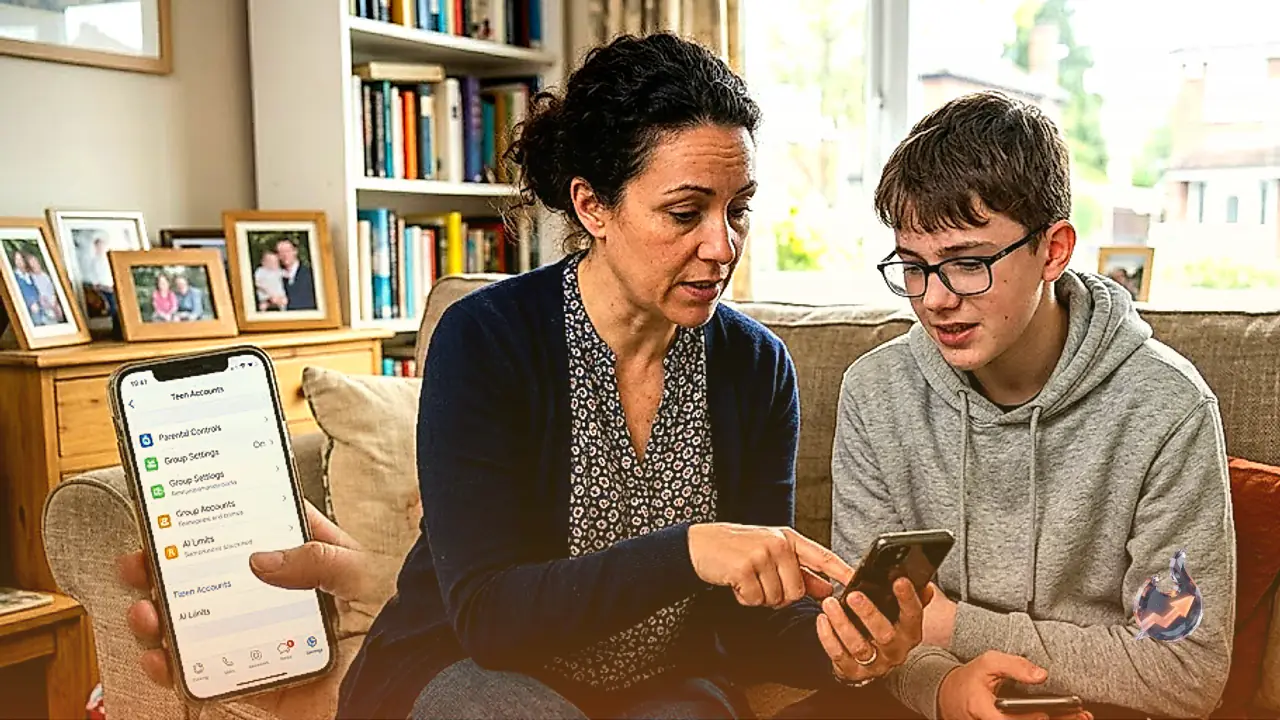

Meta has expanded safeguards across its primary messaging service by rolling out comprehensive parental controls designed for teen accounts on WhatsApp. The newly introduced oversight options give parents and guardians direct supervision over who their teenagers interact with inside the app, while also providing granular filters to regulate content generated during Meta AI interactions.
Supervising Groups and Status Visibility
Through these newly deployed supervision settings, guardians can set boundaries on how teenagers interact with broadcast channels, decide whose Status updates they are permitted to view, and restrict who is allowed to view the teen's own Status posts. Control also extends to account privacy, allowing parents to determine who can view a teenager's profile picture or add them to group chats. To prevent unsupervised exposure in large communities, parents can configure automated alerts that trigger whenever a teen joins a new group, exits a group, or when a participating group expands to reach 30, 100, or 250 members.
PIN Security and Meta AI Content Restrictions
Every single one of these parental controls is secured behind a dedicated PIN created exclusively by the parent. Consequently, if a teenager attempts to modify any privacy restriction or communication parameter, parental authorization is mandatory before any adjustment takes effect. Guardians also retain the freedom to disable these controls entirely whenever appropriate. Alongside contact management, parents can calibrate content rules governing Meta AI conversations. The platform offers a baseline 13+ configuration as well as a stricter 'Limited Content' tier. Activating this restrictive mode turns off private processing features such as incognito chat sessions and automated message summaries. WhatsApp emphasized that despite these administrative controls, personal calls and messages maintain end-to-end encryption, ensuring nobody outside the conversation can read or intercept them.
Regulatory Pressure and Broadened Safety Measures
The rollout arrives as parent firm Meta contends with intense legal and regulatory pressure over allegations that its digital platforms contribute to child harm. Lawmakers have repeatedly scrutinized Meta and Instagram over prolonged delays in releasing teen safety features. Back in August, the social media giant agreed to pay a massive $18 billion settlement resolving litigation filed across 29 states in the United States. Following that scrutiny, the corporation has accelerated child safety rollouts across its portfolio this year. Recent deployments include international movie-inspired rating filters, parental dashboard controls monitoring topics discussed with Meta AI, parent-linked WhatsApp profiles for pre-teens, and automated notifications warning parents if teenagers search for self-harm or suicide-related terms on Instagram.