





















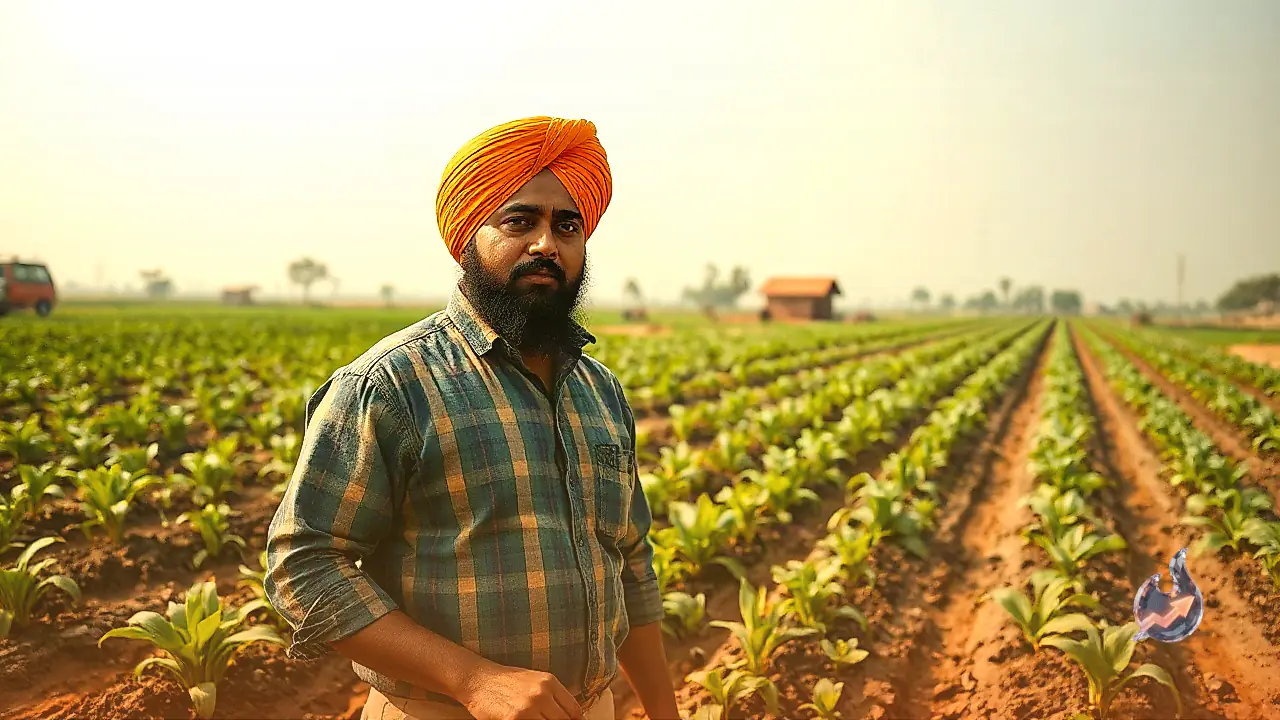

In Rajasthan's Nagaur district, isabgol stands out as one of the cornerstone cash crops of the rabi season. Known for its modest water requirements, this crop is widely cultivated across multiple farming belts in the region. The primary economic value of isabgol lies in its husk, which commands sustained demand in pharmaceutical and consumer markets. To translate this market potential into maximum field yield, growers must pay meticulous attention to planting schedules, seed bed conditioning, seed grading, and irrigation balance. According to agricultural expert Bajrang Singh, mastering these foundational practices makes all the difference between an average yield and a bountiful harvest.
Sowing Windows and Temperature Considerations
Timing the planting phase correctly is the single most critical factor in establishing a healthy crop. Agricultural expert Bajrang Singh notes that the standard sowing window for isabgol ranges from late October through November. If sowing is rushed too early, elevated autumn temperatures can impair germination, retard early plant growth, and ultimately curb final grain production. On the other hand, delaying sowing excessively compresses the developmental lifecycle of the plant, bringing down overall output. Farmers must observe local weather shifts closely and seed when temperatures drop to favorable levels that stimulate vigorous sprout emergence.
Selecting Suitable Soils and Field Preparation
Soil texture directly impacts root development and overall plant vitality. Isabgol performs best in light soils, particularly loam or sandy loam profiles with good natural porosity. The most vital prerequisite for the plot is excellent drainage, as standing water is catastrophic for this crop. Poor drainage suffocates root networks and sharply escalates the incidence of fungal and bacterial infections. Prior to planting, the field should be ploughed thoroughly until the soil achieves a fine, crumbly tilth. Leveling the plot evenly afterward ensures that subsequent light irrigations distribute moisture uniformly without creating low-lying puddles.
Quality Seeds and Row Sowing Techniques
Given that isabgol seeds are exceptionally fine and small, placement depth demands precise control. Agricultural expert Bajrang Singh advises that seeds must never be buried excessively deep beneath the soil surface, as deeper placement hinders seedling emergence. Farmers should procure only certified, high-grade seeds to guarantee robust germination rates. Instead of random broadcasting, planting in straight rows is strongly recommended. Maintaining distinct rows ensures adequate spacing between individual plants, improves airflow and sunlight exposure, and significantly simplifies subsequent weed management tasks.
Controlled Irrigation Practices
Because isabgol thrives on minimal water, moisture management must be handled with precision. Only light waterings should be applied as required by the soil conditions. Over-irrigating or allowing water to pool for extended periods will damage the root zone and spoil the standing crop. Conversely, farmers must ensure that moisture stress does not strike during critical flowering and grain-formation phases, as water deficits at these stages will shrink grain size and depress yields. Irrigation decisions should therefore be calibrated strictly against real-time soil moisture and prevailing temperatures.
Weed Eradication and Routine Health Checks
During the tender early growth phase, aggressive weeds can rapidly overrun the field. These invasive plants compete fiercely with young isabgol seedlings for available moisture, light, and soil nutrients. Timely manual weeding and hoeing must be performed to maintain a clean, weed-free seedbed. Farmers should inspect their fields routinely. If unusual discolorations or abnormal patterns appear on leaves and stems, growers should avoid indiscriminate pesticide applications and instead consult local agriculture department officials or technical experts for targeted advice.
Harvest Timeline, Processing, and Storage
Under favorable climatic and cultural conditions, an isabgol crop matures within roughly 110 to 130 days. As the crop ripens, the plants naturally turn dry and the seed spikes undergo a distinct color transformation. Postponing harvest once this stage is reached must be avoided at all costs, as mature seeds shatter easily and fall to the ground, leading to preventable harvest losses. After reaping, the spikes must be thoroughly sun-dried before threshing out the seeds. Rigorous cleaning to remove chaff followed by dry, protected storage preserves seed quality and market value.