






















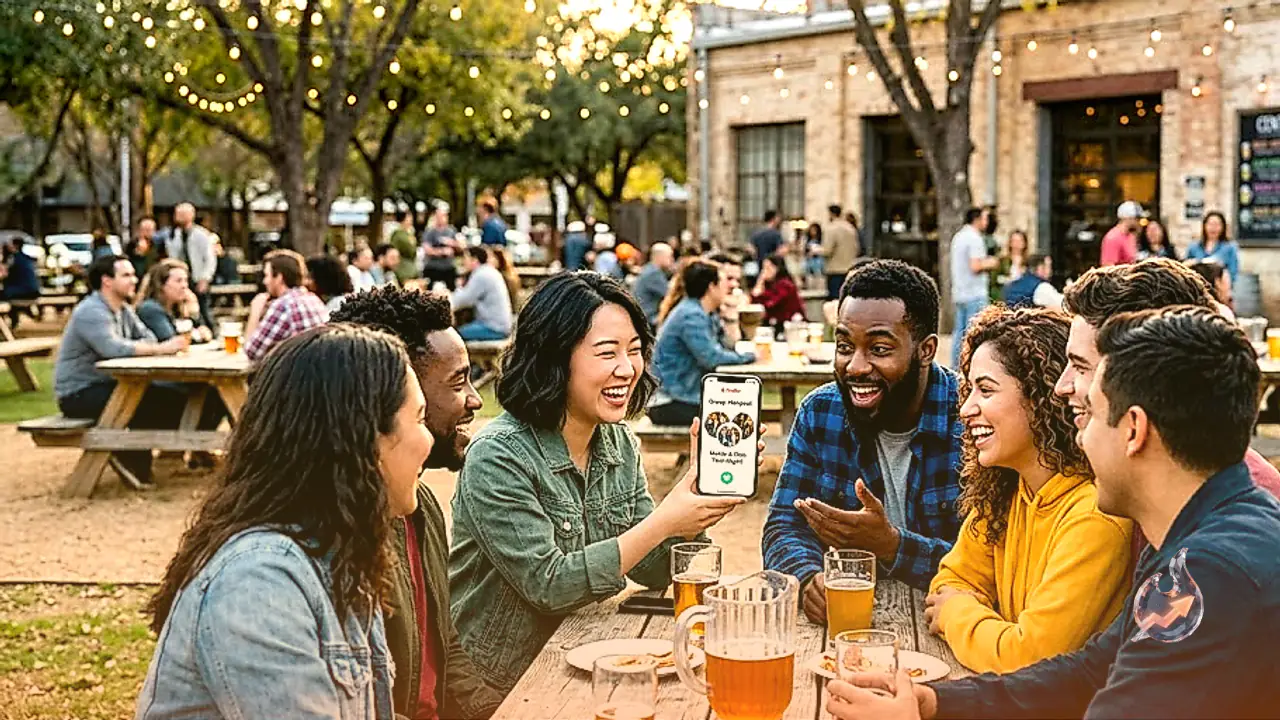

Fatigue from endless digital profile browsing is prompting online dating platforms to overhaul how people connect. Younger generations increasingly prefer meeting potential partners through casual, real-world social settings rather than high-pressure one-on-one encounters. Responding to this shift, Tinder announced the launch of Group Hangouts on Wednesday, a feature that enables circles of friends to discover other friend groups, match based on shared interests, and coordinate collective outings in the real world.
How Group Creation and Matching Work
Setting up a group requires a user to first pick a planned activity and invite at least two friends. A group profile becomes eligible to appear in the main card stack only after it reaches a minimum of three members, allowing other browsing groups to discover it. To accommodate different social circles, Tinder allows a maximum of 15 participants in a single group.
Groups can browse other group profiles and express interest with a like. The connection mechanism is designed to lower barriers: if at least one member from each group likes the other profile, a mutual match is formed. Both groups are then merged into a shared group chat, giving all participants an open space to introduce themselves and finalize meetup plans together.
Participant Controls and Safety Options
The platform has added individual safety settings to give members control over their interactions within group conversations. A user can choose to leave an active shared chat without having to drop out of their primary friend group. Furthermore, if any participant behaves inappropriately or makes someone uncomfortable, individual members retain the ability to report or block that specific person directly.
Group Hangouts is placed right at the top of the main home screen inside the mobile app. The rollout is currently taking place in phases across the United States and selected markets, with plans to expand into additional international regions later.
Evolution from Double Dates to Community Outings
The new rollout builds directly on earlier efforts to promote group-oriented interactions. Last year, the service introduced Double Date, which allowed two friends to pair up and jointly swipe on other pairs. Group Hangouts scales up that structure significantly, shifting the atmosphere from a traditional four-person setup to a lively group excursion.
Discussing what sparked the concept, Claire Watanabe, VP product management, explained in an email, "One inspiration was seeing a college women's volleyball team make a Tinder profile while traveling for away games, so they could explore a new town and meet locals." Watanabe noted that in actual use, friend circles tend to remain tight-knit, with people typically organizing casual plans with their immediate circle rather than arranging massive gatherings.
Navigating Revenue and User Declines
The push toward physical, in-person experiences comes as traditional swipe apps face plateauing growth. In March, an Events tab was introduced to help users discover local real-world pastimes, including pottery classes, bowling, and speakeasies. Earlier this month, those in-person events expanded across dozens of additional cities. Competitor Bumble is pursuing a similar path, leaning into real-life casual group meetups through its newly introduced Plans feature.
These product pivots coincide with a challenging operating period for Tinder, which is seeking to re-engage its core demographic. The company experienced a decline in revenue during the most recent quarter. Furthermore, monthly active users dropped by 7% in the second quarter, compounding an 8% drop recorded in the prior quarter.