

















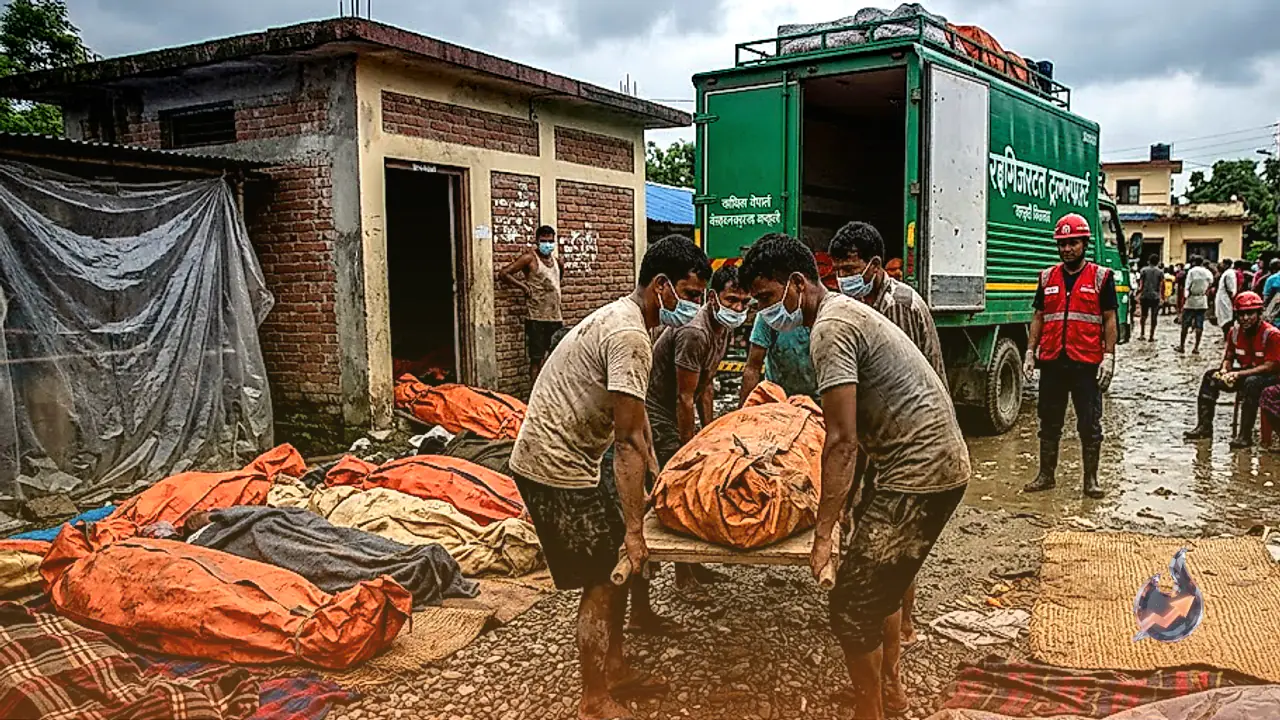

The humanitarian situation in Nepal remains critical following catastrophic flooding across the region. Search and rescue operations have led to the recovery of nearly 400 bodies so far. The task of locating victims has become increasingly complex as floodwaters carried bodies over extensive distances and left many buried under deep debris. Beyond rescue efforts, medical authorities are confronting a major logistical crisis due to a severe shortage of cold storage infrastructure required to preserve human remains.
Chitwan Facilities Overwhelmed Beyond Threefold Capacity
In the Chitwan district, local health institutions possess a combined cold storage capacity for only 50 bodies. However, the number of recovered victims in the area has already surpassed 130. Statutory forensic protocol dictates that before any final disposition or cremation can occur, authorities must document exhaustive details of each victim, capture high-resolution photographs, and secure physical evidence for identification. Fulfilling these mandatory requirements while lacking adequate refrigeration has placed immense pressure on local administrative teams.
Forensic Protocol and International Disaster Guidelines
Senior forensic expert Dr. Gopal Chaudhary of Tribhuvan University Teaching Hospital emphasized that rushed cremations during large scale natural disasters violate international standards. Proper management requires prioritizing the preservation of physical evidence. Forensic teams must systematically document the precise location where each body was retrieved, its condition, and any distinguishing physical features or marks. Most hospitals in Nepal lack large capacity mortuary facilities, exacerbating the crisis. Bodies that remained trapped under heavy mud for extended periods decompose rapidly, making prolonged preservation without cold storage extremely difficult.
High Alert Declared in Uttar Pradesh Border Districts
The devastating floods in Nepal have triggered immediate precautions across the border in India. Administrative authorities in the Maharajganj and Kushinagar districts of Uttar Pradesh have issued a high alert and intensified monitoring along the Gandak River. Following the discharge of lakhs of cusecs of water from the Valmiki Gandak Barrage, the Narayani River in Kushinagar is experiencing a rapid rise in water levels. District officials are mobilizing flood defense preparations to protect low-lying villages.
Relief Operations, SDRF Deployment, and Emergency Helpline
Following directives from Chief Minister Yogi Adityanath, the Uttar Pradesh government dispatched a 32-member SDRF platoon alongside 22 PAC personnel to assist in relief and rescue operations in Nepal. An additional SDRF platoon, equipped with four rubber boats and one aluminum boat, is also being deployed to reinforce emergency teams. The State Relief Commissioner's control room is actively monitoring conditions across all border districts. Families seeking information regarding relatives stranded in Nepal can access assistance through the official helpline number 1070.