






















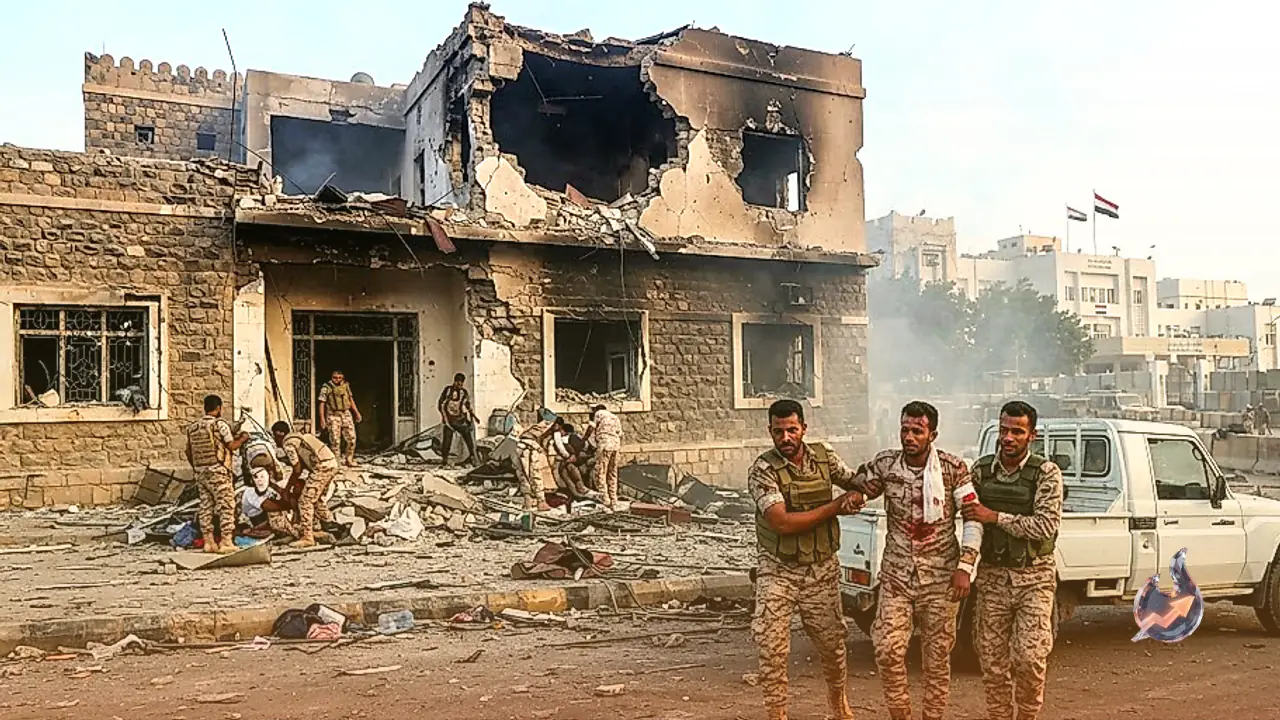

Houthi forces launched a targeted missile strike against the Al-Maashiq presidential compound in the southern Yemeni port city of Aden on Thursday, killing two security personnel and wounding six others. Following the blast, Yemen's Youth Minister Nayef Saleh Al-Bakri confirmed that all government ministers stationed within Aden remained entirely safe and uninjured. He underscored that cabinet members have no intention of abandoning the city despite the lethal breach. The assault on the executive seat marks a sharp escalation in the hostilities playing out between the Houthi movement and Saudi Arabia across multiple regional flashpoints.
Claims of Coordinated Strikes on Saudi Infrastructure
The strike on the palace complex follows assertions made by Houthi forces just a day earlier regarding extensive attacks inside Saudi territory. On Wednesday, Houthi military spokesman Yahya Saree stated that their forces deployed a barrage of ballistic missiles, cruise missiles, and unmanned aerial drones directed at several strategic Saudi sites. In a declaration posted on X, Saree detailed that the strikes targeted facilities belonging to energy giant Saudi Aramco in the Eastern Province, the Ras Tanura oil refinery, and King Khalid International Airport situated in Riyadh. The spokesperson insisted that these strikes triggered extensive damage and ignited fires at the targeted installations, although no independent verification of the claims has been established.
Warnings Directed at Commercial Shipping and Civilians
Further elaborating on their stance, Yahya Saree warned that Houthi operations against Saudi targets would persist in the days ahead. Highlighting airports and oil facilities as active priorities for future action, he urged international maritime freight companies, everyday residents, and facility workers to steer clear of these zones. The Houthi leadership explicitly categorized such energy and aviation assets as legitimate targets for their armed forces. The heightened friction had already triggered preemptive warnings from the Saudi-led coalition, which on Tuesday instructed the complete evacuation of the Yemen Oil Company's Al-Sabahah Central Station located within Houthi-controlled territory in the capital city of Sanaa.
Air Defenses Intercept Incoming Threats
Major General Turki Al-Malki, serving as the spokesperson for the Saudi-led coalition, had appealed to civilians to vacate the targeted Sanaa compound prior to anticipated military measures, sharing an indicative map of the installation on X. On the defensive front, the coalition reported that its air defense units successfully intercepted two incoming ballistic missiles fired toward Khamis Mushait in southwestern Saudi Arabia. Coalition authorities also confirmed the neutralization of three unmanned aerial drones navigating north of Riyadh. In contrast, Houthi accounts claimed the downing of a Saudi reconnaissance aircraft during the skirmishes, assertions that similarly remain without independent confirmation.
Heightened Peril for Global Trade and Maritime Corridors
The latest strikes within Aden and across the Saudi frontier have renewed sharp anxieties over regional stability, international energy corridors, and sea freight logistics. Security observers hold deep concerns regarding commercial transit through the Red Sea and the narrow Bab el-Mandeb Strait, which serves as a vital arterial route for global commercial shipping. The protracted Yemeni conflict intensified dramatically back in 2014 when Houthi forces seized control of the capital, Sanaa, effectively ousting the internationally recognized administration. In response to the takeover, a military coalition spearheaded by Saudi Arabia intervened in 2015 to back the displaced government, initiating a protracted confrontation that continues to destabilize the Arabian Peninsula.