





















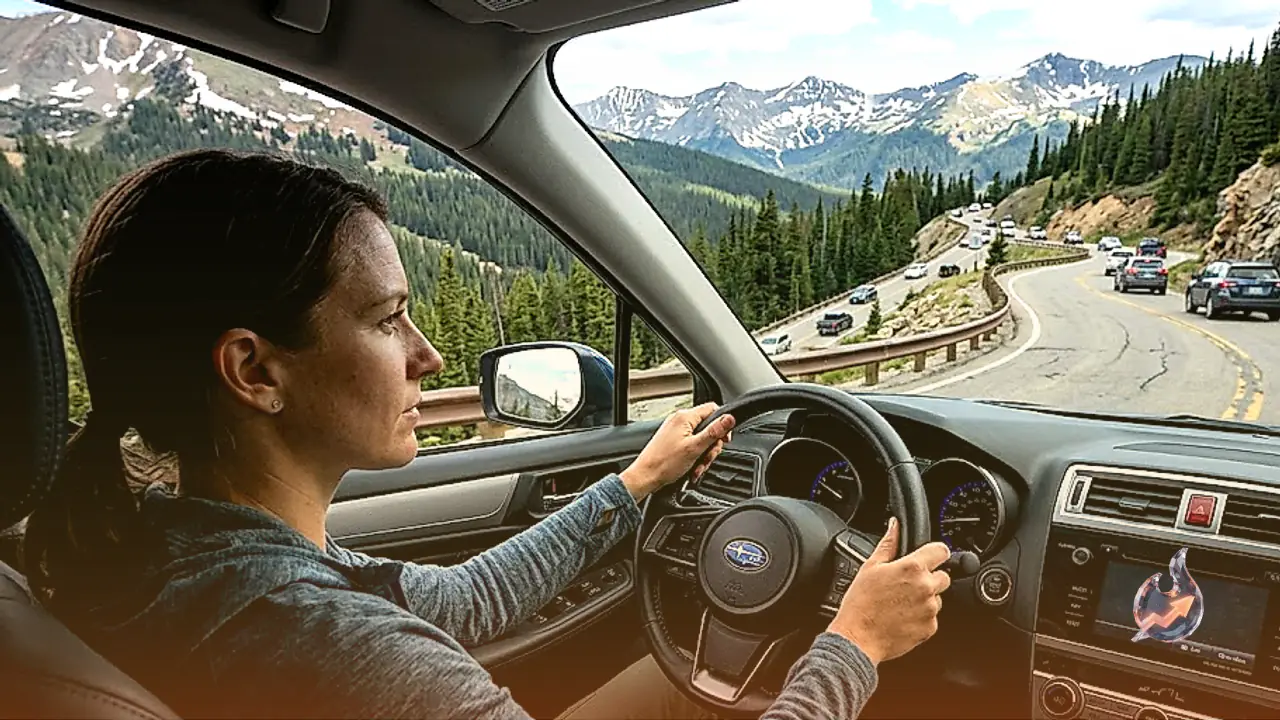

A surge of travellers from Delhi-NCR is preparing to head towards popular hill destinations like Shimla, Manali, Mussoorie, Nainital, and other parts of Uttarakhand and Himachal Pradesh for the long weekend running from October 2 to October 4. The initial stretch of October 2026 presents pleasant mountain weather, lighter visitor volumes compared to peak periods, and generally sound road surfaces. However, driving across hilly terrain demands a completely different approach compared to flat urban thoroughfares. Narrow road widths, sharp curves, sudden patches of dense fog, potential landslide activity, and steep descents make even minor driving mistakes extremely dangerous.
A significant proportion of vehicular mishaps in the hills stem from mechanical brake failure, excessive speed, or inaccurate gear selection. Enjoying a mountain holiday requires careful driving discipline alongside leisure planning. Adopting appropriate vehicle preparation and vehicle-handling techniques ensures that high-altitude travel remains both engaging and safe. Drivers must keep five vital practices in mind throughout their journey.
Pre-Departure Mechanical Inspection
A comprehensive vehicle service must be carried out prior to departing on any mountain route. Crucial inspection points include brake pads, brake discs, brake fluid, coolant levels, engine oil, and battery health. Tyre tread depth should be measured to ensure it stands at no less than 3 mm, as worn tyres easily lose grip on moist surfaces. Complete brake loss remains the single most critical hazard on mountain roads. Drivers should ensure their vehicle is packed with an operable spare tyre, jack, tool kit, torch, bottled water, and a first aid box. Radiator levels must be topped up completely because sustained uphill driving increases engine operating temperatures quickly. Travellers should also keep their FASTag balance funded and the fuel tank full.
Pacing and Appropriate Gear Application
Vehicles operating on mountain paths should not exceed speeds of 30-40 km/h. Moving beyond this threshold makes losing directional control dangerously easy. When climbing inclines, motorists must consistently engage lower gears, such as second or third gear, so the engine receives sufficient operating torque to handle the climb. Likewise, when descending steep gradients, remaining in a lower gear allows engine braking to check vehicular momentum. Riding the footbrake continuously on long slopes generates excessive friction heat, which can lead to sudden brake fade and failure. Controlling momentum through lower gear selection maintains firm handling and lowers collision risks.
Handling Blind Bends and Lane Discipline
Sounding the horn before negotiating blind curves is a non-negotiable rule on winding hill roads. Roadside signs reading Horn Please must never be disregarded. Motorists need to hold their dedicated lane on the left side of the road and strictly avoid crossing the central marking line. Overtaking must only be attempted on straight, wide sections where forward visibility is totally clear. Applying sudden brakes in the middle of a sharp bend should be avoided; instead, drivers should shift down into a lower gear and moderate their pace before entering the turn. Sudden steering jerks and abrupt accelerator inputs must be strictly avoided.
Respecting Right of Way on Slopes
Standard mountain driving etiquette dictates that uphill traffic is granted the right of way over vehicles descending the slope. Motorists travelling downhill must slow down, pull towards the outer edge, and provide adequate passage for vehicles moving up the gradient. When two vehicles meet at an extremely narrow pass, drivers must display patience and allow the oncoming vehicle to clear the bottleneck. On prolonged descents, relying solely on brake pads is perilous, making engine braking in low gear essential. Drivers feeling physical strain should stop immediately. Taking a 10-15 minute rest stop every two hours helps combat exhaustion, as a fatigued motorist poses a severe hazard on mountain corridors.
Adapting to Rapid Weather Shifts and Avoiding Night Travel
High-altitude weather patterns can alter dramatically within a matter of 15-20 minutes. If dense fog, rain showers, or light drizzles develop, motorists must reduce their speed even further. Vehicles should operate with low beam headlights and fog lights activated to improve visibility. Travellers should review route conditions in advance through updates from the Border Roads Organisation or local authorities. Sections carrying standing water or loose mud require deliberate, cautious steering. Driving after dark should be avoided due to severely restricted visibility. When travelling in groups, driving duties should be rotated among eligible drivers to prevent fatigue.