























E20 petrol, fuel blended with 20 percent ethanol, is now widely available at pumps across the country, and that rollout has triggered a fresh round of debate online. Numerous videos and posts claim that this fuel will ruin the engines of older cars, cause a sharp drop in mileage, and damage the fuel system. The truth is that these claims are not entirely accurate, but that does not mean there are no issues at all. Some vehicles, particularly very old ones, have genuinely run into problems.
The push behind E20 comes from a goal of cutting oil import spending, raising farmers' incomes, and reducing pollution. Ethanol acts as an oxygenate, which helps fuel burn more cleanly. The complications arise specifically with vehicles built before 2022, especially those from before the BS4 era, where questions have been raised about fuel system compatibility. Looking at this through the lens of engineering principles and real workshop experience makes the picture much clearer.
What ethanol actually is and why it gets blended into petrol
Ethanol is primarily an alcohol produced from sugarcane or corn. The main reason it is mixed into petrol is to increase the oxygen content of the fuel, which improves combustion. The direct benefit is lower harmful emissions and reduced dependence on fossil fuels. Interestingly, ethanol is favoured in motorsport because it has a higher octane rating, keeps combustion temperatures more controlled, and makes tuning easier. India had been running on E10, fuel with 10 percent ethanol, for a long time, and E20 has now become the new standard.
How the air fuel ratio inside an engine gets affected
Every engine has an ideal air fuel ratio, or AFR, at which it runs best. For pure petrol, known as E0, that ratio is 14.7:1, while for pure ethanol it drops to roughly 9:1. When a blend like E20 is used, this ratio shifts, which means the engine's ECU has to slightly increase the amount of fuel it delivers. If the ECU fails to make that adjustment, the engine can run lean, meaning it gets less fuel than it needs, which raises the risk of higher temperatures. Modern vehicles, however, are fully capable of managing this adjustment.
How BS4 and newer cars cope with E20 without trouble
Petrol cars built to BS4 standard or newer come equipped with closed loop fuelling systems, oxygen sensors, and smart ECUs that can automatically adjust injector pulses. Most ECUs are designed to handle fuel correction of up to around 20 percent, and E20 comfortably falls within that range. A clear example is Brazil, where blends of E25 to E27 have been used in ordinary cars for years without any major crisis. In India, preparations for ethanol compatibility were actually made back when the BS4 standard itself was introduced with E10 in mind, meaning ethanol resistant hoses, seals and pumps have already been in place. Engineering design always builds in extra headroom, which is why most BS4 and newer vehicles can be considered safe for E20.
Does E20 really mean 20 percent more fuel gets injected
The clear answer is no. Pure ethanol carries around 34 percent less energy than petrol, meaning a larger volume is needed to do the same amount of work. But in the case of E20, only 6 to 7 percent more fuel is required compared to E0, while E10 needs just 2 to 3 percent extra. The ECU handles this small shift with ease. This is why the viral claims of a 30 to 50 percent mileage drop are simply wrong. The actual drop observed is broadly in the range of just 2 to 3 percent.
How real are the fears around injector clogging and hoses
Deposits inside injectors build up gradually, and the causes can include poor quality fuel, very short drives, or general neglect of maintenance. Interestingly, E20 also carries a cleaning effect, dissolving varnish and carbon deposits much the way expensive fuel system cleaners are marketed to do. In vehicles that have already suffered from poor maintenance, old built up deposits can suddenly loosen and cause temporary trouble, but in regularly maintained vehicles this effect actually works in the owner's favour. The same logic applies to hoses. Ethanol can affect old natural rubber or cheap quality hoses, but since 2010 most manufacturers have shifted to resistant materials such as FKM or NBR, and the arrival of the BS4 standard reinforced these changes further. Because of this engineering tolerance, E20 and even E30 remain safe in most cases, as long as the vehicle in question is not a very old carburetted model.
When the risk of moisture absorption and phase separation actually rises
Ethanol is hygroscopic, meaning it absorbs moisture from the air. Phase separation in E20 can occur once water content reaches around 0.4 percent, but that process typically takes 3 to 5 weeks to happen. This is a risk mainly for vehicles that go unused for long stretches, are parked in humid areas, or frequently sit with an empty tank. Vehicles driven daily keep fuel circulating constantly, which sharply reduces the chances of this becoming an issue. Beyond that, two other small but genuine effects have been observed, a modest 2 to 3 percent dip in mileage, and a minor difficulty with cold starts in very cold weather.
Why BS3 and carburetted vehicles face a bigger, real risk
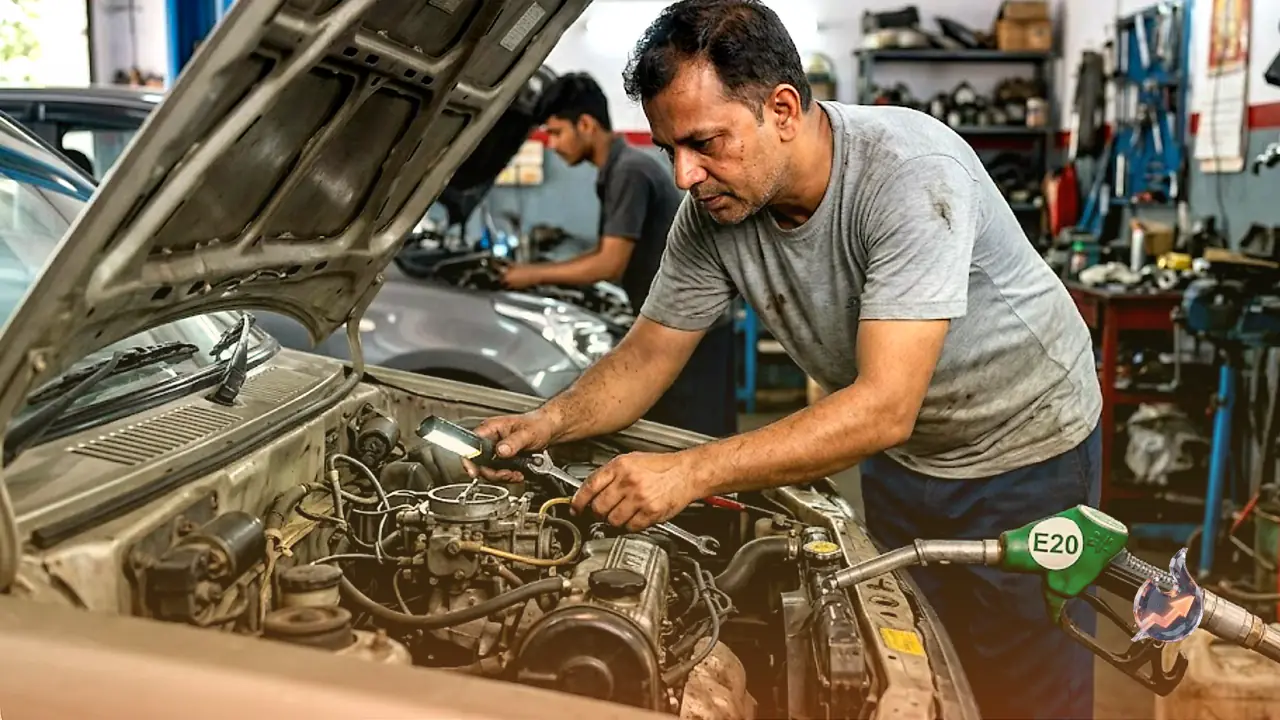
This is where real caution is warranted. Materials used in BS3 vehicles are less tolerant of ethanol compared to what later standards adopted. Prolonged use of E20 in these vehicles can cause hoses, seals and pumps to degrade faster. Carburetted engines run on fixed jets, which makes them run lean, and that can show up as hesitation, poor starting, and elevated temperatures. There is also a heightened risk of corrosion when such vehicles sit in storage for extended periods without being driven.
Precautions worth taking for owners of older vehicles
Anyone running a BS3 or a very old carburetted vehicle would do well to keep a few things in mind. First, fitting ethanol resistant hoses and seals made from materials like FKM or NBR is a sensible step. Second, pump diaphragms and seals should be checked regularly and replaced when needed. Third, if the vehicle is going to be stored for a long period, using a fuel stabilizer and avoiding keeping E20 sitting in the tank for too long is advisable. Fourth, jets and injectors should be cleaned on a regular basis. With these small precautions, even older vehicles can continue running on E20 without running into major trouble.