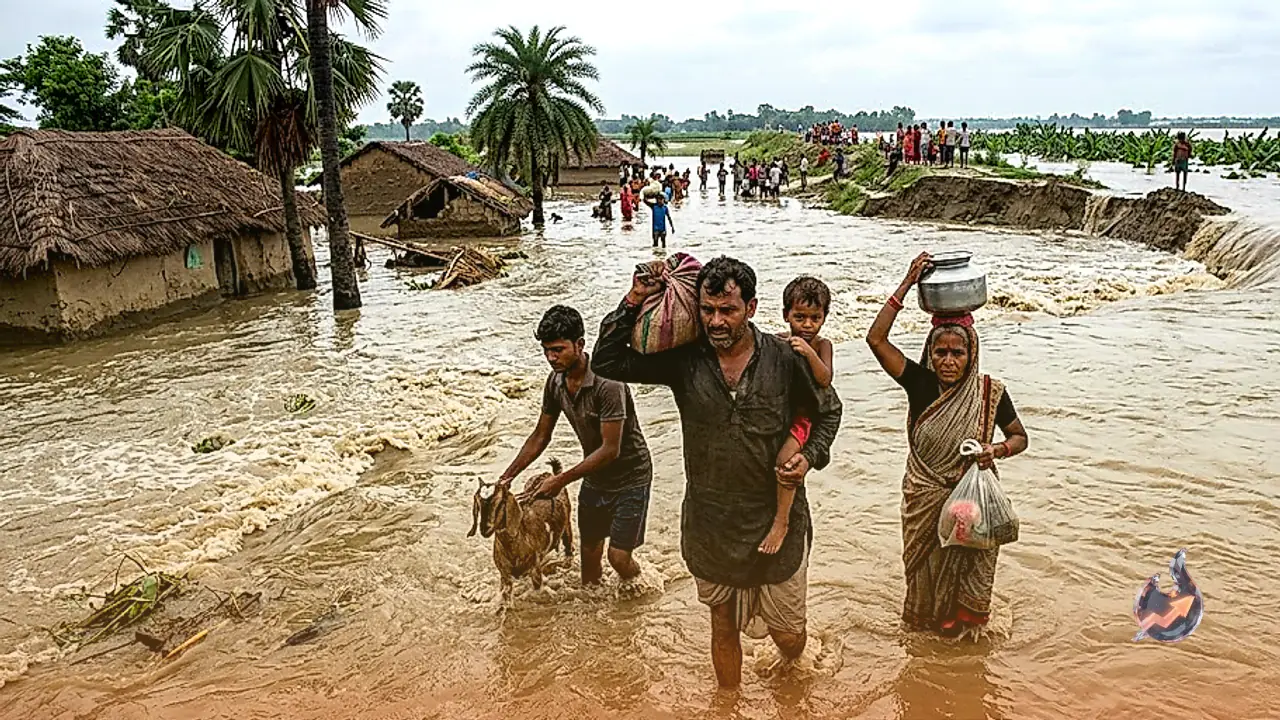

















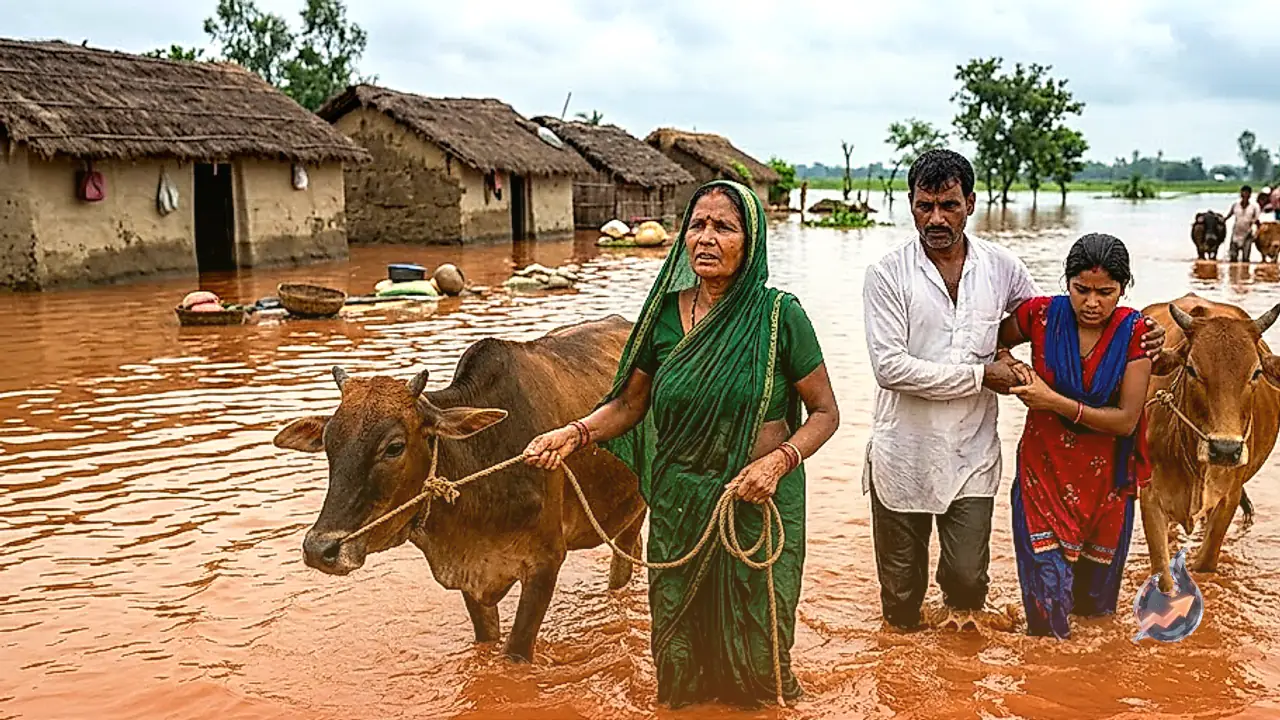

The continuous and heavy downpours across the border in Nepal have triggered a severe crisis downstream in Bihar, specifically impacting the Gopalganj district. The immense volume of rainwater flowing down from the upper catchments has caused the Gandak river to swell rapidly, breaching its normal levels and putting the entire region on high alert. The mighty river is currently in full spate, and the aggressive surge of floodwaters has already surrounded numerous villages situated in the vulnerable diara, or riverine, belt. This sudden inundation has created an atmosphere of palpable fear and panic among the local residents, who are watching the rising water with growing dread. While the local administration has issued urgent appeals for everyone to remain vigilant and take necessary precautions, the affected villagers express deep frustration, pointing out that there is a stark absence of any concrete relief preparations on the ground to handle the unfolding disaster.
The Threat of Isolation in Sadar Block
The brunt of this emerging flood situation is currently being borne by the diara areas falling under the Sadar block. The geographical location of these settlements makes them extremely susceptible to the Gandak's fury. Presently, more than half a dozen villages in this specific pocket find themselves completely encircled by the advancing floodwaters. The immediate concern for these isolated communities is the very real possibility of entirely losing their vital connectivity with the district headquarters. If the river's water level continues its upward trajectory at the current alarming rate, the main access routes will be entirely submerged. Such a total cutoff would be disastrous for the locals, creating insurmountable hurdles in procuring essential daily supplies, bringing in food rations, and most critically, transporting patients to hospitals in the event of medical emergencies.
Cattle and Livelihoods at Risk in Khap Maksudpur
The situation is particularly dire in Khap Maksudpur, a village where the local economy and the survival of most families are intricately tied to animal husbandry. The residents here rely heavily on rearing cattle and selling milk to sustain their households. The rapidly encroaching floodwaters have multiplied their hardships, forcing them to prioritize the safety of their livestock over everything else. Desperate villagers are currently engaged in the grueling task of moving their heavy animals to relatively higher and safer grounds. Alongside this, they are struggling to arrange adequate fodder and clean drinking water for their cattle, a challenge that grows harder as fields go under water. Concurrently, families are hastily shifting their essential household belongings to elevated places to prevent them from being ruined. The residents express immense sorrow, noting that the Gandak brings this wave of destruction every single year, submerging their fertile agricultural lands, washing away vital connecting roads, and creating a life-and-death struggle for their livestock, yet no permanent solution has ever been implemented to protect their livelihoods.
A Cycle of Promises and Unpreparedness
In response to the escalating crisis, the district administration has formally instructed people residing in all low-lying areas to remain on high alert and has advised them to relocate to safer locations if the situation necessitates it. However, the ground reality, according to the affected villagers, tells a completely different story of official apathy and delayed action. The residents strongly allege that essential relief measures are nowhere to be seen. There are absolutely no functional relief camps set up to shelter displaced families, and the designated community sheds remain completely unprepared to host evacuees. Furthermore, the authorities have failed to designate safe zones for the immense population of cattle, nor have they organized any emergency supply of animal fodder. The overriding sentiment among the villagers is that proactive disaster management required the administration to have all these critical arrangements fully operational well before the floodwaters actually reached their doorsteps, rather than reacting after the disaster has struck.
Sleepless Nights Across Dozens of Villages
The scale of this recurring tragedy extends far beyond a few isolated hamlets. Historically and currently, as many as sixty-two villages spread across six different blocks of the Gopalganj district face the wrath of the Gandak floods annually. This year, the exceptionally heavy rainfall in Nepal has significantly amplified the threat level, making the situation far more precarious than usual. The relentless rain combined with the constantly rising water level of the river has effectively robbed the villagers of their peace of mind. Anxiety levels are so high that multiple families are spending their entire nights awake, forming informal watch groups to continuously monitor the water level in the darkness, ready to sound the alarm if the river breaches its banks further.
The Looming Crisis
At this moment, the volume of water in the Gandak river shows no signs of receding and continues to increase steadily, fueling the intense atmosphere of terror prevalent throughout the entire diara region. The immediate future hangs in the balance, entirely dependent on the weather patterns across the international border. If the cycle of heavy rainfall in Nepal does not break soon, the volume of water rushing towards Gopalganj will only multiply, threatening to turn the current severe situation into an unmanageable catastrophe in the coming days.