




















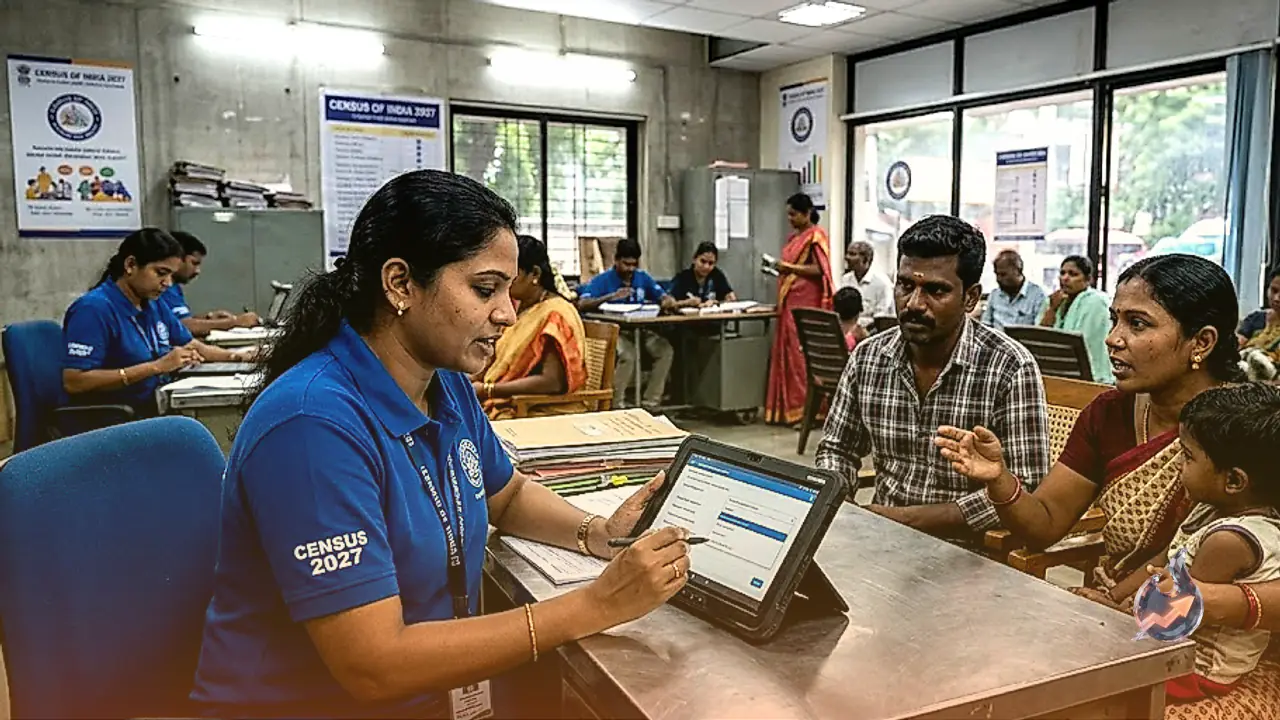

The central government has implemented sweeping and historic modifications to the rules, framework, and data collection methodologies for the upcoming national census. In a significant structural shift, the upcoming census will no longer record data regarding beggars or nomadic populations under a distinct and independent classification. The government has completely removed the standalone category of ‘beggars and vagrants’ from the official list of ‘non-economic activities’. According to official sources, a meager number of individuals, approximately 3.8 lakh, registered themselves under this specific category during the previous 2011 census. Consequently, instead of maintaining a separate demographic bucket, these individuals will now be grouped under the general ‘other’ category. Due to this policy revision, detailed tabular data regarding the total population of beggars across the country, their religious demographics, age groups, educational status, or state-wise breakdowns will no longer be separately accessible in official records.
Alongside this modification, another crucial amendment has been introduced to better comprehend population displacement dynamics, adding ‘natural disaster’ as an option under the reasons for migration for the very first time. Previously, the primary reasons documented for leaving one’s home or city were restricted to employment, business, education, marriage, relocation following birth, or migration accompanying family members. Moving forward, citizens who are forced to migrate due to severe natural calamities such as floods, droughts, devastating landslides, and cyclones will have their precise displacement data recorded separately. This administrative step is expected to play a vital role in formulating much more effective disaster management and rehabilitation policies in the future.
During the 2011 census and prior national enumerations, ‘beggars and vagrants’ were grouped alongside students, homemakers, dependents, pensioners, rent-earners, and others under the broader classification of marginal and non-working individuals engaged in ‘non-economic activities’. Under the revised framework, however, they will simply be tallied within the ‘catch-all’ other category. As a direct result, the detailed demographic categorization of beggars based on total numbers, age brackets, religion, state or union territory distribution, and literacy levels will be excluded from the forthcoming census compendium.
According to official sources, the enumeration counts of ‘beggars and nomads’ recorded in past census cycles were not considered entirely reliable because a vast majority of people belonging to this strata hesitated to identify themselves as such due to social stigma and the fear of ostracization. An official elaborated that as per established census guidelines, the enumerator is strictly mandated to record the occupation or non-economic activity as stated by the respondent. Because of this self-reporting dynamic, the count of non-working beggars and vagrants stood at approximately 3.8 lakh in the 2011 census, 6.3 lakh in the 2001 census, and roughly 5.4 lakh in the 1991 census, figures that will now be absorbed into broader statistical categories.