




















When law enforcement officials mandated to uphold public safety turn into violators of the legal framework, citizens lose trust in the criminal justice system. Across India, recurring instances of police abuse, staged encounters, illegal detention, and custodial violence have repeatedly cast a shadow over law enforcement accountability. In several shocking cases, Indian courts have taken a stern stance on police misconduct, classifying barbaric custodial killings as 'rarest of rare' crimes and sentencing guilty police personnel to capital punishment. From the staged encounter of an innocent MBA student in Uttarakhand in 2009 to the horrific custodial deaths of a father and son in Tamil Nadu in 2020, instances of police brutality have triggered national outrage. Against this backdrop of long-pending police reform mandates, a strict crackdown by SP Vinay Tiwari in Gopalganj, Bihar, has once again exposed an extortion and fabricated cases racket operating directly inside a police station.
The Gopalganj Police Racket: SP Vinay Tiwari Takes Direct Action Against His Own SHO
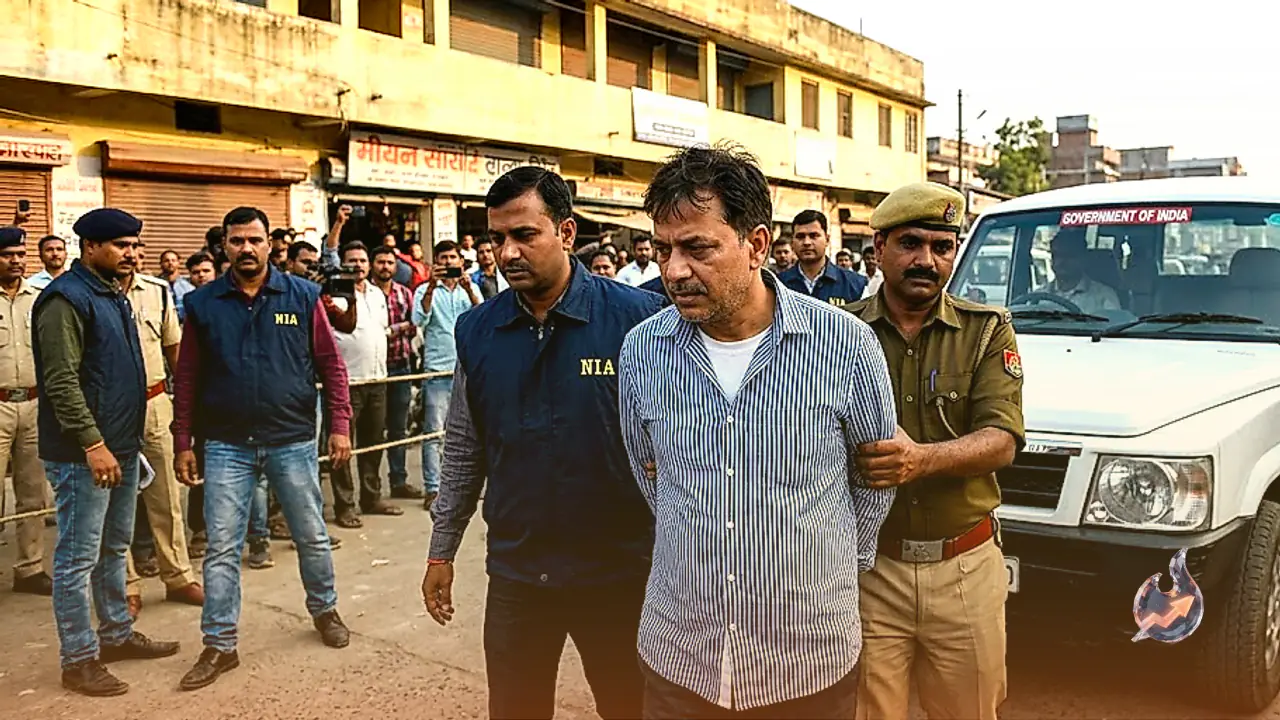
The recent illegal detention case at the Jadopur police station in Gopalganj district, Bihar, highlights the extent of systemic corruption within local police stations. According to established details, the former Station House Officer (SHO) of Jadopur, Anil Kumar Ram, along with his subordinates and accomplices, fabricated a story regarding a cannabis (ganja) seizure to target unsuspecting citizens. A poor mother and her daughter had traveled from Bettiah to Gopalganj to engage in cattle trading, specifically to purchase and sell a cow. Police personnel from the Jadopur station intercepted the women and illegally detained them under the threat of framing them in a false narcotics smuggling case.
The Jadopur police held the mother and daughter in illegal custody inside the station for approximately 36 hours. During this period, the accused police personnel extorted 1.80 lakh rupees from the victims in exchange for not filing a fabricated ganja case. When a formal complaint regarding this illegal extortion reached Gopalganj SP Vinay Tiwari, he immediately ordered an impartial inquiry conducted by a DSP level officer. The official investigation verified all allegations against the police personnel. Acting swiftly on the findings, SP Vinay Tiwari ordered the immediate arrest of his own SHO Anil Kumar Ram, a police driver, a station chowkidar, and a mediator who facilitated the extortion scheme, sending all four individuals to jail.
Commenting on the swift administrative action, journalist Mukesh Singh (@Mukesh_Journo) shared a post on social media platform X on August 21, 2026, praising SP Vinay Tiwari for taking decisive action against corrupt subordinates. The post highlighted that India needs courageous IPS officers who do not hesitate to send their own station heads to jail. It further emphasized that police personnel who abuse their authority to extort money from vulnerable citizens should face the strictest penalties provided by law.
Evolution of Police Reform Initiatives in India: Commission Reports and Supreme Court Rulings
The extortion racket uncovered in Gopalganj is not an isolated event, but a reflection of the deep-seated structural flaws in Indian policing that reform advocates have highlighted for decades. While several high-level commissions and judicial mandates have attempted to insulate the police from external interference, political reluctance has prevented their full implementation across state jurisdictions
- National Police Commission (1977-81): As the first post-independence commission on police reform, it recommended liberating police administration from political influence and replacing the outdated Police Act of 1861 with a modern legal statutory framework.
- Prakash Singh vs. Union of India (2006): Responding to a landmark public interest litigation filed by former IPS officer Prakash Singh, the Supreme Court issued 7 binding directives for police reform. Key measures included creating State Security Councils, fixing a minimum 2-year tenure for State Directors General of Police (DGP), separating investigative functions from law and order duties, and establishing Police Complaints Authorities to independently investigate public complaints against police stations.
- Soli Sorabjee Committee and Model Police Act (2006): Established by the Central Government under former Attorney General Soli Sorabjee, this committee drafted a Model Police Act designed to assist states in replacing the colonial 1861 law with transparent, professional policing guidelines.
Five Major Cases Where Indian Courts Awarded the Death Penalty to Police Personnel
While the Gopalganj case involved extortion and illegal detention, Indian criminal history records multiple instances of severe custodial violence where courts awarded capital punishment to police officers convicted of murder
1. Ranbir Singh Fake Encounter Case (Dehradun, Uttarakhand - 2009)
In 2009, Uttarakhand Police personnel in Dehradun abducted and brutally killed Ranbir Singh, an MBA student, in a staged fake encounter. Following an exhaustive investigation, a Special CBI Court in Delhi designated the incident as a 'rarest of rare' crime, convicting 18 police personnel and awarding the death penalty to 7 police officers.
2. Udayakumar Custodial Death Case (Thiruvananthapuram, Kerala - 2005)
In 2005, police officers in Thiruvananthapuram, Kerala, detained 28-year-old Udayakumar on false suspicion of theft. Inside the station, officers subjected him to severe torture using iron rods, leading to his death. In 2018, a Special CBI Court convicted duty police officers K. Jithakumar and S.V. Sreekumar, sentencing both to death.
3. Lakhan Bhaiya Fake Encounter Case (Mumbai, Maharashtra - 2006)
In 2006, a Mumbai Police team staged the fake encounter killing of Ramnarayan Gupta, popularly known as Lakhan Bhaiya. Investigative findings proved that police personnel executed a premeditated murder in custody. Taking a stern view of police officers committing cold-blooded murder under the guise of official duty, the court sentenced the involved police personnel to death.
4. Jeyaraj and Benniks Custodial Death Case (Thoothukudi, Tamil Nadu - 2020)
During the COVID-19 lockdown in 2020, police in Thoothukudi, Tamil Nadu, detained a father and son, Jeyaraj and Benniks, for keeping their shop open past permitted hours. The two were subjected to severe physical torture while in custody, leading to their deaths during treatment. The incident triggered nationwide outrage, resulting in a CBI investigation and murder charges seeking capital punishment against the accused police officers.
5. Surjeet Singh Custodial Murder Case (Tarn Taran, Punjab - 1992)
In 1992, Punjab Police officers, including a Sub-Inspector, illegally detained a youth named Surjeet Singh in Tarn Taran. After fatally torturing him in custody, officers disposed of his body and concocted a false story of an encounter to destroy evidence. A special court in Punjab and Haryana classified the crime as 'rarest of rare' and sentenced the guilty police officers to death.
Why India Urgently Requires Comprehensive Structural Police Reforms
Incidents ranging from the Gopalganj extortion scandal to custodial deaths across various states illustrate the urgent necessity for systemic overhaul within India's police apparatus
- Eliminating Political Interference: Police forces are frequently weaponized by political leaders to suppress opponents, file false criminal cases, and execute partisan agendas. Without shielding police postings and transfers from political influence, impartial policing cannot be achieved.
- Station Accountability and Middlemen Networks: Incidents like the one at Jadopur thrive because unchecked networks of middlemen operate inside police stations without independent oversight. Establishing functional Police Complaints Authorities and real-time monitoring is imperative.
- Separating Investigation from Law and Order: Overburdened station staff often resort to illegal shortcuts, coercion, and custodial torture rather than conducting scientific investigations. Implementing the Supreme Court's mandate to separate criminal investigation units from general policing duties remains vital.