
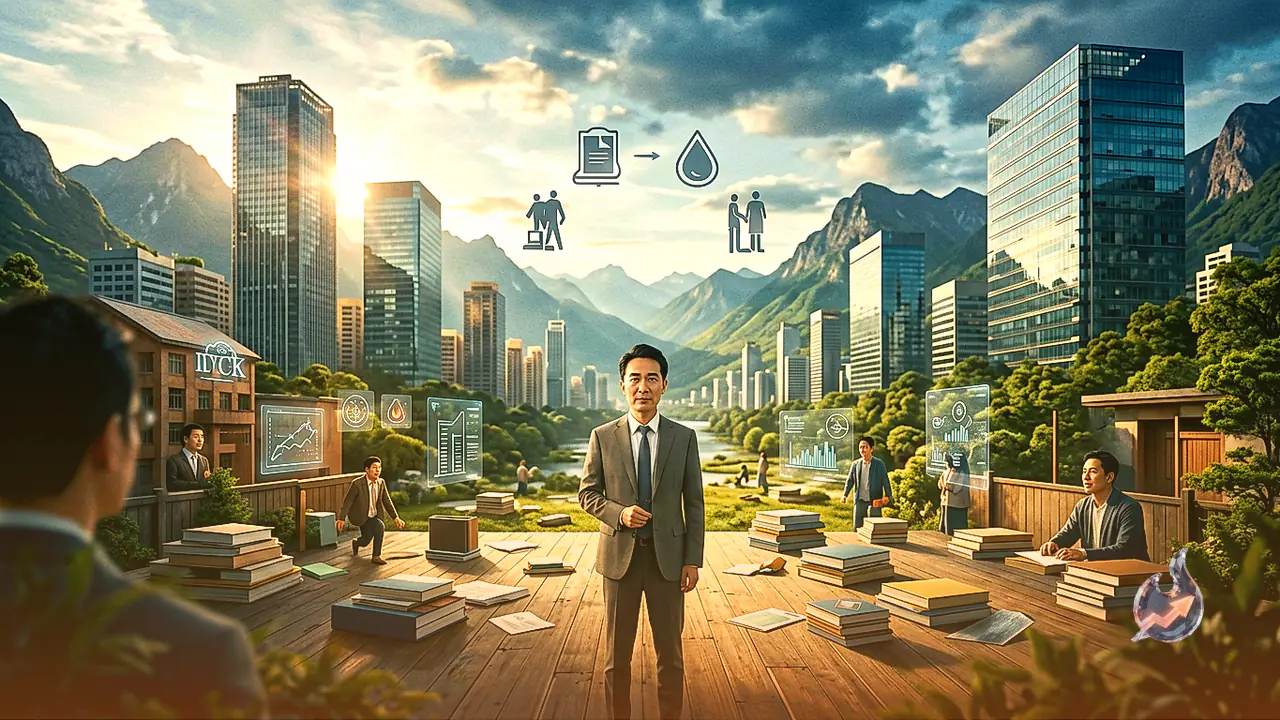





















A comprehensive strategic framework has been set in motion to fortify India's economic capabilities and accelerate the nationwide drive toward becoming a developed nation by 2047. Delivering an address on the occasion of the 80th Independence Day on August 15, Prime Minister Narendra Modi introduced a seven-point development roadmap termed 'Saptadhara'. This strategic vision identifies manufacturing, agriculture and food processing, technology and innovation, Gati Shakti, defense, green and blue economy, alongside soft power as the fundamental pillars for the nation's future growth. The framework focuses on leveraging India's vast natural assets, environmental wealth, and coastal advantages to harmoniously blend financial progress with clean energy initiatives and ocean-based economic opportunities.
A Sustainable Framework for Marine Resources
The concept of the Blue Economy centers on the responsible and sustainable utilization of ocean and coastal resources. The primary objective of this economic model is to propel financial growth and elevate local livelihoods while meticulously preserving the ecological health of marine environments. In practical terms, it represents a modern business approach where maritime trade, shipping, and coastal commerce are conducted in a manner that yields long-term economic dividends without inflicting harm on oceanic ecosystems.
Key Sectors Spanning Fisheries, Clean Power, and Deep-Sea Mining
Far beyond traditional fishing, the Blue Economy encompasses a diverse spectrum of established and frontier sectors
- Fisheries and Aquaculture: Advancing sustainable fish farming, marine culture, and modernizing seafood processing infrastructure.
- Maritime Transport and Infrastructure: Over 80% of global trade by volume moves across maritime routes. Developing green ports and energy-efficient shipping fleets forms the backbone of this division.
- Marine Tourism: Expanding eco-tourism, luxury cruise travel, and water sports along coastal zones to generate local economic value.
- Renewable Ocean Energy: Harnessing wave action, tidal dynamics, and offshore wind installations to generate clean, carbon-neutral electricity.
- Deep-Sea Mining and Biotechnology: Extracting critical seabed mineral resources such as polymetallic nodules while utilizing marine biological organisms for pharmaceutical and industrial breakthroughs.
Differentiating the Blue Economy from Traditional Marine Economics
Conventional marine economic models focused almost exclusively on resource extraction and immediate commercial profit, frequently ignoring long-term environmental degradation such as overfishing or toxic oil spills. Conversely, the Blue Economy operates strictly on the doctrine of sustainability. Its governing principle mandates taking only as much from the sea as ocean ecosystems can naturally replenish, while enforcing zero-tolerance policies against dumping plastic, industrial effluents, or waste into marine environments.
India's Geographical Advantages and Ocean Imperative
The strategic relevance of the Blue Economy for India is underlined by the country's impressive maritime profile
- Extensive Coastline: India commands a vast coastline spanning approximately 7516 kilometers across 9 coastal states.
- Vast Exclusive Economic Zone: India exercises jurisdiction over an Exclusive Economic Zone exceeding 20 lakh square kilometers, holding immense natural reserves.
- Livelihood Security: Millions of citizens depend directly or indirectly on oceanic assets and coastal trade for their daily living.
- Deep Ocean Mission: The government has deployed its flagship Deep Ocean Mission to explore uncharted seabed territories, living organisms, and valuable minerals.
Just as the Green Economy advocates for environmentally conscious growth across terrestrial lands, the Blue Economy provides the blueprint for sustainable ocean conservation linked with national economic advancement.