





















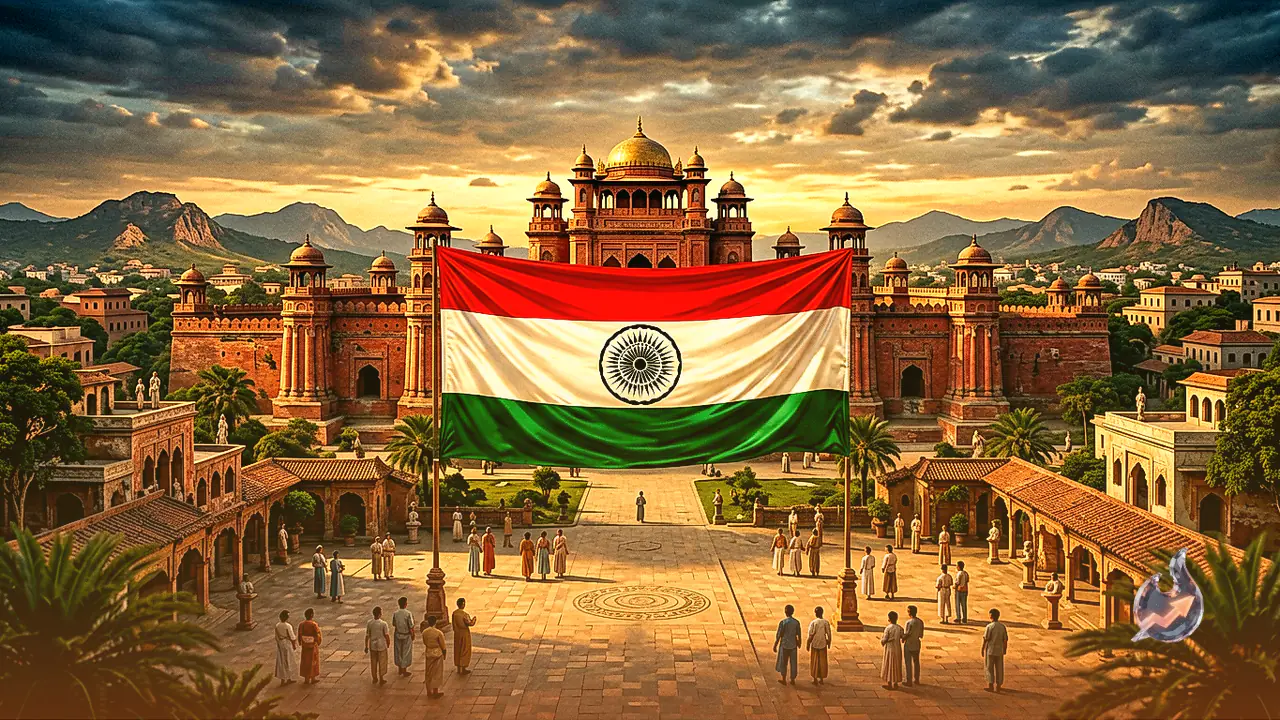

On the historic occasion of India's 80th Independence Day celebrations, Prime Minister Narendra Modi unfurled the national tricolor from the ramparts of the Red Fort. Delivering his address to the nation, he reiterated the firm resolve to transform India into a fully developed nation by the time the country celebrates 100 years of independence in 2047. To achieve this ambitious transformation, he unveiled a comprehensive development strategy termed the Seven Pillars of Power, or Shakti Ki Saptdhara, designed to serve as the engine of growth.
Accelerated Growth Agenda for the Next Five to Seven Years
Addressing the nation, Narendra Modi emphasized that the country requires a renewed momentum in its development trajectory. He stated that over the next five to seven years, the collective energy of the Saptdhara vision aims to accomplish milestones that could not be realized over the past five to seven decades. This new direction is intended to provide the nation with enhanced speed, greater heights, and the capability to surpass monumental goals. Furthermore, the immense potential of the country's youth will be actively integrated into national development initiatives to maximize their contribution.
The Seven Core Pillars of National Transformation
The strategic roadmap outlines seven key areas essential for positioning India as a leading global power
- Manufacturing Power: Establishing India as a reliable and resilient global supply chain hub for everything from individual components to finished products.
- Agriculture and Food Products: Expanding the food processing sector while bringing Indian millets, spices, fruits, and agricultural produce to international markets.
- Technology and Innovation: Developing India into a global hub for Artificial Intelligence (AI), quantum computing, space exploration, robotics, data centers, and next-generation communications.
- Gati Shakti (Infrastructure & Connectivity): Strengthening national infrastructure through high-speed rail networks, modern highways, upgraded airports, multimodal logistics, and maritime ports.
- Defense Power: Achieving self-reliance in military production, advancing next-generation defense technologies, and emerging as a global defense exporter.
- Green and Blue Economy: Advancing green hydrogen, renewable energy generation, energy storage systems, green mobility, alongside sustainable fisheries, coastal tourism, and ocean technology.
- India's Soft Power: Leveraging yoga, ayurveda, holistic healthcare solutions, rich cultural traditions, and spiritual heritage to expand global influence.
Strategic Focus on Manufacturing and International Quality Standards
Elaborating on the industrial roadmap, the Prime Minister highlighted the imperative to significantly scale up the manufacturing sector. Rather than focusing solely on final assembly, Indian industries must produce essential sub-components and command the entire value chain. From original product design to final assembly, India aims to become the primary trusted center for global supply chains.
A clear message was directed toward manufacturers, entrepreneurs, and the Micro, Small, and Medium Enterprises (MSME) sector to align with global benchmarks across cost, quality, and scale. Industrial units must ensure high competitiveness while manufacturing user-friendly goods. Additionally, packaging must meet attractive international aesthetic standards to appeal to global consumers. The core identity of Indian manufacturing must rest upon zero-defect production and precision engineering.
Entrepreneurs across all scales were urged to target international markets. The global reputation of Indian products must be defined strictly by unwavering reliability and high quality. With a zero-tolerance stance on quality compromises, the address emphasized prioritizing quality above all else to build global brand value for Indian products.