




















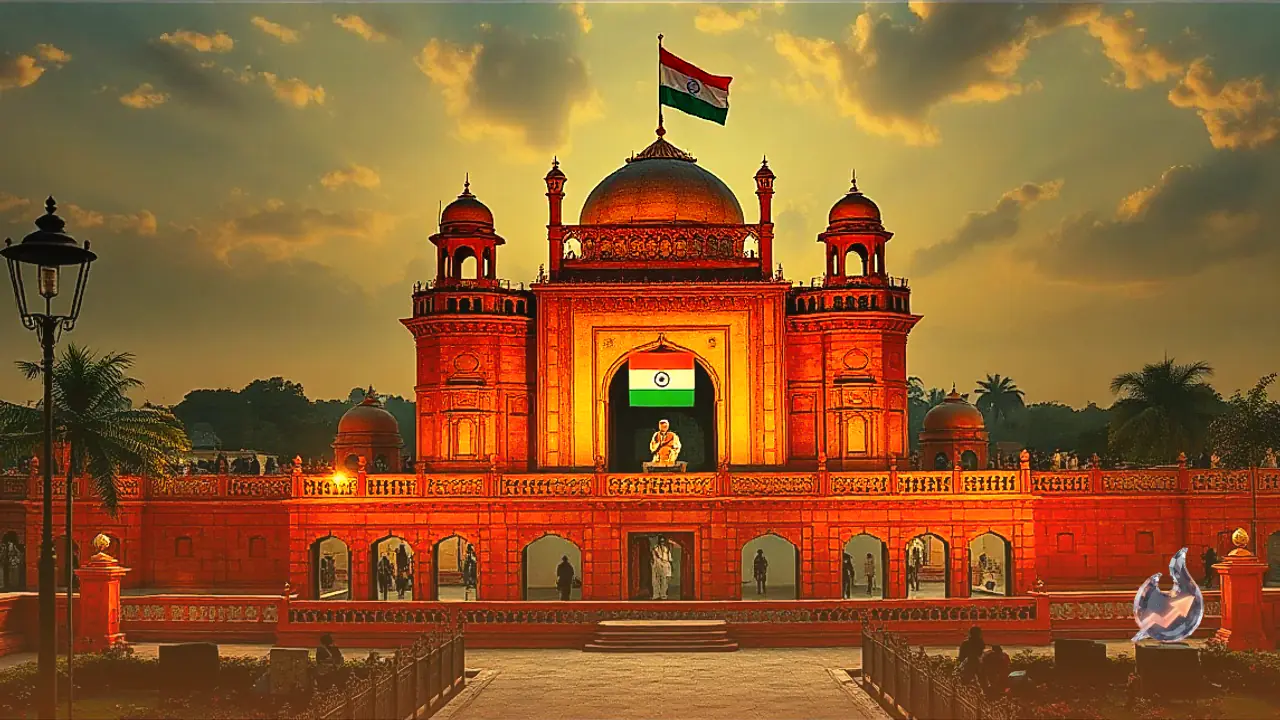

Marking the historic occasion of India's 80th Independence Day, Prime Minister Narendra Modi addressed the nation from the ramparts of the Red Fort for the 13th consecutive time. The address laid down a sharp focus on national economic priorities, presenting a strategic vision to transform India into a fully developed nation. Emphasizing the need for a accelerated growth paradigm, the speech unveiled the Sapt Sindhu framework comprising seven core pillars of economic strength.
The economic blueprint encompasses industrial expansion, logistics modernization, agricultural welfare, clean energy transition, and global trade engagement. Amid volatile global economic conditions, the outlined roadmap prioritizes self-reliance, domestic manufacturing capabilities, and establishing Indian goods prominently in international markets.
Vision for Viksit Bharat and the Seven Sapt Sindhu Pillars
To steer the nation toward sustained economic prosperity, the Prime Minister introduced the Sapt Sindhu framework, identifying seven vital sectors that will power India's growth trajectory. These seven drivers of national development include
- Manufacturing Sector: Scaling up domestic industrial capacity and output.
- Food Processing: Enhancing value addition and processing within the agricultural chain.
- Technology and Innovation: Driving growth through cutting-edge technological research.
- Gati-Shakti: Expanding high-speed, multi-modal transport and connectivity networks.
- Defense Production: Achieving complete self-reliance in military manufacturing.
- Green Economy and Blue Economy: Promoting sustainable energy transition and maritime resource utilization.
- Soft Power: Leveraging cultural heritage, wellness systems, and digital content globally.
Focus on Quality, Cost, and Scale in Manufacturing
To make Indian industries globally competitive, the Prime Minister stressed three foundational elements for the manufacturing sector: Cost, Quality, and Scale. Enterprises must focus on optimizing production costs while simultaneously expanding manufacturing volumes to meet global demands.
Highlighting the critical nature of quality standards, the Prime Minister stated that compromise on product quality cannot be permitted as it directly defines India's global brand value. Since 2014, India has entered into Free Trade Agreements (FTAs) with approximately 40 nations, securing unprecedented market access for Indian exporters. With reinforced domestic fundamentals, Indian manufacturing is positioned to capture larger shares of international trade.
Shielding Farmers with Massive Fertilizer Subsidies
Addressing global geopolitical and economic disruptions, the Prime Minister noted that international crises have caused widespread inflation across nations. However, the government has taken substantial financial measures to shield domestic agricultural producers from global price shocks, particularly regarding fertilizer costs.
While the international price of a urea bag has escalated to ₹3,000, the government absorbs the difference, supplying it to Indian farmers at a subsidized rate of ₹300 per bag. Similarly, even as Di-Ammonium Phosphate (DAP) prices reached ₹5,000 in international markets, it is made available to farmers at ₹1,250 per bag. This massive subsidy allocation ensures that agricultural input expenses remain manageable for farming communities.
Gati Shakti Infrastructure and Defense Self-Reliance
Under the Gati-Shakti framework, India is accelerating infrastructure development to establish seamless connectivity across logistics networks. The national plan encompasses high-speed railway corridors, modern expressway networks, inland waterways, expanded airport infrastructure, multi-modal logistics hubs, and deep-water ports. Special emphasis is being placed on port-led development to boost maritime commercial efficiency.
In the defense domain, the national objective has shifted from import dependency to self-reliance and global supply. India aims to develop robust domestic defense manufacturing pipelines, transforming the nation into an exporter of advanced defense platforms and military hardware to global partners.
Navigating Global Resource Weaponization
Highlighting international geopolitical complexities, the Prime Minister pointed out that global entities are increasingly weaponizing essential resources to project geopolitical power. Critical commodities, including crude oil, diesel, agricultural fertilizers, pharmaceuticals, semiconductor chips, and territorial assets, are being leveraged for strategic leverage.
The Prime Minister noted that had India not prioritized self-reliance over the past decade, navigating these international supply chain vulnerabilities would have presented severe economic obstacles. Strategic investments in domestic manufacturing capacity over the last 10 years have significantly strengthened national economic resilience.
Driving Growth Through Green and Blue Economies
Environmental sustainability and economic expansion were framed as complementary goals through the development of the Green Economy and Blue Economy. The Green Economy roadmap emphasizes investments in renewable power generation, advanced energy storage systems, eco-friendly logistics, and green manufacturing processes.
Concurrently, India's extensive coastline presents vast potential for the Blue Economy, which involves the sustainable, responsible, and efficient management of ocean and coastal resources. The primary objectives of the Blue Economy strategy include boosting coastal economic activity, creating employment opportunities, and improving livelihoods across maritime regions.
Global Opportunities for MSMEs and Empowerment Initiatives
Micro, Small, and Medium Enterprises (MSMEs) were urged to aggressively leverage the trade avenues opened by international agreements. With Free Trade Agreements signed with around 40 countries since 2014, domestic manufacturers in sectors such as textiles, industrial machinery, and pharmaceuticals have direct access to high-value foreign markets.
Furthermore, India's soft power assets, including Yoga, Ayurveda, holistic healthcare, artisanal crafts, cultural heritage, cinema, animation, gaming, and digital media, were highlighted as vital tools for boosting international tourism. Initiatives such as the WAVES summit and a network of over 100 national parks showcase India's global attraction.
Concluding the economic directives from the Red Fort, a major social welfare announcement was made to create 6 crore Lakhpati Didis across the country, aiming to drive financial independence and entrepreneurship among rural women.