
























Consumers planning to buy a new smartphone in India will need to allocate a higher budget as leading mobile brands update their product pricing. Smartphone maker iQOO has implemented significant price increases across several models listed on its official online store, including the iQOO 15, iQOO 15R, and iQOO Neo 10. In tandem, Xiaomi sub-brand Redmi has revised the prices of its recently introduced Redmi Turbo 5 series, highlighting an industry-wide trend driven by rising manufacturing expenses.
Price Revisions for iQOO 15 and iQOO 15R Series
The flagship iQOO 15 lineup has experienced the steepest increase in retail prices. The base variant featuring 12GB RAM and 256GB internal storage, which originally debuted at ₹72,999, is now listed at ₹85,999, representing a direct hike of ₹13,000. Similarly, the top-tier configuration with 16GB RAM and 512GB storage has jumped to ₹93,999 from its initial launch price of ₹79,999.
Significant upward revisions have also affected the iQOO 15R model lineup. The 8GB+256GB storage configuration, which was introduced at ₹44,999, now carries a price tag of ₹53,999. The mid-tier 12GB+256GB model has seen its price rise from ₹47,999 to ₹59,999, while the highest variant offering 12GB+512GB storage has increased from its launch cost of ₹52,999 to a revised price of ₹66,999.
Updated Costs for iQOO Neo 10 and Redmi Turbo 5
The iQOO Neo 10 series has also undergone substantial price increases across its surviving configurations. The 8GB+256GB model, originally launched at ₹33,999, is now priced at ₹43,999, while the 12GB+256GB variant has climbed from ₹35,999 to ₹48,999. Notably, the entry-level 8GB+128GB variant, which was previously available for ₹31,999, has been officially discontinued by the manufacturer.
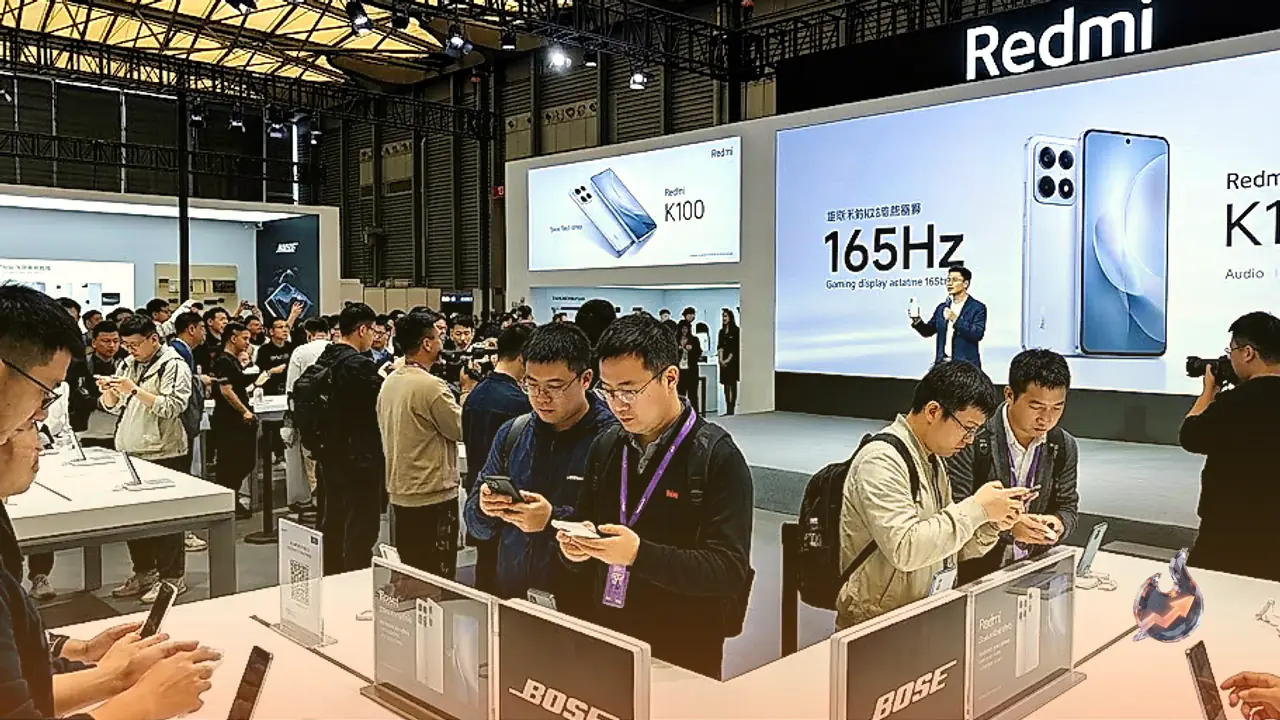
Meanwhile, Redmi has updated the pricing structure for the Redmi Turbo 5 handset. The 8GB+256GB model is currently retailing at ₹41,999, up from its original launch price of ₹37,999. The higher 12GB+256GB option, which initially hit the market at ₹40,999, is now offered at ₹46,999.
Supply Chain Pressures and Rising Component Costs
The upward price adjustment is not restricted to budget or mid-range devices; it spans across premium flagship devices as well. Major industry peers including OnePlus, Vivo, and Oppo have also raised retail prices on select models in recent weeks. Industry analysts point to escalating costs for core internal hardware, particularly DRAM and NAND flash memory components, as the primary catalyst behind these pricing shifts.
The surging global demand for artificial intelligence technologies has prompted memory component suppliers to shift a substantial portion of their production capacity toward high-bandwidth memory required by AI data centers. Consequently, supply constraints for standard smartphone components have inflated procurement costs for hardware manufacturers, maintaining upward pressure on mobile retail prices for the foreseeable future.