

















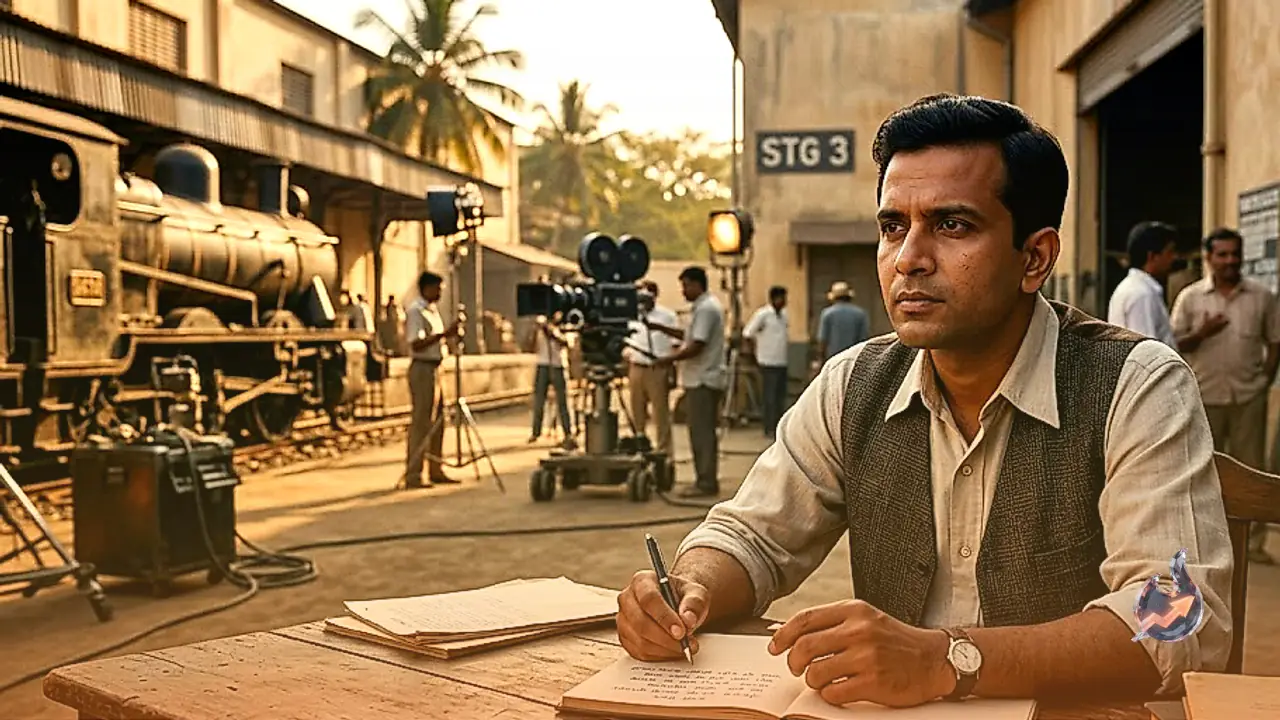

The life story of Shailendra, one of the most venerated lyricists in Hindi cinema, stands as an inspiring testament to turning adversity into historic creative achievement. Born on 30 August 1923 in Rawalpindi, which is now located in Pakistan, Shailendra belonged to a family that originally hailed from Ara in Bihar. However, severe financial distress forced his family to relocate from Rawalpindi to Mathura, where he completed his formal education.
Tragic Childhood and the Journey to Bombay
Shailendra faced immense personal tragedy at a very early age when he lost both his mother and his sister. Despite this profound grief, he turned to literary creation, spending countless hours penning poetry. After finishing his studies, Shailendra moved to Bombay in 1947 and took up employment as an apprentice at the Matunga workshop of Indian Railways. Even while dealing with the demands of a workshop job, he nurtured his passion for literature and poetry every day.
The Initial Offer from Raj Kapoor and Prompt Rejection
Whenever Shailendra found free time away from his railway duties, he wrote verses and actively participated in cultural meets, poetry symposiums, and mushairas. During one such event, he recited his poem 'Jalta Hai Punjab' with intense emotion. Actor and filmmaker Raj Kapoor was in attendance and was deeply moved by the performance. Raj Kapoor approached Shailendra with an offer to buy 'Jalta Hai Punjab' for his film 'Aag' (1948). Holding fast to his artistic ideals at the time, Shailendra flatly refused the proposal.
Financial Crisis and the Turning Point with 'Barsaat'
Shailendra's perspective shifted when his wife became pregnant, creating a major financial strain that made meeting household expenses nearly impossible. Realising he needed urgent funds, he decided to reach out to Raj Kapoor. At that point, Raj Kapoor was filming 'Barsaat' (1949), and two songs for the movie remained unwritten. Raj Kapoor agreed to hire Shailendra to write both tracks for a fee of 500 rupees. Shailendra penned 'Patli Kamar Hai' and 'Barsaat Mein', with the iconic music duo Shankar-Jaikishan setting them to tune. This assignment marked the official transformation of poet Shailendra into a legendary cinematic lyricist.
Global Fame with 'Awara' and 'Shree 420'
The collaborative powerhouse of Raj Kapoor, lyricist Shailendra, and music composers Shankar-Jaikishan went on to deliver several historic chartbusters for Indian cinema. In 1951, the song 'Awara Hoon' from the movie 'Awara', authored by Shailendra, became a monumental hit that achieved unprecedented popularity abroad, becoming one of the most celebrated Indian compositions internationally. Shailendra continued to write lyrics for most of Raj Kapoor's major projects, including the 1955 classic 'Shree 420'. The tracks from that film became timeless classics that continue to enjoy massive popularity across generations today.