

















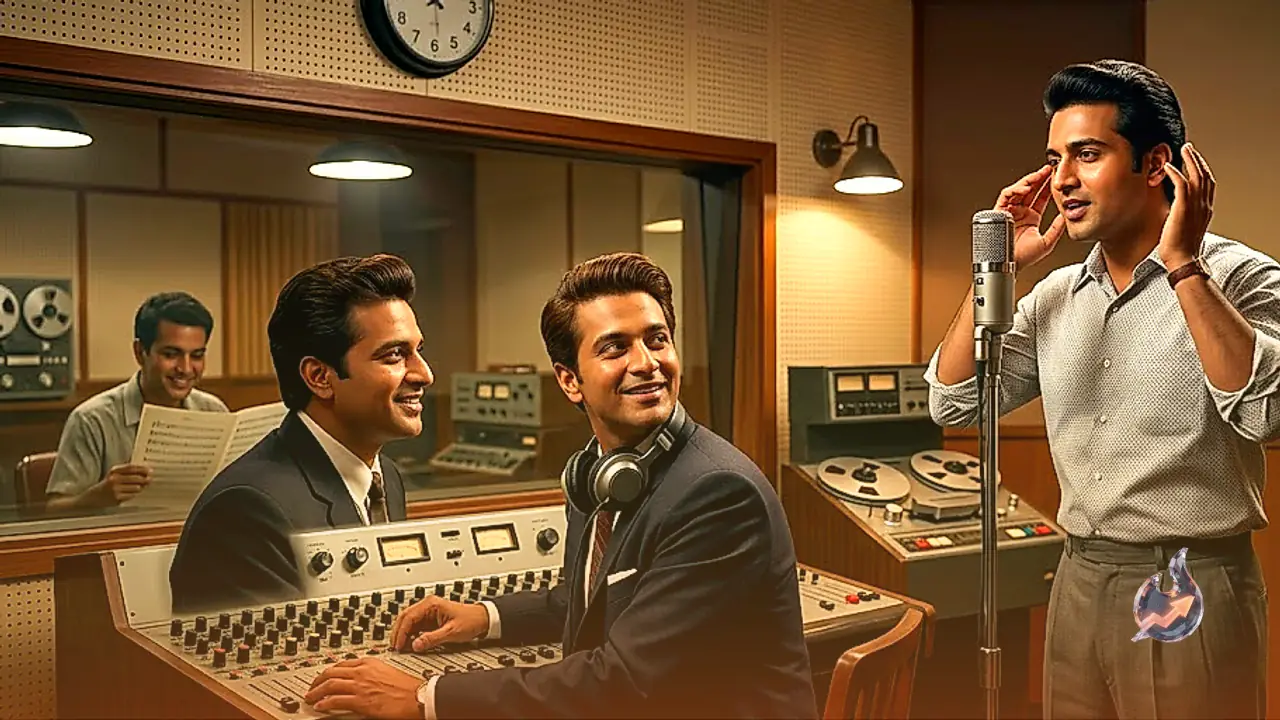

A fascinating chapter in Indian cinema unfolded in 1958 during the creation of the musical film Ragini. At the time, Kishore Kumar was featured as the lead actor and was primarily concentrating on his acting career. His reputation as a playback singer was still developing, with his vocal renditions mostly restricted to his own on-screen roles or for actor Dev Anand. Adding to the dynamic, Kishore Kumar's elder brother, Ashok Kumar, was producing the film while also playing a pivotal role in the movie.
The Musical Landscape of Ragini in 1958
During the soundtrack composition for Ragini, music director OP Nayyar brought together several prominent playback artists. Kishore Kumar was assigned a few duet tracks alongside acclaimed vocalists such as Asha Bhosle and Geeta Dutt. Additionally, classical maestro Ustad Amir Khan contributed a song to the film's soundtrack. At that stage, composers generally did not view Kishore Kumar as a heavyweight classical playback singer. Nevertheless, given his position as the main hero of the project, he was expected to lend his voice to key songs on the album.
The Challenge of the Classical Composition Man Mora Bawra
Complications arose when OP Nayyar crafted a highly intricate song based heavily on classical music framework, titled "Man Mora Bawra Nis Din Gaye". The composer initiated intense rehearsal sessions with Kishore Kumar to master the intricate nuances of the composition. Despite repeated attempts and multiple rehearsals, Kishore Kumar struggled to deliver the exact level of vocal perfection that OP Nayyar envisioned. This created a delicate dilemma for the composer. Since Kishore Kumar was the lead actor and his brother Ashok Kumar was producing the venture, OP Nayyar felt trapped and hesitant to outright turn down the actor.
Manna Dey's Intervention and the Decision to Involve Mohammed Rafi
With the recording stalled and no resolution in sight, OP Nayyar found himself in deep uncertainty. During this period, he happened to meet singer Manna Dey and shared his ongoing frustration. Manna Dey promptly advised him to approach Mohammed Rafi to execute the demanding classical song. OP Nayyar initially hesitated, fearing that replacing Kishore Kumar might strain their professional equation. To navigate the situation, OP Nayyar discussed the matter directly with producer Ashok Kumar, who agreed that bringing in Mohammed Rafi was the best artistic decision for the composition.
A Masterpiece Delivered in a Single Take
Following extensive deliberations, Mohammed Rafi was formally called into the recording studio to perform playback singing for Kishore Kumar. Demonstrating his exceptional vocal prowess and effortless mastery over classical scales, Mohammed Rafi recorded the complete song "Man Mora Bawra Nis Din Gaye Milan Ka" in a single take. Upon its release, the composition garnered widespread acclaim, with audiences and critics alike praising the flawless execution by Mohammed Rafi and the brilliant musical arrangement by OP Nayyar.