






















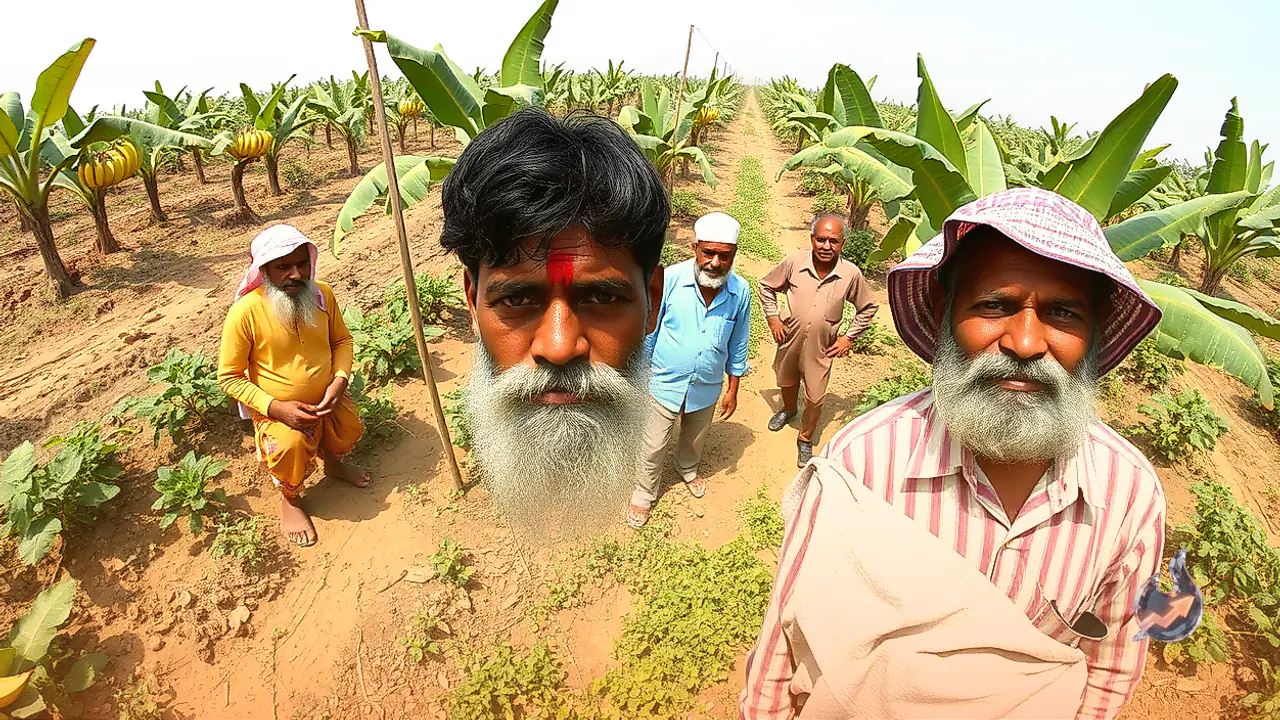

Adopting strategic planning and clever crop rotation techniques is allowing progressive growers to extract significantly higher returns from their existing landholdings. A persistent issue faced by orchard growers revolves around the substantial floor space that stays vacant and unproductive during the early vegetative development of banana saplings. Addressing this specific limitation, Triloki, a young agriculturist from Mirzapur village in the Bahraich district, has implemented an intercropping blueprint that fully monetizes this unused acreage. Through this integrated multi-crop arrangement, the overall expenditure required for manure, irrigation, and soil preparation for the primary orchard is entirely recovered from intermediary vegetable harvests, allowing the eventual banana proceeds to translate into pure savings.
Choosing Sesame over Sesbania for Green Manuring
While agricultural practitioners traditionally cultivate sesbania, locally known as dhaincha, to regenerate soil organic matter through green manuring, Triloki deliberately chose sesame instead. Explaining his practical reasoning, he pointed out that sesbania stems take a notably long duration to decompose and blend seamlessly into the ground. Because his immediate schedule required transplanting capsicum seedlings within just one week, sesame served as a far more viable solution. Tilling young, green sesame vegetation directly into the soil enriches the root zone with organic nourishment quickly without extended downtime. Furthermore, should the crop be permitted to mature, sesame seeds and culinary oil fetch strong commercial prices in local produce markets.
The Three-Stage Secondary Crop Rotation Blueprint
According to the cultivation schedule laid out by Triloki, the land parcel yields three distinct intermediate harvests well before the main plantation matures. The opening cycle relies on sesame sowing, which is subsequently tilled under to act as fast-acting organic manure that readies the topsoil. Directly following this soil preparation, capsicum is transplanted across the beds, delivering sustained yields and market revenue running right through March and April. Once the capsicum harvesting season concludes, the temporary gap is capitalized on by sowing leafy green coriander. This continuous succession ensures that the open land between the rows generates commercial output without resting idle.
Production Economics and Math Across 5 Bighas
Triloki manages a 5-bigha plantation dedicated specifically to raw culinary banana varieties. On average, a single bigha of this land yields between 30 and 35 quintals of vegetable bananas. Across the entire 5-bigha holding, the cumulative harvest reaches approximately 150 quintals. The prevailing market rate for this variety hovers around ₹15 per kilogram. The foundational economic edge of this farming model is that the interim crops comprising sesame, bell peppers, and coriander completely recover the running overheads of irrigation, plowing, and fertilizers. Consequently, once the main banana crop is harvested and brought to market, the entirety of the gross sales functions as net unencumbered profit for the grower.
Actionable Takeaways for Neighboring Farmers
Reflecting on his practical experience, Triloki emphasizes that neighboring growers can easily implement similar multi-tier cultivation methods to scale their farm earnings. The open ground within banana orchards need not be restricted solely to sesame or coriander; farmers can readily integrate bottle gourd, pumpkin, bell peppers, coriander, or assorted seasonal vegetables suited to regional weather. By adopting this balanced intercropping schedule, agricultural producers can offset operational expenses and achieve twice the financial returns with minimal capital exposure.